

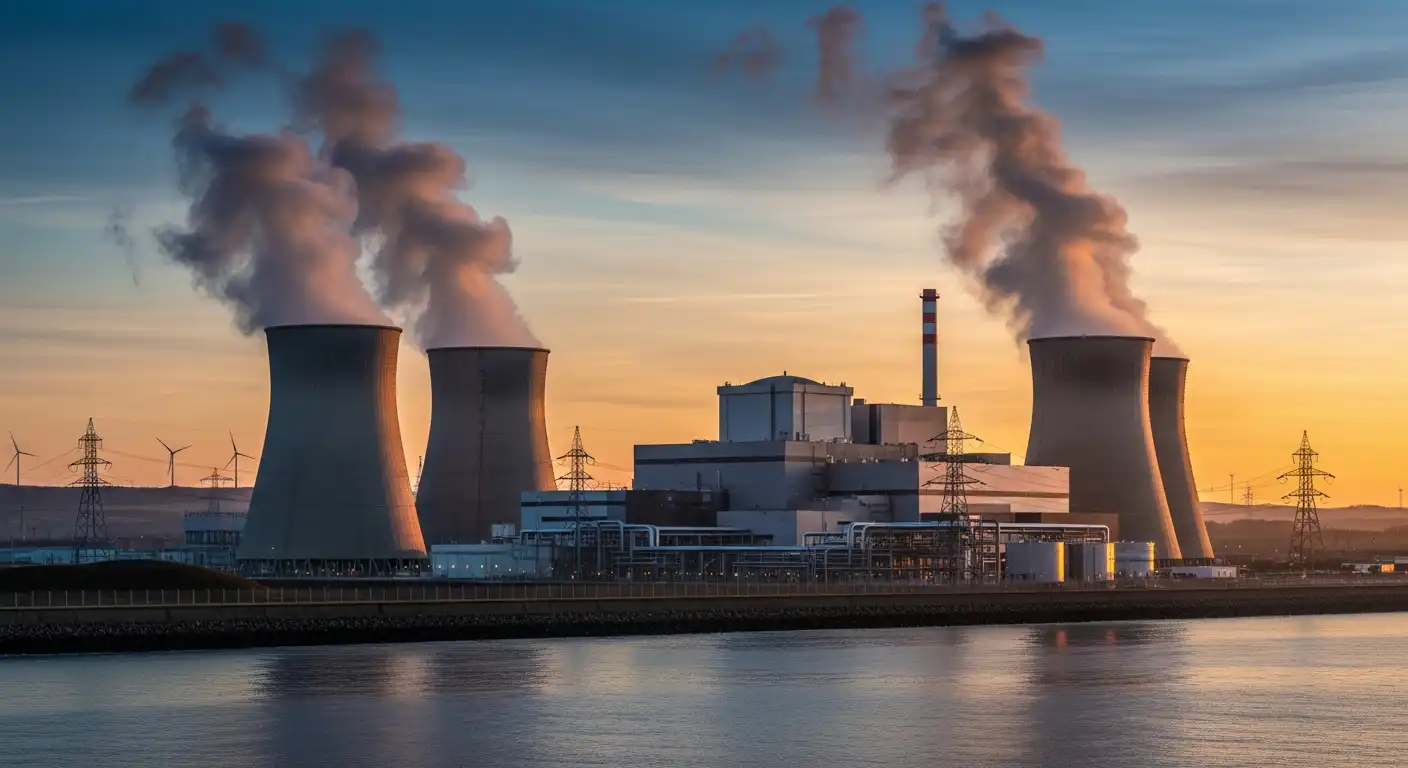
The geopolitical and environmental maps of Europe are undergoing a rapid, highly significant transformation, and France has firmly established itself as the undisputed heart of the continent’s clean energy transition. According to official data compiled by the national grid operator, Réseau de Transport d’Électricité, French electricity exports surged to an unprecedented historical record during the first half of the year. The massive milestone highlights a profound recovery in France’s domestic nuclear generation, paired with a rapid expansion of regional renewable energy and highly competitive wholesale pricing.
Between January and June, France registered a record-breaking net electricity export balance of 51 Terawatt-hours. To understand the sheer scale of this export boom, investors and energy analysts must look at the historical context of European power markets. In the previous record year of 2025, France’s net export balance during the first six months stood at 37 Terawatt-hours.
The contrast with previous decades is even more stark; in 2019, France exported 55.7 Terawatt-hours over the entire twelve-month period. What previously required a full year of intensive, round-the-clock generation has now been achieved in just six months, demonstrating how quickly the country’s clean energy supercycle is accelerating.
This record-breaking export performance is providing a vital stabilizer for the broader European economy. By flooding neighboring national grids with billions of kilowatt-hours of low-cost, zero-emission electricity, France is helping its European Union partners lower their utility costs, reduce their reliance on expensive imported natural gas, and make massive, rapid progress toward their own national decarbonization targets. As the continent continues to battle volatile fossil fuel prices, France’s return to its historical role as Europe’s primary power exporter represents a major victory for regional economic security.
The Quadruple Drivers Behind the Fifty-One Terawatt-Hour Boom
The historic performance of the French power grid is not an accidental event. According to Thomas Veyrenc, the Executive Director for Economy, Strategy, and Finance at RTE, the 51 Terawatt-hour export boom is the direct result of a highly successful convergence of four core operational drivers: a sustained recovery in nuclear output, a rapid expansion of solar and wind generation, highly competitive domestic pricing, and a structural decline in domestic French electricity consumption.
By combining these four elements, France has constructed a massive, highly efficient energy surplus that neighboring countries are eager to exploit. While other European nations struggle to balance their grids amid variable weather conditions and high fuel bills, France’s diversified, nuclear-anchored power system is delivering reliable, low-carbon electricity to the European market at a scale that has completely altered the supply-and-demand dynamics of the entire region.
The Rebound of the EDF Nuclear Fleet
The most critical driver of the export boom is the operational recovery of France’s nuclear fleet, which is managed by state-owned utility Electricité de France, widely known as EDF. In 2022, the French nuclear sector faced its most severe crisis in history, as a series of unexpected stress-corrosion cracks, maintenance backlogs, and river cooling constraints forced more than half of the country’s 57 reactors offline, transforming France into a temporary net importer of electricity.
EDF has successfully put those crises behind it. Through an aggressive, highly coordinated maintenance campaign and a restructuring of its engineering workflows, the utility has restored its reactors to full operational health.
Nuclear output has climbed steadily, providing the reliable, zero-emission baseload power that historically defined France’s energy wealth.
This recovery has allowed the company to keep its generation costs incredibly low, ensuring that French electricity remains the most competitive option on the European wholesale market.
The Rise of Regional Renewables and the Spanish Connection
While nuclear power remains the undisputed anchor of the French grid, renewable energy is playing an increasingly vital role in generating the export surplus. Under the influence of the European Union’s renewable energy mandates, France has experienced a rapid expansion of its domestic solar and wind capacity, with solar installations in particular setting new generation records during the summer months.
This rising renewable capacity has allowed France to optimize its international trade flows. During midday solar gluts, the country can import cheap, excess solar electricity from Spain—which recently registered a minor net export balance of 1 Terawatt-hour to France—allowing EDF to conserve its domestic hydropower reserves and run its nuclear reactors at more stable, highly efficient operational levels.
When the sun goes down, and Spanish solar output collapses, France reverses the flow, exporting high-capacity, low-carbon nuclear power back to the southern peninsula, creating a highly efficient, mutually beneficial regional trade loop.
Sluggish Domestic Consumption and Energy Sobriety
An overlooked but highly significant factor driving the record-breaking export balance is a structural decline in domestic French electricity consumption. Data compiled by RTE shows that domestic electricity demand in France remained approximately 6% to 7% lower than the historical averages observed during the pre-pandemic 2010s.
This sluggish domestic demand is the result of a permanent, structural shift in consumer behavior. High electricity prices have forced households and small businesses to implement strict energy-saving measures, transitioning from “suffered” energy sobriety to permanent, planned energy efficiency.
Furthermore, major industrial manufacturers have been slow to switch away from fossil fuels like natural gas, keeping industrial electricity consumption relatively soft.
Because domestic demand remains suppressed, EDF can dedicate a much larger percentage of its total generation output directly to the highly lucrative export markets, maximizing the country’s trade balance and generating billions of euros in high-margin international revenues.
The Geopolitical Flow Map: Who is Buying France’s Low-Carbon Power?
The physical path of France’s electricity exports reveals how deeply integrated the European power grid has become. According to RTE’s cross-border trade logs, France exported its low-carbon electricity to every single one of its land neighbors during the first half of the year, acting as the primary energy crossroads of the European continent.
The primary beneficiaries of this clean energy surplus are the major industrial economies of Western Europe:
- Germany and Belgium: Together, these two countries imported a massive 14 Terawatt-hours of French electricity during the first six months, using the cheap imports to stabilize their own grids and reduce their reliance on expensive coal and natural gas generation.
- Italy: Long-established as the primary beneficiary of French power, Italy imported an impressive 14 Terawatt-hours, relying heavily on French nuclear baseload to meet its high industrial and cooling demands.
- The United Kingdom: Connected to France via high-voltage subsea interconnectors, the UK imported 12 Terawatt-hours, helping the country meet its strict national carbon-reduction targets.
By serving as the primary supplier to these massive economies, France’s electricity network has successfully replaced millions of tons of fossil-fuel-powered generation across Europe, demonstrating that a strong, nuclear-anchored grid is the single most effective tool for lowering overall European carbon emissions.
The Thermodynamic Challenge: Managing the Summer Heatwave
Despite the extraordinary success of the export boom, France’s nuclear-heavy grid continues to face significant seasonal challenges, particularly during the hot summer months. Nuclear reactors generate an immense amount of thermal energy, requiring vast quantities of water to cool their steam-condensing systems before returning the water to the environment.
This requirement has created a major regulatory challenge during recent summer heatwaves. Under strict French environmental protection laws designed to protect aquatic ecosystems, EDF must reduce or fully halt reactor output when the temperatures of major rivers like the Rhône, Garonne, and Seine approach specified thermal thresholds, ensuring that the discharged cooling water does not cause excessive warming of the waterways.
The Regulatory Limits on Thermal Discharges
The operational reality of these environmental regulations became clear during a powerful, late-June heatwave that pushed air temperatures in parts of central and eastern France up to 42.5 degrees Celsius. As the rivers warmed gradually, EDF was forced to reduce nuclear power generation by 6.3 gigawatts—representing roughly 14% of the country’s total electricity demand—across eight major reactors, including Saint-Alban 1 and 2, Bugey 3, 4 and 5, Golfech 2, and Blayais 1 and 3.
To comply with the regulations, Golfech 2 and Bugey 3 were taken fully offline, while the remaining reactors operated at significantly reduced capacities.
RTE and EDF executives emphasized that these curtailments are strictly regulatory limits designed to protect river fish and aquatic ecosystems, rather than technical failures of the reactors themselves.
Despite these production cuts, France remained a net exporter of over 10 gigawatts of electricity to its neighbors throughout the heatwave, demonstrating that the grid possesses more than enough reserve capacity to handle extreme weather events without risking domestic power shortages.
The Climate Adaptation Program and the Civaux Cooling Solution
To protect its long-term export revenues from the threat of rising global temperatures, EDF has launched a massive, €8.7 billion ($9.92 billion) climate adaptation program. The 15-year capital investment plan is designed to retrofit the existing nuclear fleet to operate efficiently even during prolonged, high-heat summer conditions.
One of the primary engineering solutions under study is the installation of advanced cooling tower systems designed to cool down the wastewater drawn from the reactors before it is discharged back into local rivers.
This technology is already running successfully at the Civaux nuclear power plant, allowing the facility to maintain full power generation during extreme heatwaves without violating environmental thermal discharge limits.
By scaling these cooling retrofits across the rest of the fleet, EDF expects to permanently eliminate the need for summer output curtailments, securing France’s export capacity against the worst effects of climate change.
Rebuilding the Nuclear Bastion: France’s €10 Billion Electrification Pact
The long-term strategic future of France’s energy policy was officially locked in with the launch of the landmark National Electrification Pact. Signed by President Emmanuel Macron alongside 200 corporate leaders, the state-backed strategy aims to double the share of electricity in France’s total energy mix to 60% by 2030, securing absolute energy sovereignty by aggressively phasing out imported fossil fuels.
The cornerstone of the €10 billion ($11.4 billion) annual pact is a massive, multi-decade commitment to civil nuclear energy. The Ministry of Energy Transition’s Multiannual Energy Program prioritizes a massive nuclear baseline, targeting a minimum of 380 Terawatt-hours of nuclear output by 2030.
To achieve this target, the government will extend the operational lifespans of its existing 57 reactors and greenlight the construction of six next-generation EPR2 units—modernized, high-power flagship reactors designed by EDF—ensuring that France maintains its nuclear leadership well into the second half of the century.
Overhauling the Grid: RTE’s €100 Billion Modernization Plan
To support this massive electrification push and manage the parallel growth of regional solar and wind capacity, grid operator RTE has launched a colossal, €100 billion ($113.7 billion) grid modernization plan. The capital commitment, scheduled to run through 2035, represents the largest investment in the French electrical transmission network since its initial construction.
The modernization program is designed to completely overhaul the high-voltage transmission network, installing advanced high-conductivity cables, upgrading regional substations, and deploying automated smart-grid technologies to manage localized electricity gluts and enhance network resilience against extreme weather events.
By building a stronger, more flexible high-voltage transmission system, RTE expects to increase its cross-border export capacity significantly, allowing France to transmit even larger volumes of low-carbon electricity to its European neighbors and cementing its status as the indispensable, primary engine of the European energy market.
The record-breaking 51 Terawatt-hour export performance of France’s power grid is a clear, undeniable signal that the transition to a low-carbon economy is highly dependent on a strong, nuclear-anchored baseline. By combining battle-proven nuclear reactors with rising renewable capacity and a highly sophisticated, upgraded transmission network, France has built a clean energy powerhouse that is uniquely equipped to protect the economic and environmental security of the entire European continent.
As the country continues to execute its €10 billion annual Electrification Pact and scales up its grid modernization programs, France’s electricity network will remain the indispensable, primary engine of European energy, ensuring steady, non-inflationary growth and massive trade benefits for its citizens and businesses alike for decades to come.






