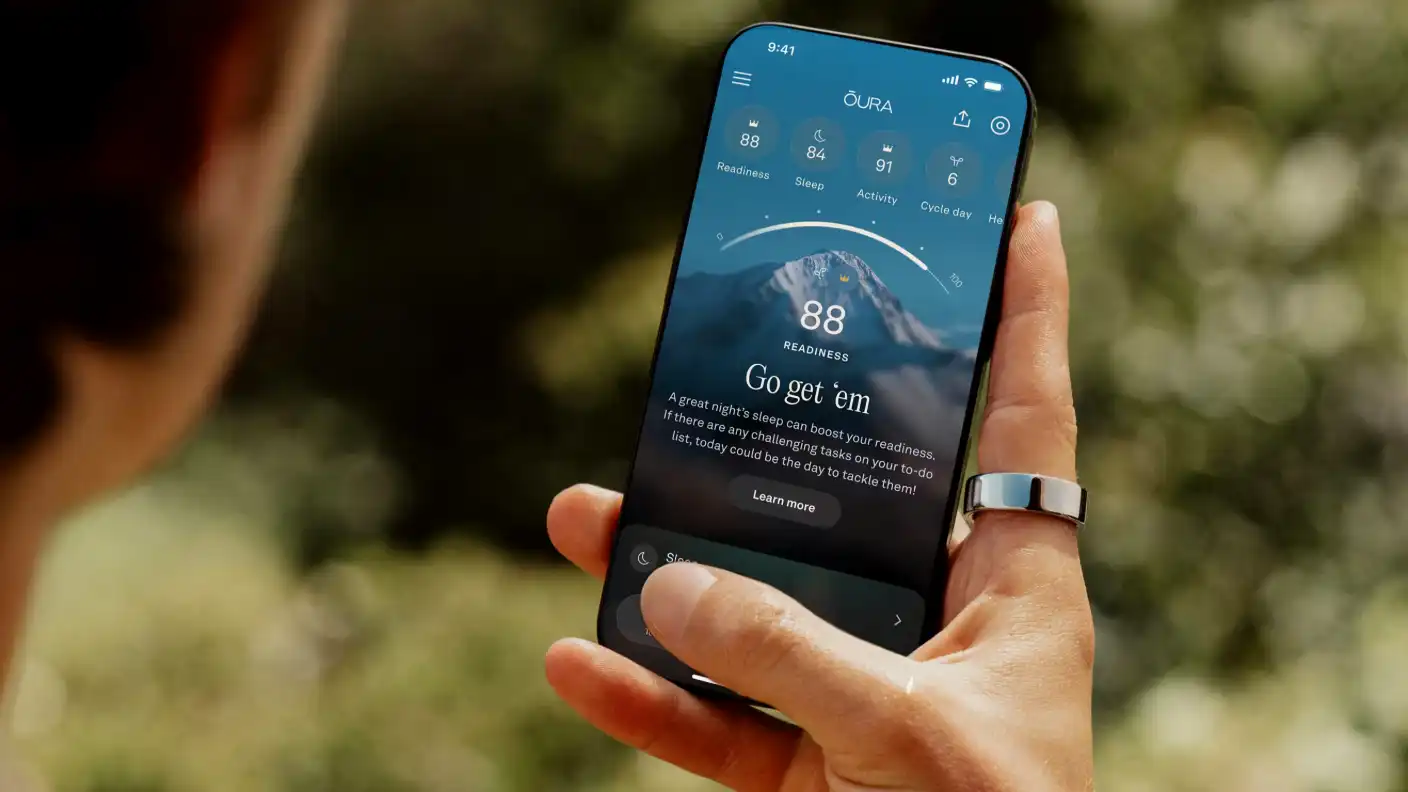
Finnish health technology pioneer Oura Health Oy has officially filed confidentially for an initial public offering in the United States, positioning the creator of the popular Oura Ring to make one of the most anticipated consumer technology debuts on Wall Street. The Oulu-headquartered wearable device maker is working with major investment banks to list its common stock on a major New York exchange, targeting a public market valuation that could exceed $5 billion to $6 billion.
The public listing arrives during a period of explosive commercial and financial expansion for the digital health company. Oura’s annual revenue doubled over the past year, surpassing $500 million in annual sales driven by record shipments of its flagship Oura Ring 4, expanding recurring software subscriptions, and high-margin corporate wellness partnerships. The company has surpassed 3 million cumulative smart-ring sales worldwide, establishing an early, dominant lead in a high-growth wearable category that is attracting intense competition from consumer electronics conglomerates like Samsung Electronics and Apple.
Under the executive leadership of Chief Executive Officer Tom Hale, Oura has successfully transformed its business from a niche sleep-tracking hardware gadget into a comprehensive preventative healthcare platform. By pairing miniature titanium biometric rings with a $5.99 monthly software subscription and executing multi-million-dollar strategic alliances with medical device giants like DexCom, Oura has built a predictable, recurring cash-flow engine. As institutional investors evaluate the company’s registration documents, Oura’s public debut will establish the definitive financial valuation benchmark for the next generation of consumer biometric technology and preventative digital health platforms.
A Landmark Public Market Debut for Health Wearables
The decision to pursue an American public listing represents the culmination of a thirteen-year journey for Oura Health. Founded in Finland in 2013 by Petteri Lahtela, Kari Kivelä, and Markku Koskela, the startup pioneered the concept of embedding research-grade photoplethysmography sensors, infrared temperature monitors, and three-dimensional accelerometers into a lightweight finger ring.
While traditional fitness tracking was dominated by bulky wristwatches and chest straps, Oura identified a unique physiological advantage: the arteries in the fingers sit closer to the surface of the skin than those in the wrist, allowing optical sensors to capture pulse signals and blood oxygen levels with significantly higher accuracy.
The upcoming initial public offering marks an important inflection point for the broader technology sector. Following a multi-year freeze in high-growth technology listings caused by rising interest rates and macroeconomic volatility, Oura’s public filing signals that profitable, fast-growing consumer hardware and software platforms can successfully tap public capital markets.
Wall Street investment banks, led by Goldman Sachs, JPMorgan Chase, and Morgan Stanley, are preparing to market the offering to global institutional asset managers, highlighting Oura’s rare combination of triple-digit revenue expansion, positive operating cash flows, and high software retention rates.
Unpacking the $5 Billion Valuation Target and SEC Registration
Oura’s confidential registration filing with the United States Securities and Exchange Commission establishes an ambitious valuation target. In its most recent private venture funding rounds, the company achieved a private valuation of $2.55 billion, supported by prominent venture funds including Lifeline Ventures, Forerunner Ventures, MSD Capital, and Singapore’s sovereign wealth entity Temasek Holdings.
The target public valuation of $5 billion to $6 billion reflects significant operational milestones achieved over recent quarters:
- Total corporate annual revenues are expanding at an annual rate exceeding 100%, climbing from roughly $250 million to more than $500 million.
- Gross profit margins are expanding from 60% to 65%, supported by the growing contribution of high-margin recurring software subscription revenues.
- Positive free cash flow generation that eliminates the need for emergency venture debt or dilutive emergency funding.
- A diversified balance sheet backed by more than $200 million in liquid cash reserves and zero long-term funded debt.
Securing a $5 billion public valuation would establish Oura as one of the most successful venture-backed hardware-and-software success stories emerging from Europe, proving that focused European hardware engineering can scale to global commercial dominance.
Surpassing $500 Million in Annual Revenue with 100% Growth
The primary metric driving institutional enthusiasm is Oura’s rapid top-line growth. While established consumer electronics manufacturers have experienced stagnant hardware upgrade cycles, Oura’s sales volume has expanded across all geographic retail regions.
The revenue expansion is supported by broad consumer adoption trends:
- Annual smart-ring device sales accelerated sharply, driven by the global commercial rollout of the Oura Ring 4 across premier consumer retail channels, including Amazon, Best Buy, and Target.
- International sales outside the United States grew to account for more than 35% of total corporate revenues, supported by rapid market penetration across the United Kingdom, Germany, Japan, and Australia.
- Direct-to-consumer digital sales through Oura’s official e-commerce portal generated high-margin transactions, capturing full retail gross margins.
- Average customer acquisition costs dropped by roughly 22% as organic word-of-mouth endorsements and celebrity brand ambassadors drove high inbound organic web traffic.
The company’s ability to double top-line revenues while maintaining disciplined marketing overhead demonstrates that consumer demand for discreet, health-tracking hardware is expanding rapidly into mainstream demographics.
The High-Margin Subscription Engine and Hardware Ecosystem
The defining corporate achievement that separates Oura from legacy hardware manufacturers is its successful deployment of a recurring software subscription model. Historically, consumer electronics companies struggled with feast-or-famine financial cycles: they made a profit when a consumer purchased a physical device, but earned zero ongoing revenue until that customer bought a replacement device three to four years later.
Oura broke this commoditization trap by introducing a mandatory software membership in late 2021. When a consumer purchases an Oura Ring, the customer receives basic hardware functionality, but unlocking advanced sleep staging, heart rate variability tracking, daily readiness scores, and predictive illness alerts requires paying a recurring monthly fee.
This hybrid business model transforms Oura from a cyclical hardware manufacturer into a predictable software-as-a-service enterprise, commanding significantly higher valuation multiples from public equity investors.
Scaling Past 3 Million Rings Sold Worldwide
The physical adoption of the Oura Ring has reached historic milestones across the global wearable market. Having taken nearly eight years to sell its first 1 million devices, Oura accelerated its manufacturing throughput to sell its subsequent 2 million devices in less than thirty months.
Production and customer metrics highlight the scale of the user base:
- Total cumulative ring sales officially surpassed 3.0 million units worldwide, establishing the largest active smart-ring user base on Earth.
- Active daily app engagement exceeds 88%, with users checking their Oura mobile dashboard an average of 3.8 times every single day.
- Customer net promoter scores remain above 72, reflecting exceptional brand loyalty and user satisfaction.
- The company has collected more than 50 billion hours of longitudinal health data, creating one of the world’s most extensive databases of continuous human biometric telemetry.
This massive, highly engaged user base provides Oura with an irreplaceable data moat that allows its machine learning algorithms to refine predictive health insights with high accuracy.
The $5.99 Monthly Membership Model Powering Software Cash Flows
The financial engine driving Oura’s valuation expansion is its $5.99 monthly (or $69.99 annual) membership tier. With more than 2.5 million active paying subscribers, the recurring software business generates hundreds of millions of dollars in predictable, high-margin annual recurring revenue.
The subscription model delivers extraordinary financial benefits:
- Recurring software revenues generate gross margins exceeding 80% to 85%, significantly higher than physical hardware manufacturing margins.
- Annual subscriber churn remains below 4.5%, proving that users view daily biometric scoring as an essential component of their personal wellness routines.
- Recurring subscription cash flows provide guaranteed working capital that funds continuous software engineering, algorithm development, and clinical research trials.
- The lifetime customer value of an Oura user expanded from roughly $300 under the standalone hardware model to more than $580 under the subscription model over a four-year customer lifecycle.
By generating predictable monthly subscription cash flows, Oura insulates its corporate income statement from seasonal hardware purchasing dips, providing the steady financial performance that Wall Street expects.
Hardware Engineering Milestones in the Oura Ring 4
The commercial launch of the Oura Ring 4 represented a major engineering breakthrough that cemented the company’s technological leadership. Fabricated from lightweight aerospace-grade titanium, the fourth-generation ring completely redesigned the interior sensor architecture.
Key engineering innovations embedded in the Oura Ring 4 include:
- Smart Sensing Technology: Utilizing fully recessed, flat sensor domes embedded smoothly into the interior titanium band, eliminating the raised epoxy bumps of previous generations to provide maximum finger comfort.
- Expanded Optical Sensor Array: Incorporating 18 distinct optical and infrared sensor channels that dynamically shift signal routing based on ring movement and skin tone variations, improving continuous blood oxygen sensing accuracy by 120%.
- Extended Battery Life: Utilizing custom-molded micro-lithium batteries that deliver up to eight days of continuous operational runtime on a single twenty-minute charge.
- Sizing and Material Variety: Expanding physical size offerings from size 4 to size 15 across six distinct premium finishes, including brushed silver, stealth titanium, and rose gold.
The refined interior finish and extended battery life established the Oura Ring 4 as the most comfortable, technically sophisticated smart ring on the market, driving strong customer upgrade cycles.
Strategic Healthcare Expansion and Enterprise Wellness
While consumer wellness remains Oura’s largest retail segment, the company’s long-term growth strategy focuses on expanding into regulated medical healthcare and commercial enterprise wellness. Under the leadership of Tom Hale, Oura has repositioned its technology from an athletic sleep tracker into a clinical-grade health monitoring platform capable of detecting early signs of chronic illness.
The company is executing multi-million-dollar partnerships with leading medical technology manufacturers, pharmaceutical research conglomerates, and institutional healthcare networks.
By validating its biometric algorithms through peer-reviewed clinical trials and securing regulatory certifications, Oura is building a healthcare ecosystem that bridges consumer wellness and professional medical diagnostics.
DexCom’s $75 Million Strategic Investment and Glucose Tracking Integration
The most high-profile commercial partnership executed by Oura is its landmark strategic alliance with continuous glucose monitoring pioneer DexCom. DexCom invested $75 million in Oura as part of a multi-phase technical and commercial collaboration designed to link metabolic health with continuous sleep and activity tracking.
The integrated platform delivers transformative health intelligence:
- Bi-Directional Data Integration: Allowing users to view real-time interstitial glucose readings from DexCom continuous glucose monitors directly inside the Oura mobile app alongside sleep and stress metrics.
- Metabolic-Sleep Insights: Utilizing machine learning algorithms to show users how late-night sugar spikes and dietary choices directly degrade deep sleep and cardiovascular recovery scores.
- Cross-Selling Distribution: Marketing the Oura Ring directly to millions of DexCom diabetic and pre-diabetic patients, while introducing DexCom Stelo non-prescription glucose sensors to Oura’s health-conscious consumer base.
- Joint Clinical Research: Funding clinical research trials with leading academic medical centers to evaluate how continuous biometric monitoring can prevent the progression of metabolic syndrome.
The partnership with DexCom proves that Oura’s hardware can integrate with leading clinical medical devices, expanding its addressable market into chronic disease management.
Oura for Business Scaling Across Corporate Health and Clinical Trials
Alongside consumer healthcare, Oura has built a rapidly growing enterprise division marketed as Oura for Business. The enterprise platform allows corporate employers, university athletic departments, military defense branches, and pharmaceutical research organizations to deploy fleets of smart rings across thousands of individuals.
The enterprise platform is capturing substantial commercial market share:
- Corporate Wellness Programs: Fortune 500 employers deploy Oura Rings to corporate workforces to track executive burnout, monitor employee sleep quality, and lower annual corporate health insurance premiums.
- Clinical Research and Pharmaceutical Trials: Medical research institutions and biotechnology developers utilize Oura Rings as continuous digital endpoints in clinical trials, tracking drug efficacy and patients’ vital signs in real time.
- Elite Athletic Organizations: Professional sports franchises across the NBA, NFL, NASCAR, and the English Premier League utilize Oura fleet dashboards to optimize athlete recovery schedules and prevent overtraining injuries.
- Military and Defense Contracts: Defense agencies utilize biometric algorithms to monitor soldier fatigue, physical resilience, and early illness onset during tactical field deployments.
Oura for Business generates high-volume, multi-year enterprise contracts, providing an institutional revenue stream that diversifies corporate sales beyond consumer retail.
Competitive Crosscurrents: Clashing with Samsung and Apple
Oura’s push toward a public listing arrives at an intensely competitive moment for the wearable technology sector. For nearly a decade, Oura operated with minimal competition from major tech giants, allowing the startup to capture early market share and define the smart-ring category.
However, the rapid growth of the smart-ring market has attracted the attention of the world’s largest consumer electronics conglomerates.
South Korean technology giant Samsung Electronics entered the market with the launch of its Galaxy Ring, while patent filings indicate that Apple is actively researching smart-ring architectures and spatial gesture controls.
Navigating competition from multi-trillion-dollar conglomerates will test Oura’s brand loyalty, distribution channels, and software pricing power.
The Entry of Samsung’s Galaxy Ring Without Monthly Subscription Fees
The most direct competitive threat facing Oura is the Samsung Galaxy Ring, which debuted globally across major consumer electronics channels. Samsung’s entry validated the smart-ring form factor on the global stage, but it introduced intense commercial pressure.
Samsung’s competitive strategy targets several of Oura’s potential vulnerabilities:
- Zero Subscription Fees: Samsung bundled the Galaxy Ring into its free Samsung Health app ecosystem, allowing consumers to purchase the $399 physical ring without paying a mandatory monthly subscription fee.
- Massive Retail Distribution: Samsung leverages its global retail footprint spanning hundreds of thousands of carrier stores, electronics retailers, and authorized distributors worldwide.
- Seamless Android Integration: The Galaxy Ring integrates natively with Samsung Galaxy smartphones, smartwatches, and artificial intelligence features, offering one-click pairing and automated health summaries.
- Multi-Device Energy Balancing: When a user wears both a Galaxy Watch and a Galaxy Ring simultaneously, the Samsung Health app coordinates sensor firing to extend the battery life of both devices by up to 30%.
Oura has responded by highlighting its superior clinical accuracy, platform neutrality across both iOS and Android operating systems, and deeper longitudinal health algorithms developed over a decade of continuous research.
Defending the Smart Ring Category Against Smartwatches and Big Tech
Beyond competing smart rings, Oura must defend its form factor against the dominant wrist-worn smartwatch market. Smartwatches like the Apple Watch and Garmin fitness trackers command hundreds of millions of active users, offering full digital screens, cellular voice calls, mobile payments, and GPS navigation.
Oura’s competitive defense rests on form-factor specialization and battery endurance:
- Screen-Free Mindfulness: Oura positions its ring as a screen-free wellness tracker that eliminates intrusive notifications, allowing users to disconnect from digital distractions while tracking biometric data passively.
- Superior Sleep Ergonomics: A lightweight 4-gram titanium ring is significantly more comfortable to wear to sleep than a heavy, illuminated smartwatch with a rigid strap.
- Multi-Day Battery Reliability: Oura’s eight-day battery life eliminates the daily charging routine required by traditional smartwatches, ensuring continuous, uninterrupted biometric tracking.
- Intellectual Property Moats: Oura holds hundreds of granted patents covering finger-based optical sensing, ring charging docks, and biometric algorithms, initiating patent infringement litigation against emerging low-cost competitors to defend its designs.
By focusing exclusively on health and recovery, Oura maintains a distinct, premium identity that complements rather than competes directly with consumer smartwatches.
Strategic Implications for the Digital Health and Consumer Tech Market
Oura’s upcoming public listing carries profound implications for the broader digital health, consumer technology, and venture capital ecosystems. As public markets evaluate Oura’s financial prospectus, the company’s valuation multiple will establish the benchmark for how investors value hybrid hardware-and-software health platforms.
The successful transition of a hardware startup into a multi-billion-dollar recurring software enterprise provides a proven blueprint for the future of connected consumer electronics.
The public capital raised through the initial public offering will provide Oura with the financial war chest needed to expand global retail marketing, fund clinical research, and execute strategic technology acquisitions.
Setting the Valuation Benchmark for Wearable Health Technology
In public equity markets, pure-play hardware manufacturers traditionally trade at modest valuation multiples between 1.0 and 2.5 times annual revenue, reflecting cyclical manufacturing risks and component cost inflation. In contrast, recurring software-as-a-service companies command premium valuation multiples between 6.0 and 12.0 times annual recurring revenue.
Financial analysts project that Oura will command an attractive hybrid valuation multiple:
- Blended Multiple Valuation: Combining a 3.0-to-4.0-times multiple on physical hardware sales with an 8.0-to-10.0-times multiple on high-margin recurring subscription revenues.
- Public Investor Comparables: Establishing financial benchmarks against wearable health leaders like Garmin and medical device innovators like DexCom and Abbott Laboratories.
- Unlocking Mergers and Acquisitions: Using liquid public stock to acquire specialized biotechnology startups, sleep diagnostic platforms, and advanced sensor developers.
- Institutional Research Coverage: Attracting formal research coverage from premier Wall Street equity analysts, expanding market visibility among global institutional investors.
A successful, high-valuation public debut will reignite institutional venture investment across the digital health and consumer wearable sectors, proving that hardware-enabled software platforms can generate exceptional returns.
The Long-Term Horizon for Predictive Biometrics and Preventative Healthcare
Looking toward the end of the decade, the digital health industry is transitioning from passive historical tracking to real-time predictive healthcare. The future of wearable technology is not merely telling a user how many hours they slept last night; it is predicting health events before physical symptoms emerge.
Key technological horizons that will define Oura’s long-term roadmap include:
- Early Illness Detection: Utilizing continuous temperature variations and respiratory telemetry to alert users of viral infections, including influenza and COVID-19, up to 48 hours before symptoms appear.
- Cardiovascular Health Mapping: Deploying advanced optical sensors to measure arterial stiffness, pulse wave velocity, and vascular age, providing early warning indicators for hypertension and heart disease.
- Women’s Health and Fertility Tracking: Leveraging baseline body temperature shifts to deliver accurate ovulation forecasting, pregnancy tracking, and perimenopause symptom mapping.
- Generative AI Health Coaches: Integrating conversational artificial intelligence assistants that analyze multi-year biometric trends to deliver individualized, daily sleep and nutrition recommendations.
By transforming personal biometrics into actionable preventative healthcare, Oura is positioning itself at the forefront of a global medical revolution that prioritizes wellness and early detection over reactive treatment.
Oura Health’s decision to file confidentially for a United States initial public offering marks a defining milestone for the global wearable technology industry. By turning a discreet titanium ring into a $500 million revenue engine that doubles annually and commands over 3 million users worldwide, Oura has proved that the future of personal technology lies in seamless, continuous biometric intelligence. Supported by its high-margin $5.99 monthly subscription model, landmark healthcare partnerships with DexCom, and the engineering excellence of the Oura Ring 4, the Finnish pioneer has built an enduring competitive moat. As Oura prepares to step onto Wall Street with a target valuation exceeding $5 billion, its public debut confirms that the smart ring has evolved from an experimental gadget into an indispensable, multi-billion-dollar pillar of modern preventative healthcare.