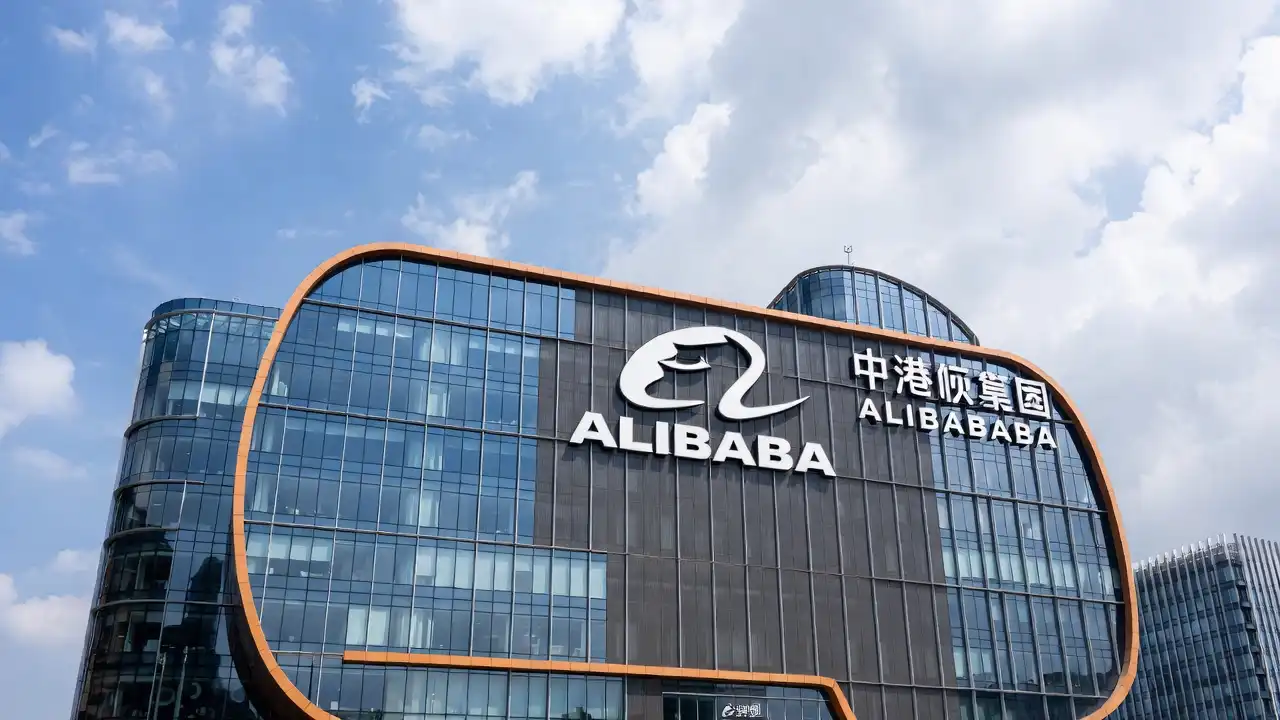
The legal and technological cold war between the United States and China has entered a high-stakes new phase. In a bold and highly coordinated move, Chinese e-commerce and technology giant Alibaba Group Holding Ltd. has filed a major federal lawsuit against the United States Department of Defense. The legal action, officially submitted on Tuesday, June 23, 2026, challenges the Pentagon’s recent decision to designate the company as a “Chinese military company” under the controversial Section 1260H blacklist.
This legal confrontation represents a watershed moment in the relationship between Silicon Valley, Wall Street, and Beijing’s tech sector. Alibaba, which has long been viewed as “China’s Amazon” and operates as a major publicly traded entity on the New York Stock Exchange, is fiercely contesting the US government’s claim that it supports Beijing’s defense establishment.
The company argues that the military label is factually incorrect, has caused severe reputational harm, and threatens to disrupt its massive global cloud and enterprise operations.
As the Pentagon and Alibaba prepare for a prolonged courtroom battle, the lawsuit highlights the deep systemic tensions between the world’s two largest economies. While Washington remains determined to enforce strict “de-risking” measures to protect national security, Chinese technology giants are increasingly willing to use the United States legal system to challenge federal blacklists, transforming a geopolitical trade war into a high-stakes legal drama.
Challenging the Military-Civil Fusion Label
To understand the core of the legal dispute, one must examine the specific mechanics of the Section 1260H blacklist and the reasons why the Pentagon chose to target one of China’s most prominent consumer brands.
Challenging the ‘Arbitrary and Capricious’ Designation
In its formal court filing, Alibaba argued that the Department of Defense’s decision to include the company on the 1260H roster was “arbitrary and capricious.” The company’s legal team asserts that the Pentagon lacks any substantial, verifiable evidence to link the consumer-focused e-commerce giant to the People’s Liberation Army.
According to the lawsuit, the designation violates the Administrative Procedure Act and represents an abuse of executive power that could set a dangerous precedent for other international commercial enterprises.
Alibaba emphasized that it operates as a standard, market-driven commercial business. The company provides online shopping platforms, cloud storage, payment services, and localized logistics networks to hundreds of millions of ordinary consumers and small businesses worldwide.
By labeling a highly visible consumer-facing company as a military enterprise, the US government has overstretched its national security mandate, creating a climate of fear and uncertainty for international investors and corporate partners.
The Procurement Bans and Supply Chain Ramifications
The consequences of being placed on the Section 1260H list are far-reaching and financially painful, even if the designation does not immediately ban regular consumer trade in the United States.
Under the specific provisions of the congressional mandate, the Department of Defense is legally prohibited from signing any direct procurement contracts with blacklisted firms. This procurement ban is scheduled to take effect at the end of June 2026.
More importantly, the supply chain restrictions will escalate significantly in the coming year. Starting in July 2027, the Pentagon will be barred from purchasing any goods, services, or software from suppliers that use components or software manufactured by blacklisted entities.
For a company like Alibaba, which operates a massive global cloud computing network and provides enterprise software to multinational corporations, this secondary ban is a major threat.
It effectively forces US defense contractors and their subcontractors to purge Alibaba Cloud and logistics systems from their software stacks to protect their federal contracts. This requirement threatens to cut Alibaba out of a massive share of the international enterprise market.
The Core Dispute: Defining ‘Military-Civil Fusion’
The fundamental disagreement between Alibaba and the US government centers on the concept of “military-civil fusion.” This is a national security strategy implemented by Beijing that seeks to systematically harness the technological innovations of private commercial firms to modernize the Chinese military.
The Joint Venture in Satellite Navigation
While Alibaba maintains that its operations are entirely civilian, US national security analysts point to specific corporate relationships and joint ventures that they argue bridge the gap between commercial tech and military applications.
A primary clue to the Pentagon’s decision involves a specialized joint venture named Qianxun Spatial Intelligence. Established in 2015 as a joint partnership between Alibaba Group and the state-owned defense conglomerate China North Industries Group, also known as Norinco, Qianxun Spatial Intelligence is designed to provide high-precision satellite positioning services using China’s Beidou satellite navigation network.
High-precision satellite positioning is a classic dual-use technology. While it is widely used for civilian applications, such as autonomous driving, agricultural mapping, and smartphone navigation, it is also highly critical for military operations, including missile guidance, drone navigation, and real-time troop tracking.
Because Norinco is a primary weapons manufacturer for the People’s Liberation Army, and Alibaba holds a significant ownership stake in the joint venture, the Pentagon has argued that Alibaba acts as an indirect contributor to China’s defense industrial base.
Alibaba’s Defense: Operating as a Pure Commercial Entity
In its official statements, Alibaba has rejected these claims, asserting that the company is not a Chinese military-industrial enterprise and does not participate in any military-civil fusion strategy.
The company’s legal representatives argue that holding an ownership stake in a joint venture that provides high-precision positioning services does not make the parent company a military contractor.
The company’s defense emphasizes that Qianxun Spatial Intelligence operates as an independent commercial entity, selling its services to civilian automotive, agricultural, and consumer electronics companies.
By applying a guilt-by-association standard, the US government is ignoring the standard corporate structures of multinational conglomerates, punishing Alibaba for participating in joint projects that are common across the global technology industry.
The Expanding Section 1260H List
The legal showdown with Alibaba is part of a much larger and more aggressive campaign by the United States government to restrict Chinese technology firms from operating within its economic sphere.
A Broad Crackdown on Non-State Champions
On June 8, 2026, the Department of Defense released a long-awaited update to its Section 1260H roster, expanding the list to a total of 188 companies, which represents 54 new additions compared to previous versions.
The updated list is notable because it increasingly targets highly prominent, non-state-owned Chinese commercial enterprises that are not traditionally considered to be part of the defense or security sector.
In addition to Alibaba, the updated list includes internet search provider Baidu Inc., electric vehicle manufacturers BYD Co. and Nio Inc., robotic maker Unitree, and consumer router manufacturer TP-Link Technologies.
By blacklisting these commercial champions, the US government is signaling that it views China’s entire high-tech commercial sector as an extension of Beijing’s strategic state apparatus.
This broad approach reflects a growing wariness in Washington that any technological advancement made by a Chinese firm—whether in artificial intelligence, robotics, electric vehicles, or telecommunications—will ultimately be leveraged by the Chinese military.
The Brief February Withdrawal and Trump-Xi Summit Context
The political timing of the list’s release has added to the diplomatic friction between Washington and Beijing. The Pentagon had originally prepared a version of this expanded blacklist in February.
However, officials quickly withdrew that version without explanation, just days before a delicate, high-profile summit in Beijing between US President Donald Trump and Chinese leader Xi Jinping.
At the time, both leaders were attempting to maintain a fragile trade war truce and prevent an open economic conflict.
The decision to officially re-release the expanded blacklist in June, with the inclusion of major chipmakers like ChangXin Memory Technologies (CXMT) and Yangtze Memory Technologies Corp (YMTC), signals that the Beijing summit failed to ease technology competition.
With the trade truce now effectively over, the US government is moving forward with its security-first policy, prioritizing the containment of Chinese technological influence over diplomatic goodwill.
The Escalating Geopolitical Retaliation
The legal battle in Washington is happening alongside a parallel wave of economic retaliation in Beijing, as both nations engage in a tit-for-tat trade confrontation.
China’s Counter-Sanctions on US Defense Firms
Just one day before Alibaba filed its lawsuit, China’s Ministry of Commerce announced aggressive counter-sanctions against 10 American defense-related companies.
The affected US firms include several prominent military contractors, aerospace developers, and defense technology providers.
Under the new Chinese sanctions, domestic companies are legally blocked from exporting “dual-use” items to the 10 sanctioned American firms.
Dual-use items are goods, raw materials, or technologies that can have both civilian and military applications, such as rare earth elements, specialized chemical compounds, high-performance electronics, and advanced carbon fiber materials.
By cutting off these critical inputs, Beijing is attempting to disrupt the supply chains of American defense manufacturers, proving that it can also weaponize its industrial capabilities to protect its interests.
The Threat to Global Supply Chain Alliances
The Ministry of Commerce’s announcement also includes a highly aggressive provision that extends the export bans to third-party countries.
Under the new rules, any company or individual in a third country is strictly barred from transferring dual-use items sourced from China to the sanctioned American defense firms.
This provision represents a significant threat to global supply chains. It forces multinational suppliers in countries like Germany, Japan, and South Korea to carefully audit their procurement networks, ensuring that no Chinese-sourced materials are integrated into components bound for US military contractors.
While the Chinese government has established a licensing process allowing domestic firms to apply for export approvals for goods that are “genuinely necessary,” the new rules introduce a massive layer of regulatory friction, complicating global defense logistics and threatening to drive up manufacturing costs for American military hardware.
The Path Forward for Chinese Tech Giants
Alibaba’s decision to sue the US Department of Defense represents a major shift in how Chinese technology companies respond to US regulatory blacklists.
In the past, blacklisted firms often relied on diplomatic channels or public relations campaigns to protest their inclusion, with very few choosing to mount a direct legal challenge against the US government.
The success of previous legal challenges has provided a successful blueprint for Alibaba.
Several years ago, Chinese smartphone manufacturer Xiaomi and lidar sensor maker Hesai Technology successfully sued the Department of Defense over similar military designations, forcing the Pentagon to retract its listings after federal courts ruled that the government had failed to provide sufficient evidence to support its claims.
By taking the US government to court, Alibaba is hoping to replicate this success, utilizing the independence of the US judicial system to overturn a politically motivated blacklist.
Regardless of the legal outcome, the showdown with Alibaba makes one thing clear: the technological and economic separation between the United States and China is accelerating.
As Washington continues to expand its Section 1260H list and Beijing retaliates with its own export curbs, multinational corporations are being forced to navigate an increasingly fragmented and hostile regulatory landscape.
For companies like Alibaba, surviving in this new era requires not just technical innovation on the factory floor, but aggressive legal defense in the courtroom, as they work to protect their global brands from the shifting currents of superpower geopolitics.