Key Points:
- ASML Chief Executive Officer Christophe Fouquet stated that the company must actively work to prevent supply constraints as it supports massive new chip ventures.
- Elon Musk’s ambitious Terafab semiconductor project in Texas is expected to cost up to $119 billion, putting heavy pressure on global lithography equipment capacity.
- The Dutch chip giant holds a complete global monopoly on the extreme ultraviolet (EUV) lithography systems required to build sub-5-nanometer advanced processors.
- Despite rising geopolitical tensions and internal employee debates, ASML continues to see enormous demand for artificial intelligence infrastructure.
The global semiconductor supply chain is bracing for massive new pressures as the world’s sole provider of advanced lithography equipment warns of potential supply bottlenecks. Christophe Fouquet, the Chief Executive Officer of ASML, recently expressed caution regarding the company’s ability to keep pace with explosive demand from emerging mega-projects. Speaking to global business media, Fouquet emphasized that while new semiconductor ventures represent immense commercial opportunities, the industry faces severe physical limitations if manufacturing capacities are stretched too thin. His comments directly highlight the mounting pressure surrounding Elon Musk’s highly anticipated Terafab semiconductor initiative in Texas.
The Terafab project represents an ambitious collaborative effort between Tesla, SpaceX, and xAI, with major manufacturing backing from Intel. Originally estimated to cost billions of dollars, recent official projections indicate that the true scope of the Texas-based fabrication plant could swell to an initial $55 billion, and potentially top $119 billion if developers build out the facility completely. Investment banking firm Morgan Stanley estimated the overall investment could easily range between $35 billion and $45 billion. The planned mega-factory aims to bring every stage of chip production under one roof to produce cutting-edge silicon wafers that will support Musk’s massive ecosystem of automated systems.
Once operational, the massive Texas facility will focus on manufacturing two distinct classes of advanced semiconductors. The first consists of high-efficiency inference chips designed to power Tesla’s electric vehicles and its autonomous Optimus humanoid robots. The second is a specialized, radiation-hardened chip design intended to power SpaceX’s planned fleet of up to one million orbital data centers. Because these cutting-edge applications require incredibly complex logic architectures, the manufacturing process depends entirely on sub-5nanometer silicon wafers that can only be patterned using specialized lithography machinery.
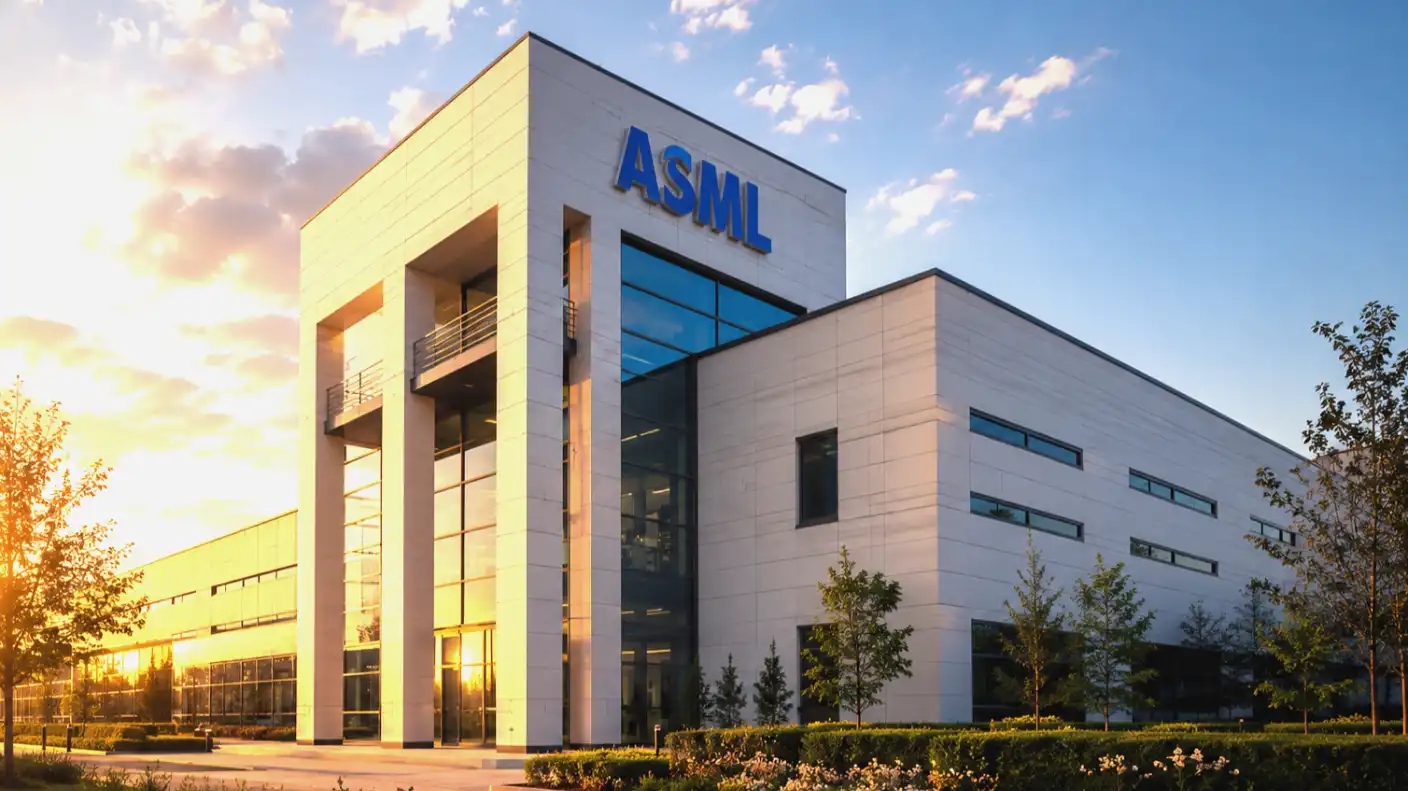
This is where ASML’s strategic position becomes absolutely critical. Based in Veldhoven, Netherlands, the company holds an exclusive global monopoly on extreme ultraviolet (EUV) lithography systems. These massive machines are the only tools on Earth capable of etching nanoscale transistor features onto advanced computer chips. Because every major global foundry—including TSMC, Samsung, SK hynix, and Intel—relies on the exact same Dutch supplier, any newly proposed mega-factory like Terafab must compete for a very limited pool of annual machine deliveries.
Fouquet has made it clear that the explosive rise of generative artificial intelligence will keep the semiconductor market supply-limited for the foreseeable future. He noted that ASML is currently working diligently to expand its manufacturing capacity, but high-end lithography systems simply cannot be mass-produced overnight. The addition of a massive new buyer like Musk into the ecosystem threatens to worsen existing shortages, potentially forcing established chipmakers to wait longer for critical equipment upgrades. This dynamic has raised concerns among industry analysts that a hardware bottleneck could slow down the broader deployment of next-generation AI infrastructure.
Despite the potential bottlenecks, Musk has been actively courting the Dutch equipment manufacturer to secure his spot in the order backlog. The tech billionaire recently addressed ASML employees virtually during a closed-door fireside chat at the company’s annual technology conference. During his presentation, Musk elaborated on his long-term vision for combining space exploration, robotics, and domestic silicon manufacturing. He praised the European giant on social media, calling ASML “arguably the greatest company in Europe” and arguing that the critical manufacturer must be deeply treasured and supported by the international community.
Musk’s high-profile involvement did not proceed without internal controversy. Several ASML employees expressed deep frustration over the decision to give the polarizing tech executive a corporate platform, citing his outspoken political stances and controversial social media activity. Some workers went as far as threatening to boycott the internal presentation on the company’s private messaging channels. Despite the vocal pushback, corporate leadership proceeded with the event, emphasizing that Musk’s team is rapidly becoming an influential player in the global semiconductor ecosystem and that cooperation remains highly relevant to ASML’s long-term business interests.
Looking forward, Fouquet noted that the demand for AI infrastructure remains “enormous” and even discussed the potential for data centers in space, a vision that aligns directly with SpaceX’s long-term orbital compute aspirations. If the Veldhoven-based manufacturer can successfully expand its production lines without falling victim to supply chain bottlenecks, projects like Terafab could successfully usher in a new era of decentralized, high-performance computing. For now, both investors and tech manufacturers must monitor how carefully the Dutch giant manages its manufacturing constraints. The ongoing silicon rush proves that in the modern economy, controlling the tools of production is just as valuable as designing the software itself.