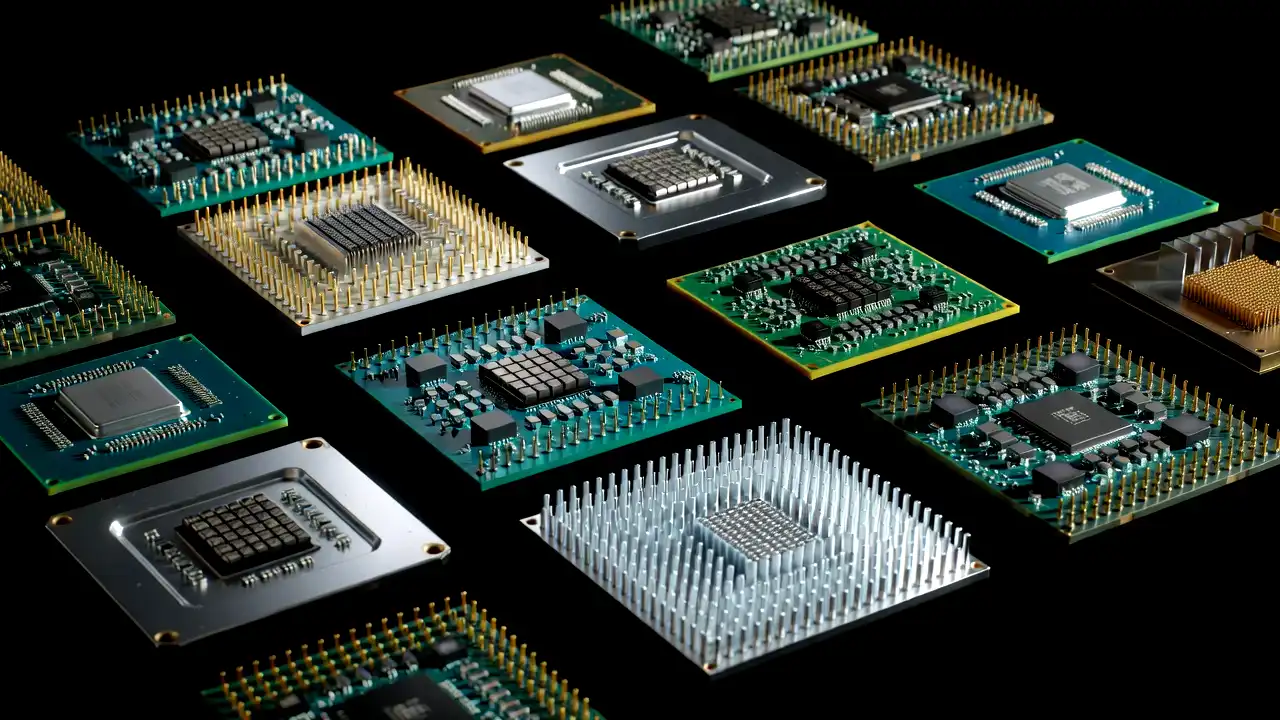
Geopolitical tech competition has entered a highly volatile phase, as natural resource security becomes the primary weapon in the battle for semiconductor supremacy. In an unexpected and highly consequential move, China’s trade authorities imposed an immediate, temporary ban on helium exports. The administrative decree, which took effect without any transition arrangements, represents a major defensive escalation designed to protect the country’s domestic technology and medical sectors from an impending global supply catastrophe.
The catalyst for this sudden export ban is the rapid reignition of military hostilities in the Middle East. The active war involving regional powers and global coalitions has disrupted critical shipping traffic through the Strait of Hormuz, severely squeezing global liquefied natural gas operations in Qatar—the world’s most dominant exporter of commercial helium. With global supply networks fracturing under the weight of maritime blockades and military actions, Beijing chose to freeze its own outbound shipments to prevent domestic chipmakers and advanced medical facilities from facing critical shortages.
This export ban has introduced a severe supply shock to the global semiconductor industry at a time when the multi-billion-dollar artificial intelligence buildout is at its absolute peak. Helium is an invisible, irreplaceable lifeblood of modern cleanrooms, essential for manufacturing the high-performance processors and high-bandwidth memory storage devices that power artificial intelligence models. As global supplies dry up and major export channels close, the tech sector is facing a severe reckoning over who controls the critical raw materials that define great-power competition.
Unpacking the Invisible Chokepoint: Why Helium Is Irreplaceable in Modern Fabs
To understand why this export ban has sent shockwaves through the global technology sector, one must understand the unique physical and chemical properties of helium. Helium is a noble, inert gas that cannot be synthetically manufactured on an industrial scale. It is the second-lightest and second-most abundant element in the universe, yet it is incredibly scarce on Earth because it is light enough to escape gravity and drift directly into space. Consequently, the world relies entirely on extracting the gas from natural gas fields with unusually high helium concentrations, where it has accumulated over millions of years through the radioactive decay of heavy elements.
In the semiconductor industry, helium is not a commodity that commands daily headlines, but its absence can paralyze production. Modern cleanrooms utilize the gas at almost every stage of advanced chip fabrication. Because helium is chemically inert, it does not react with other elements even under extreme thermal and electrical conditions, making it the perfect medium for heat management, wafer cooling, plasma etching, chemical vapor deposition, and atomic layer deposition.
A standard semiconductor fabrication plant, or “fab,” cannot operate without a steady, uninterrupted supply of high-purity helium. If a fab loses access to the gas, its automated manufacturing tools must be shut down immediately to prevent catastrophic thermal damage, halting production lines that produce millions of dollars worth of advanced silicon each day.
Extreme Heat Management of High-Numerical-Aperture EUV Systems
The technical necessity of helium is particularly critical in the manufacturing of next-generation, high-performance artificial intelligence chips. As chip designers push the boundaries of physics to pack billions of transistors onto tiny silicon dies, advanced lithography machines must operate with extreme precision.
The cutting-edge High-Numerical-Aperture Extreme Ultraviolet (High-NA EUV) lithography systems developed to print advanced circuits generate extraordinary thermal loads as they project high-power light beams onto silicon wafers.
To prevent these microscopic patterns from distorting due to thermal expansion, the wafers must be cooled with absolute speed and consistency. Liquid helium is the only substance capable of delivering the extreme cryogenic cooling required to keep these advanced lithography mirrors and silicon substrates stable during the exposure process. Without liquid helium’s unique thermodynamic properties, printing the sub-2-nanometer features that define modern AI processors is physically impossible.
The Lack of Viable Chemical Substitutes in Chip Fabrication
The semiconductor industry has no meaningful chemical substitute for helium. While other noble gases, such as argon, neon, and krypton, are also used in various stages of cleanroom operations, they cannot replicate helium’s unique combination of high thermal conductivity, low molecular weight, and complete chemical inertness.
Nitrogen and carbon dioxide are sometimes used for low-grade cooling in less advanced industrial processes, but they lack the extreme cooling efficiency required to protect delicate advanced packaging cleanrooms and high-power EUV systems.
This lack of viable alternatives makes the helium market highly vulnerable to supply disruptions. If the supply of helium declines, fabs have no choice but to scale back production, create rationing systems, or shut down entire assembly lines, making the noble gas one of the most powerful chokepoints in the entire global high-tech economy.
The Geopolitical Perfect Storm: The Qatar Disruption and Russia’s Exit
The sudden escalation in the Middle East has triggered a geopolitical perfect storm that has devastated the global helium supply chain. Because helium is a byproduct of liquefied natural gas production, the global supply of the gas is deeply tied to the health of the international LNG market.
The largest single source of global helium is Qatar, which accounts for roughly one-third of the world’s commercial supply and has historically supplied more than half of China’s helium imports.
The reignited military conflict in the Middle East has severely disrupted Qatar’s shipping routes through the Strait of Hormuz, forcing the country to temporarily shut down several major LNG-derived helium extraction facilities.
At the same time, Russia, another major global helium producer, has severely restricted its own exports. Russia implemented strict temporary export controls on helium, cutting its Asian supply quotas to just 40% of previous levels.
This double blow has taken a massive percentage of the global helium supply offline, leaving international buyers in a state of absolute panic as they scramble to secure dwindling inventories.
Under the current geopolitical dynamics, global helium supplies face a triple threat: Qatar, which produces a third of the world’s supply, has seen its shipments halted by the Strait of Hormuz blockade; Russia has cut Asian supply quotas to forty percent through export controls; and China has now completely frozen its own outbound shipments.
The Strait of Hormuz Blockade and the Qatar LNG Collapse
The blockade of the Strait of Hormuz represents a devastating blow to the international high-tech supply chain. As military strikes target maritime vessels, international shipping companies have halted transits through the narrow waterway, effectively blocking the main export route for Qatari LNG and helium shipments.
Because helium must be transported in highly specialized, vacuum-insulated cryogenic containers to keep the gas in its liquid state, it cannot be easily stored for long periods or shipped via standard, uninsulated cargo containers.
When Qatari export terminals are forced to halt operations due to maritime security risks, the global market immediately experiences a severe supply squeeze, as alternative producers in the United States and Algeria do not possess the excess capacity to cover the deficit.
Russia’s Preemptive Export Restrictions
The global helium supply crunch was already highly strained before the Middle East conflict reignited, largely due to Russia’s preemptive trade policies. Russia implemented temporary export controls on helium to protect its domestic aerospace, defense, and high-tech sectors from international sanctions.
These restrictions reduced Asian supply quotas to just 40% of their previous levels, hitting semiconductor manufacturers in South Korea, Taiwan, and Japan particularly hard.
By taking this action, Russia significantly reduced the global market’s operational buffer. When the subsequent Middle East crisis took Qatar’s exports offline, the global supply chain collapsed into a state of absolute deficit, forcing countries to implement aggressive resource-preservation strategies to protect their own domestic industries.
Analyzing China’s Defensive Calculation: Protecting the Sovereign AI Industry
On the surface, China’s decision to ban helium exports appears highly paradoxical. China is actually highly dependent on imported helium to fuel its own industrial base, with international shipments accounting for roughly 80% to 85% of its total domestic consumption.
However, despite this overall import dependency, Chinese chemical and trading companies have historically re-exported a portion of their imported helium, selling surplus volumes into neighboring Asian markets like Taiwan, South Korea, and Southeast Asia to generate substantial profits when regional prices spike.
By issuing this new export ban, the Chinese government has effectively closed this re-export channel immediately. This is a clear defensive move aimed at preventing domestic trading firms from exporting critical reserves for profit, ensuring that China preserves every cubic meter of the gas to support its own semiconductor cleanrooms and advanced domestic memory manufacturers.
The Impact on Global Foundries and TSMC’s Buffer
The immediate concern for global technology companies is how long major semiconductor foundries can continue to operate under this double-squeeze.
While major global chipmakers maintain strategic buffers of critical raw materials, these inventories are typically measured in weeks rather than months.
If the Middle East conflict continues to block Qatari shipments and Russia maintains its export restrictions, global foundries will soon exhaust their reserves.
Industry veterans had already issued a stark warning, noting that the global semiconductor supply chain is highly vulnerable to helium disruptions and that a prolonged supply crisis could easily choke advanced AI chip production worldwide.
As China’s export ban cuts off regional re-export channels, the timeline for potential production slowdowns at major East Asian fabs has accelerated significantly, raising the risk of widespread chip shortages by the end of the year.
Shifting Supply Chains: The Rush for North American Helium Sovereignty
The severe supply shocks have highlighted the extreme vulnerability of relying on geographically concentrated supply chains for critical industrial inputs. In response, technology companies, aerospace firms, and governments are launching an aggressive push to build domestic helium sovereignty.
In North America, exploration companies are rushing to locate and develop natural gas fields with unusually high helium concentrations, targeting regional deposits in Texas, Minnesota, Arizona, and western Canada.
Firms are raising substantial capital to build localized helium purification and liquefaction facilities, aiming to supply North American defense and semiconductor operations directly.
However, building out these advanced extraction systems is a capital-intensive, multi-year process. While these domestic initiatives will eventually improve North American supply chain resilience, they cannot scale up fast enough to solve the immediate supply deficit facing the technology sector, leaving global chipmakers highly exposed to the immediate consequences of China’s export ban.
Strategic Outlook: The Geopolitical Weaponization of the Periodic Table
The helium export ban is the latest example of a broader, highly significant trend in international relations: the strategic weaponization of the periodic table. As the technological rivalry between major global powers intensifies, governments are increasingly utilizing export controls on critical minerals, rare earth elements, and industrial gases to protect their domestic industries and project geopolitical leverage.
In recent years, trade authorities have systematically expanded their export control toolkit, implementing temporary curbs on strategic materials like gallium, germanium, graphite, fuel, and other critical chemical components.
By adding helium to this restricted list, China is sending a clear message to the international community: in a world defined by geopolitical fragmentation and supply chain disruptions, resource security will always take precedence over international trade commitments.
This shift represents a permanent departure from the globalized, just-in-time supply chains of the past decade, forcing great powers to prioritize domestic self-sufficiency and build massive, secure stockpiles of the foundational technologies and raw materials that will define the future of global commerce.