

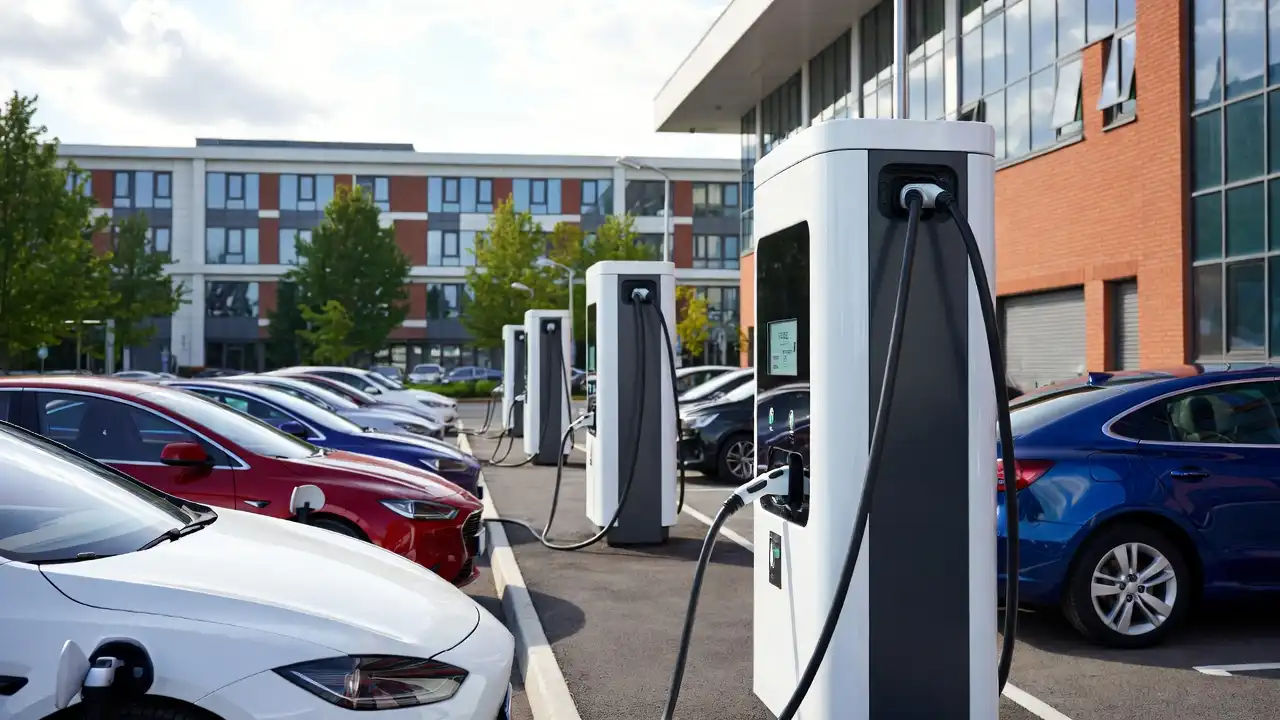
The decision to switch from a traditional gasoline-powered car to an electric vehicle has historically been framed around environmental benefits, zero tailpipe emissions, and corporate sustainability goals. However, as the automotive market matures, the primary driver for most consumers has shifted to a much more practical consideration: their household budgets. A recent comprehensive analysis of fuel prices and household power rates reveals that the financial benefits of driving an electric vehicle are highly dependent on geography. Across the United States, the gap between what drivers pay at the pump and what they pay on their monthly utility bills varies dramatically, creating massive regional pockets of savings.
On a national level, swapping a standard gas-powered car for a typical electric vehicle charged at home saves a driver nearly $1,500 a year in fuel costs. But in a huge swath of the American West, those savings skyrocket. In nine specific US states—including Arizona, Utah, and Washington—consumers pay more than the national average for gasoline while paying far less than the national average for residential electricity. This unique combination of expensive fuel and cheap power turns the western region into the most financially lucrative corridor in the country for electric vehicle owners.
The timing of these findings is highly significant for the automotive industry. Federal support measures for clean transportation have faced substantial rollbacks, making organic market forces the primary engine for consumer adoption. When federal tax incentives are reduced or eliminated, the raw difference between the cost of a gallon of gas and the cost of a kilowatt-hour of electricity becomes the most powerful marketing tool for electric vehicles. In the Western United States, those market forces are doing the heavy lifting on their own.
The Economic Mechanics of Fuel and Electricity Spreads
To understand why certain states offer such massive financial advantages for electric vehicle owners, we must look at the underlying commodity markets. The cost of operating a gasoline-powered vehicle is tied directly to highly volatile global oil markets and regional refining capacities. In the Western United States, geographically isolated fuel networks, strict local environmental standards, and high state fuel taxes combine to keep retail gasoline prices consistently above the national average.
Conversely, the cost of charging an electric vehicle is determined by local utility commissions and regional power generation sources. Many Western states benefit from abundant, low-cost renewable energy, particularly large-scale hydroelectric systems, utility-scale solar farms, and geothermal projects. This clean power grid keeps residential electricity rates remarkably low.
When a driver charges an electric vehicle at home in one of these states, they are essentially bypassing the expensive fossil fuel retail network in favor of a highly subsidized, low-cost local power grid. This wide spread between expensive gasoline and cheap electricity translates directly into immediate, persistent monthly savings for household budgets.
The Leading States in Fuel Savings
The Bloomberg analysis highlights several states where the financial math is tilted heavily in favor of driving electric. While the average American driver can expect a healthy reduction in their annual operating costs, those who live in the Pacific Northwest and the Mountain West are realizing some of the largest fuel-cost reductions ever recorded.
Washington State: The Hydroelectric Haven
Washington stands out as the single most lucrative state in the country for electric vehicle fuel savings. The state routinely records some of the highest retail gasoline prices in the nation, often trailing only California and Hawaii. At the same time, Washington boasts some of the cheapest residential electricity rates in the country, thanks to its massive network of public utilities and abundant hydroelectric power generated along the Columbia River basin.
For an average driver traveling standard annual distances, swapping a traditional gasoline car for a battery-powered model in Washington saves an astonishing $2,346 a year in fuel costs alone. This massive gap has made the state a hotbed for electric vehicle adoption, proving that when the financial incentives are this clear, consumers do not need regulatory mandates or ideological persuasion to make the switch.
Oregon: Close Behind in Savings
Just across the state line, Oregon offers a nearly identical economic profile. Like its northern neighbor, Oregon suffers from high West Coast gasoline prices due to its distance from major Gulf Coast refining hubs and its reliance on imported fuel. However, its residential power grid remains highly affordable, drawing on the same regional hydroelectric resources and a growing portfolio of utility-scale wind farms.
An electric vehicle owner in Oregon can expect to save roughly $2,057 a year on fuel compared to driving a comparable gasoline-powered car. These significant, recurring savings have led to a steady increase in electric vehicle registrations across the state, particularly in metropolitan areas like Portland and Eugene, where local municipal utilities offer attractive off-peak charging rates for overnight residential users.
Nevada and the Rise of Organic Market Forces
Nevada represents another key Western market where market forces are driving rapid transition. The state does not offer the same level of aggressive state-level buyer rebates or tax incentives as some of its coastal neighbors, yet it ranks third in the nation when it comes to overall electric vehicle market share, with battery-powered cars accounting for 11% of all new vehicle purchases this year through April.
This strong performance is driven almost entirely by the raw economic advantages of charging with cheap local electricity. Nevada’s abundant solar resources and active geothermal plants provide a steady supply of low-cost power, while its proximity to California keeps its retail gasoline prices elevated. For Nevada residents, the choice to go electric is a straightforward mathematical decision that requires no government intervention to justify.
Arizona’s Low-Power Edge and Growing EV Interest
Arizona has emerged as one of the fastest-growing markets for electric vehicle interest, ranking eighth nationally in overall consumer inquiry volumes. A major factor behind this surging interest is the state’s highly competitive residential power market. Arizona’s electricity rates are far lower than those of the average American household, driven by massive investments in solar energy and nuclear power from the Palo Verde Generating Station.
When retail gasoline prices spike during the high-demand summer travel season, the financial contrast between filling a tank in Phoenix or Tempe and charging a vehicle overnight at home becomes impossible for budget-conscious families to ignore. Experts point to Arizona as a prime example of a market where long-term transition is being sustained purely by natural economic advantages rather than political alignment or state-mandated targets.
The California Paradox: High EV Adoption Despite High Costs
While the rest of the West benefits from a wide spread between expensive gas and cheap power, California presents a unique paradox. The Golden State leads the nation in overall electric vehicle adoption, with battery-powered cars capturing a dominant 16% share of all new passenger vehicle sales this year through April.
However, California does not fit the typical profile of a high-savings state. Because of the state’s complex regulatory environment, aging utility infrastructure, and wildfire mitigation liabilities, residential electricity rates in California are among the highest in the country, often rivaling its infamously expensive gasoline prices.
As a result, the net fuel savings for a California electric vehicle owner are actually lower than those in Washington or Oregon, despite California having the highest gas prices in the nation. The state’s leading adoption rate is sustained not by cheap charging, but by a combination of aggressive state-level clean car mandates, local air quality regulations, high concentrations of wealthy technology buyers, and a massive, mature public charging infrastructure network.
The New Political Landscape and Slowing National Growth
The localized savings in the American West are becoming increasingly critical for the automotive industry as federal support for the electric vehicle transition undergoes a major shift. Following recent political changes under the current administration and Republican lawmakers, many of the federal policy measures that once supported consumer demand have been systematically dismantled.
Rollback of Federal Incentives and Efficiency Mandates
The federal government has initiated efforts to weaken corporate average fuel economy standards, revoke California’s long-standing authority to set its own vehicle emission mandates, and eliminate the federal clean vehicle tax credit, which was worth up to $7,500 for qualifying buyers. Additionally, newly imposed tariffs and trade barriers have made it significantly harder for automakers to source cheap battery components and sell vehicles competitively in the domestic market.
In response to this changing regulatory environment, major global automakers have significantly scaled back their electrification plans. Companies like Ford, General Motors, and Stellantis have delayed or canceled the introduction of at least 27 planned electric models, choosing instead to focus their resources on highly profitable hybrid vehicles and traditional internal combustion engine trucks to match changing consumer demand.
BloombergNEF Lowers Long-Term Adoption Outlook
These combined policy shifts and manufacturing delays have forced leading research firms to revise their long-term forecasts. BloombergNEF recently lowered its outlook for electric vehicle adoption in the United States for the second consecutive year.
The research firm now expects electric passenger vehicles to account for just 17% of all U.S. passenger vehicle sales by 2030. This is a sharp reduction from its forecast of 27% last year, and falls drastically below the optimistic projection of 48% made in 2024.
On a global scale, BNEF now projects that annual sales of electric passenger cars will reach 35.6 million units by 2030. This figure is approximately 3.4 million units fewer than what the firm had estimated just a year ago, reflecting the far-reaching consequences of the U.S. policy shift. Under this new market paradigm, localized fuel savings are no longer just an added benefit of owning an electric vehicle; they have become the single most important factor determining whether the technology can succeed in the mass market.
The Full Picture: Sticker Prices, Depreciation, and Insurance
While the monthly savings at the plug are highly persuasive, consumer advocates emphasize that fuel is only one component of the total cost of vehicle ownership. To make an informed decision, car shoppers must evaluate the entire financial lifecycle of the vehicle.
Upfront Capital Costs and Shrinking Price Spreads
Historically, the highest barrier to electric vehicle adoption has been the premium sticker price. Battery-powered models have generally cost significantly more upfront than their gasoline-powered counterparts. While the price spread between the two technologies has been shrinking steadily due to falling lithium prices and improved manufacturing efficiencies, electric vehicles still require a larger initial capital investment.
For buyers who finance their purchase, this higher upfront cost translates into larger monthly car loan payments. In some cases, the increased monthly loan payment can temporarily offset the monthly fuel savings, particularly during the first few years of ownership before the vehicle’s operating efficiencies can fully cover the purchase premium.
The Depreciation and Maintenance Trade-off
Depreciation represents another critical area of financial contrast. Currently, electric vehicles tend to lose their resale value more quickly than traditional gasoline cars, driven by rapid advancements in battery technology that can make older models appear obsolete, alongside a highly volatile market for used batteries.
However, electric vehicles offer a massive advantage when it comes to ongoing maintenance and repair costs. Because electric drivetrains have far fewer moving parts than internal combustion engines—lacking complex components like spark plugs, timing belts, exhaust systems, and automatic transmissions—they require far less routine servicing. Electric vehicle owners completely bypass the need for routine oil changes, and their regenerative braking systems significantly extend the lifespan of brake pads and rotors, saving thousands of dollars over the lifetime of the vehicle.
Conversely, insurance premiums present a persistent challenge. Electric vehicles remain significantly more expensive to insure than comparable gasoline models. This insurance premium is driven by the high cost of repairing advanced electronic components and the extreme expense of replacing a battery pack in the event of a collision, with even minor structural damage often leading insurance adjusters to declare a vehicle a total loss.
The Transition to an Organic Market
The current landscape of the U.S. automotive market illustrates a profound transition from a government-supported industry to one driven almost entirely by raw, organic economics. While federal policy rollbacks and manufacturing delays have undoubtedly slowed the overall pace of national electric vehicle adoption, they have also forced the market to focus on genuine, self-sustaining value propositions.
In the nine states of the American West, that value proposition is exceptionally strong. The wide gap between expensive retail gasoline and cheap, renewable public power has created an environment where driving electric is simply a smarter financial decision for the average household. As consumers continue to crunch the numbers on their own, the natural market forces of the Western United States will continue to drive adoption, proving that the future of clean transportation does not depend on political mandates, but on the simple, powerful promise of saving money.






