Key Points:
- Pattern Energy’s $11 billion, 3.5-gigawatt SunZia Wind Farm in New Mexico has officially achieved full commercial operations.
- The historic project features 916 turbines across 500,000 acres and a 550-mile transmission line supplying clean electricity to California and Arizona.
- SunZia comes online as President Trump’s second administration wages a highly aggressive, multi-billion-dollar campaign to halt new wind projects.
- The federal government has paid over $2.6 billion to buy back leases and pay developers to abandon wind projects in favor of fossil fuels.
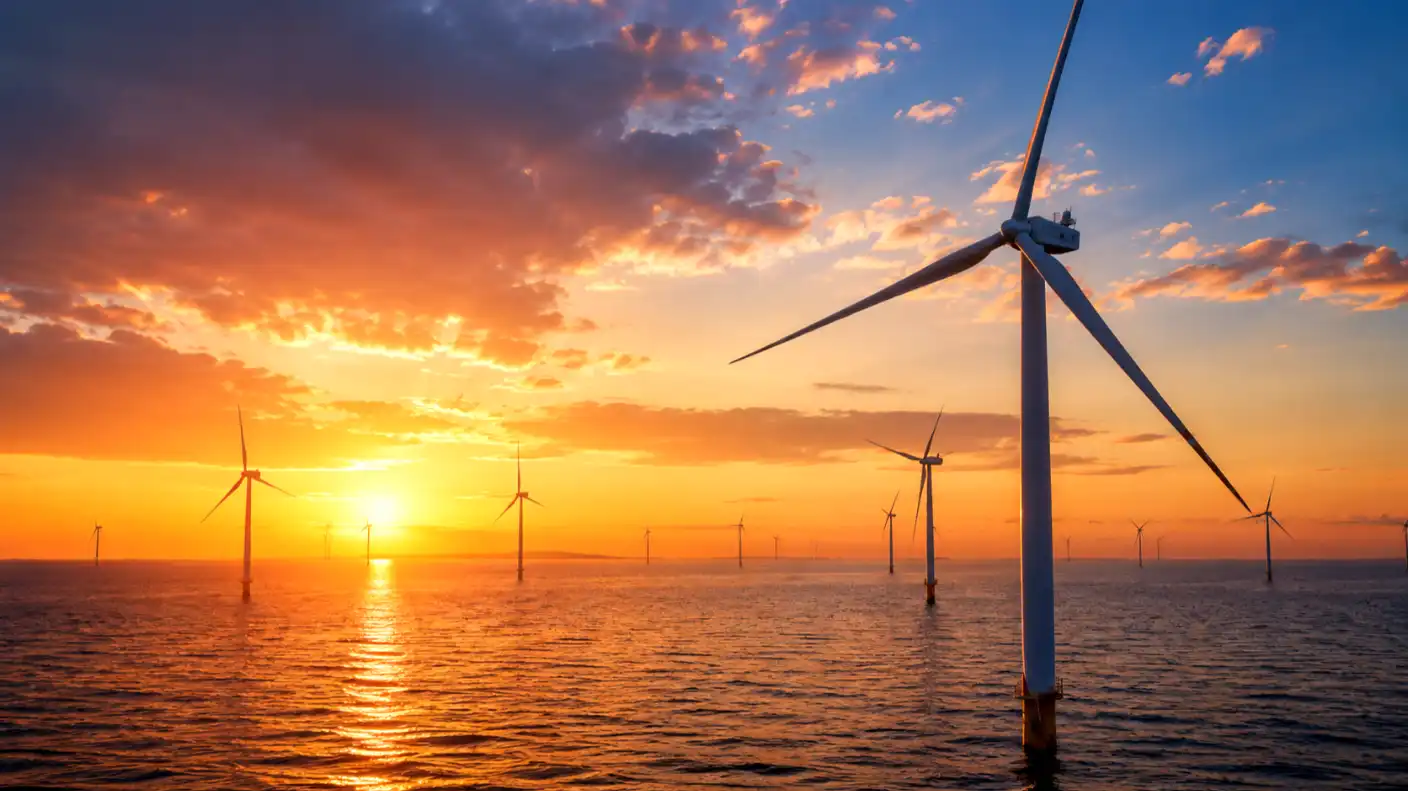
The largest clean energy installation in United States history is officially online, delivering massive amounts of electricity across the American West. Pattern Energy Group LLC has completed commercial commissioning for its monumental $11 billion SunZia Wind Farm and Transmission Project in New Mexico. Operating at a peak capacity of 3.5 gigawatts, the giant onshore array has started sending zero-emissions electricity to energy-hungry consumers in Arizona and California. However, this historic milestone arrives at a highly volatile moment for the broader green economy, serving as a rare bright spot as a tightening federal campaign threatens to freeze the next wave of major renewable energy developments.
The sheer physical scale of the SunZia development is unprecedented for the North American clean energy sector. Stretched across Torrance, Lincoln, and San Miguel counties, the project covers more than 500,000 acres of New Mexico’s wind-rich Estancia Valley. The facility deploys a staggering 916 wind turbines, consisting of 674 GE Vernova and 242 Vestas generators, producing enough clean electricity to power more than one million homes annually. To transport this massive volume of power, developers constructed a 550-mile high-voltage direct-current transmission line, linking New Mexico’s rural wind resources directly to the high-demand urban markets of Southern California.
Securing the necessary permits and financing to build such a massive, cross-border infrastructure project required nearly two decades of intensive planning, local negotiation, and environmental reviews. The project’s developers spent years aligning federal, state, and private landowners, overcoming localized legal challenges, and securing the massive $11 billion capital package required to begin physical construction in 2023. While the successful launch of SunZia proves that long-term, large-scale clean energy projects can succeed, industry experts warn that the transaction represents one of the final blockbusters of a rapidly closing era.
The primary headwind facing the renewable energy sector is an aggressive, coordinated campaign by President Donald Trump’s second administration to dismantle clean energy policies. Since taking office, the administration has prioritized domestic coal, oil, and natural gas in a highly publicized mission to achieve total American energy dominance. On day one of his second term, the president signed an executive order freezing all new federal wind permits on public lands and offshore waters. The policy has immediately choked off the development pipeline, leaving over 5,000 wind turbines in a growing regulatory backlog as federal agencies and the Pentagon withhold critical approvals.
To bypass legal defeats in federal courts—where judges have repeatedly blocked executive attempts to arbitrarily terminate already-approved wind projects—the administration has turned to a highly unusual, multi-billion-dollar “buyback” strategy. Under this less-visible tactic, the federal government is actively using public money to pay energy developers to abandon their permitted wind leases and redirect those funds into fossil fuel projects instead. To date, the administration has spent approximately $2.6 billion in public funds to convince energy companies to walk away from their renewable developments, systematically shrinking the future clean energy pipeline.
The scale of this buyback campaign was highlighted recently by several massive federal payout agreements. The Department of the Interior agreed to pay developer Invenergy LLC $765 million in exchange for the firm relinquishing four offshore wind leases off the coasts of California, New York, and Maine. Under the terms of the settlement, Invenergy will redirect those funds to build at least five natural gas power plants across the Midwest. This transaction follows a similar deal earlier in the year where French energy giant TotalEnergies accepted a $928 million payout to cancel two major offshore projects off New York and North Carolina, redirecting the capital into Gulf Coast natural gas and liquefied petroleum infrastructure.
These aggressive regulatory roadblocks are already taking a heavy toll on long-term renewable energy forecasts. A recent analysis by an energy consulting firm warned that the administration’s systematic targeting of permitted projects could reduce total U.S. wind installations by up to 17% through the end of the decade, representing a loss of approximately 7 gigawatts of clean electricity capacity. This planned contraction comes at a highly inconvenient time, as the booming artificial intelligence sector, a massive data center buildout, and regional heatwaves are already putting unprecedented strain on local power grids.
While the federal campaign has heavily restricted wind energy development, other clean energy sectors are continuing to thrive by capitalizing on shifting market demands. Utility-scale solar power and large-scale battery energy storage systems are experiencing explosive, market-driven growth across the country. In a historic milestone, utility-scale solar generation recently surpassed coal-fired electricity output on the national grid, generating 12.8% of the country’s electricity compared to coal’s 12.2%. Because battery storage facilities allow utilities to store cheap solar energy during the day and release it during peak evening hours, they are successfully proving that clean energy can maintain grid reliability without requiring federal subsidies.
Ultimately, the successful commissioning of the SunZia Wind Farm represents a monument to long-term engineering determination, but also a stark reminder of the regulatory barriers ahead. While the physical completion of this massive project will provide critical electricity relief to California and Arizona, the future of the nation’s energy transition remains highly uncertain. If the federal government continues to use multi-billion-dollar payouts to freeze the next wave of wind installations, the country may find itself increasingly reliant on fossil fuels to power its high-tech future. The battle for grid reliability is no longer just about who can build the most efficient technology, but how successfully developers can navigate a highly politicized, polarized regulatory landscape.