Key Points:
- Foxconn reported a massive 40% increase in quarterly revenue, fueled primarily by the intense global demand for AI server hardware.
- The company is now the primary manufacturer for the world’s leading AI server providers, securing its role as a critical component in the tech supply chain.
- Diversification into electric vehicle components and industrial robotics has provided additional stability, though AI hardware remains the primary engine of current growth.
- Market analysts expect this revenue trajectory to continue as cloud hyperscalers accelerate their $1 billion-plus investments in massive data center clusters.
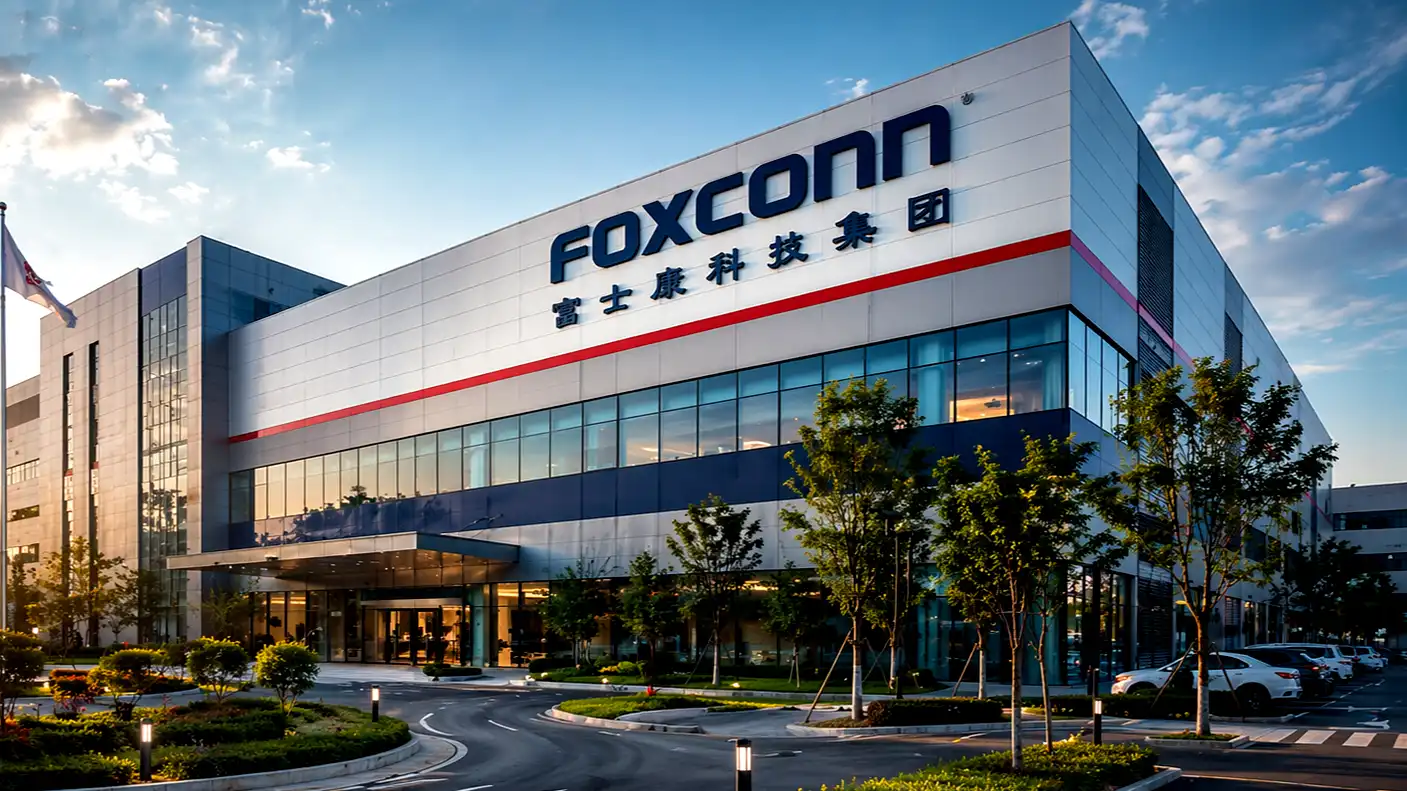
Foxconn, the world’s largest contract electronics manufacturer, has posted a stunning 40% year-over-year jump in second-quarter revenue, shattering market expectations. This massive growth is driven by a insatiable global demand for artificial intelligence infrastructure. As the primary assembler for the most powerful AI servers and hardware on the planet, the company has effectively become the manufacturing backbone of the ongoing intelligence revolution. This performance signals that the shift toward AI-ready infrastructure is no longer just a trend, but a dominant force that is reshaping the industrial landscape.
For years, the company’s business model was tied almost exclusively to the consumer electronics cycle, specifically the seasonal demand for smartphones and laptops. However, the move into AI servers has fundamentally altered its financial profile. These servers require highly specialized assembly, advanced cooling solutions, and rigorous testing protocols that demand higher margins than traditional consumer electronics. By positioning itself as the “go-to” factory for the most complex AI systems, Foxconn has successfully decoupled its growth from the slower-moving consumer market and aligned it with the high-speed expansion of global cloud computing.
The 40% revenue jump confirms that the scale of AI infrastructure spending is truly historic. Cloud providers and tech giants are currently engaged in a race to build the largest, most sophisticated computing clusters ever created. These projects are massive, often involving thousands of GPUs stacked in dense, interconnected racks that require custom assembly techniques. Foxconn’s ability to scale its factory capacity to meet this demand has made it an indispensable partner for hardware designers. The company has invested heavily in new, high-density assembly lines, ensuring that it can handle the unique thermal and electrical requirements of the latest generation of AI processors.
Beyond the server racks, Foxconn is seeing a ripple effect of demand for its broader industrial portfolio. The assembly of these servers requires specialized metalwork, precision power supply units, and highly sensitive connectivity cables. The company’s existing expertise in these areas has allowed it to bundle services, offering a “one-stop-shop” solution for global hardware designers. This vertical integration reduces the risk for customers, who prefer to work with a partner capable of handling the entire manufacturing lifecycle rather than coordinating with dozens of different sub-suppliers.
The economic significance of this revenue surge extends well beyond the firm’s balance sheet. It indicates that we are in the early stages of a fundamental build-out of the digital world’s infrastructure. If a company the size of Foxconn can record a 40% revenue increase in a single quarter, it means that billions of dollars are actively being converted from cash on balance sheets into physical hardware installed in data centers worldwide. This is a clear indicator of long-term belief in the potential of artificial intelligence to generate productivity, as companies wouldn’t be investing this heavily if they didn’t expect a tangible return on their technology spend.
Diversification remains a key pillar of the company’s stability. While AI is currently the star performer, management has been careful not to abandon the other high-growth segments of its business. The expansion into electric vehicle powertrain components and industrial automation has provided a solid floor for the company’s financials. These segments are starting to show their own momentum, with some industrial robotics orders seeing growth of 1.5% to 2% month-over-month. This multi-pronged approach ensures that even if the AI hardware market eventually hits a plateau, the firm has other reliable channels to drive revenue.
Looking toward the remainder of the year, the focus will be on operational excellence and capacity management. The company is actively building out new production facilities across Southeast Asia and North America to diversify its manufacturing footprint and stay closer to its primary customers in the U.S. and European markets. This regionalization strategy is essential for managing geopolitical risk and ensuring that the supply chain remains resilient, even as the global trade environment becomes increasingly complex. Investors are clearly betting that this geographic spread, combined with its technological lead in AI hardware, will lead to sustained, profitable growth.
As the company settles into its new role as the primary architect of the AI hardware age, the challenge will be to balance rapid expansion with the need for high-quality control. Scaling the assembly of highly sophisticated servers is an incredibly difficult task, where one faulty component can cause a system-wide failure. The company’s ability to maintain its high standards while growing at 40% per year is a testament to the effectiveness of its proprietary automated testing systems and its deep pool of technical talent. It is a level of industrial performance that very few companies in history have ever achieved.
Ultimately, this revenue milestone is a harbinger of the “AI Industrial Revolution.” We are moving toward a world where every major company, government, and university will require its own high-performance compute infrastructure. By building the factories that build the future, the company has positioned itself to be one of the most important entities in the global economy. The journey from assembly-line assembler to the center of the artificial intelligence ecosystem is complete, and the company is now reaping the rewards of that ambitious transformation.