Key Points:
- The Federal Aviation Administration has completed its investigation into the Super Heavy booster failure from the May test flight.
- The regulatory clearance allows the rocket to return to flight as soon as Thursday, July 16.
- The upcoming mission will carry its first operational payload: 20 next-generation V3 Starlink satellites.
- Software updates and hardware modifications aim to resolve the heat damage and engine alarm issues that caused the previous booster crash.
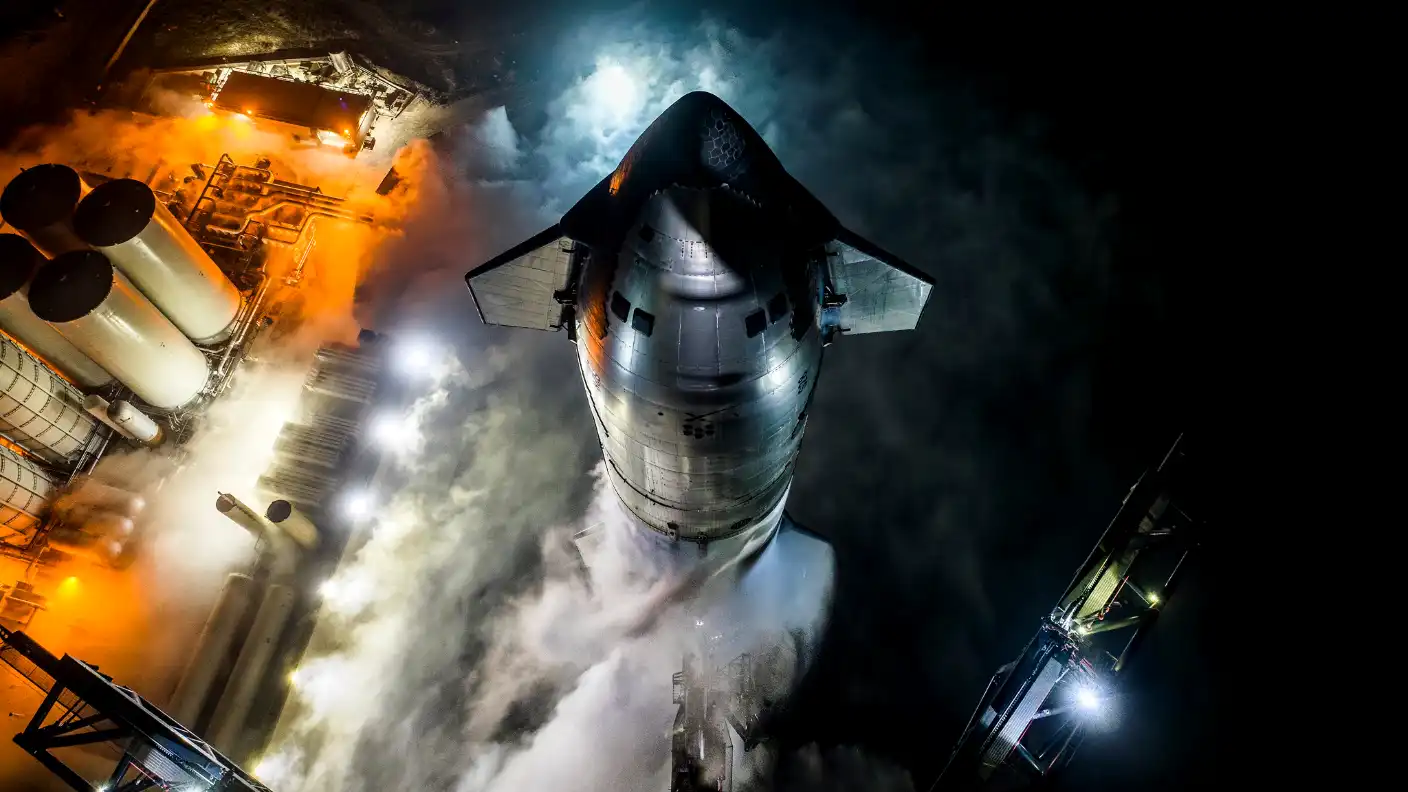
The U.S. Federal Aviation Administration (FAA) has completed its review into the Super Heavy booster landing failure from the May test flight, clearing the final regulatory hurdle for the upcoming SpaceX Starship Flight 13 launch. The mission will lift off from the Starbase facility in Boca Chica, Texas, during a 90-minute window opening on Thursday, July 16.
The previous test flight, which took place on May 22, debuted the upgraded third version (V3) of the massive rocket system. While the launch and ascent went smoothly, and the upper-stage Starship successfully reached its suborbital trajectory toward the Indian Ocean, the Super Heavy booster encountered severe issues during its return sequence. The booster failed to complete its planned controlled soft landing in the Gulf of Mexico, leading to an intense high-speed impact and subsequent explosion.
The root cause of the landing failure stemmed from the “hot-staging” separation maneuver roughly two minutes into the flight. During this sequence, the Starship upper stage ignited its engines while still attached to the booster to push itself into space. However, slight differences in the engine startup timing caused a massive 90-degree orientation error, exposing the booster to a concentrated blast of superheated engine exhaust. This structural and thermal stress inflicted severe heat-related damage on critical propulsion components.
The physical damage, combined with incorrect configuration settings in the booster’s onboard safety computers, rapidly compounded the failure. Erroneous engine alarm system settings misidentified the state of the propulsion systems. When the booster attempted to relight its Raptor engines to execute its boostback and landing burns, five of its 33 engines failed to ignite. Lacking sufficient reverse thrust to slow its vertical descent, the massive booster plunged into the Gulf of Mexico at high speed.
To address these vulnerabilities, SpaceX implemented hardware and software modifications designed to protect the booster’s propulsion components from hot-staging thermal blowback. The updates also redesigned the engine startup sequences to handle timing variations better and updated the engine alarm and abort thresholds to accurately match the extreme environments experienced during multi-engine flights.
The upper stage of the rocket also received substantial physical upgrades. During the May test flight, the ship lost one of its three vacuum-optimized Raptor engines during ascent, requiring structural shielding and improved fuel delivery systems. Additionally, for the upcoming flight, six of the ship’s protective heatshield tiles feature high-resolution cameras. These cameras will inspect the thermal protection system in real-time as the vehicle re-enters Earth’s atmosphere over the Indian Ocean.
The upcoming Flight 13 represents a fundamental transition for the Starship development program. For the first time, the world’s largest rocket will move past carrying dead weight and deploy an active commercial payload: 20 third-generation (V3) Starlink satellites. This deployment directly links the development of the megarocket with the core satellite internet business, demonstrating Starship’s future role as a high-capacity orbital delivery vehicle.
Because of the suborbital trajectory planned for this developmental flight, these initial V3 satellites will not remain in permanent orbit. Instead, they will deploy during the coast phase in space to test the functionality of the new deployment door and laser-link communication systems. Approximately 20 minutes after release, the satellites will re-enter the atmosphere alongside the Starship upper stage, burning up harmlessly over the ocean.
The flight represents the first major operational test for SpaceX since its historic Nasdaq initial public offering, which valued the company at an unprecedented $86 billion. The launch serves to gauge public market appetite for the company’s aggressive, rapid-iteration development model. Resolving the regulatory hurdles within a couple of months of the failure shows that the company can maintain its high launch cadence despite complex technical setbacks.
If the launch window opens on schedule at 5:45 p.m. Central Time on Thursday, SpaceX will attempt to execute a clean stage separation, a soft landing of the booster in the Gulf of Mexico, and a controlled descent of the ship. Securing a successful landing burn for the Super Heavy booster would mark a major victory for the program, bringing the company one step closer to its ultimate goal of rapid, fully reusable space travel.