Key Points:
- European Commission President Ursula von der Leyen visited Greenland to sign a new strategic partnership declaration.
- The European Union unveiled a €200 million ($232 million) funding package for raw materials, clean energy, and digital infrastructure.
- Brussels proposed increasing direct long-term aid to €530 million ($615 million) under the 2028–2034 European budget.
- Greenland holds 25 of the 34 critical raw materials identified by the EU as essential for the green and digital transition.
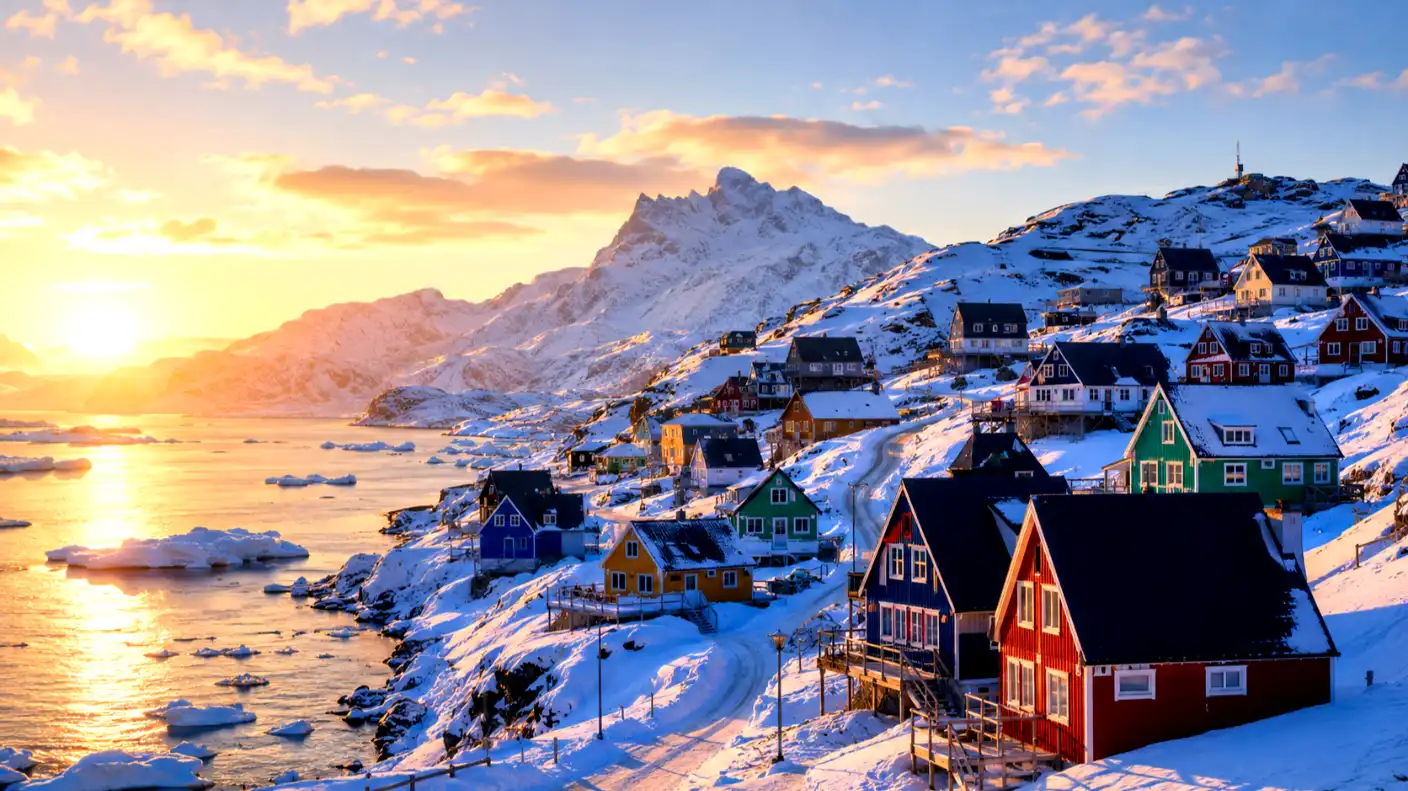
European Commission President Ursula von der Leyen arrived in Greenland for a two-day diplomatic mission to reinforce the European Union’s economic, security, and industrial partnership with the autonomous Arctic territory. Traveling alongside Danish Prime Minister Mette Frederiksen, von der Leyen met with Greenlandic Prime Minister Jens-Frederik Nielsen in the capital city of Nuuk. The high-level visit aims to solidify European backing for the territory, unlock strategic critical mineral supply chains, and reaffirm that Greenland’s political future rests solely in the hands of its people.
During the diplomatic summit, European leaders announced a fresh €200 million ($232 million) investment package to finance strategic infrastructure projects across Greenland through 2027. The newly unveiled funding supplements the €225 million that the European Union previously allocated under its ongoing multiannual framework. European officials also detailed plans to more than double direct long-term financial assistance to €530 million ($615 million) under the upcoming 2028-to-2034 European budget cycle.
Securing stable access to critical raw materials sits at the absolute center of Europe’s strategic push into the Arctic. Geological surveys confirm that Greenland contains deposits of 25 of the 34 critical raw materials that the European Union needs to power electric vehicle manufacturing, wind turbines, and digital electronics. As European policymakers work to reduce reliance on Chinese processing monopolies, Greenland’s massive deposits of neodymium, dysprosium, titanium, graphite, and nickel offer a nearby, environmentally responsible alternative.
Greenlandic leaders emphasized that resource extraction must benefit local communities and adhere to strict environmental standards. The island’s government is actively working to diversify its economy away from commercial fisheries, which currently generate more than 90% of total export revenues. Greenlandic officials welcomed European capital investments, stressing that mining projects must include local job creation, infrastructure development, and strict environmental safeguards rather than simple raw ore extraction.
In addition to mineral exploration, the European partnership directs substantial capital into digital connectivity and clean energy infrastructure. The delegation inaugurated the Enhanced Satellite Connectivity Project at local telecommunications facilities in Nuuk, expanding high-speed internet across remote Arctic settlements. The European Union is also financing large-scale hydroelectric energy projects to tap Greenland’s vast glacial runoff, supporting local green hydrogen production and helping the island expand its 70% clean energy baseload.
The diplomatic mission carries profound geopolitical significance amid renewed international interest in Arctic sovereignty. Former United States President Donald Trump repeatedly proposed acquiring or controlling Greenland, claiming that Denmark could not defend the territory from Russian and Chinese influence. European leaders firmly rejected foreign acquisition attempts, using the visit to signal that Greenland and Denmark maintain an unshakeable partnership with European allies founded on mutual democratic values.
The timing of the European visit coincides with NATO’s Arctic Shield military exercises, which brought together armed forces from 10 allied nations across northern maritime corridors. The joint defense drills demonstrate collective Western resolve to maintain freedom of navigation through emerging Arctic shipping lanes as polar ice melts. Defense strategists highlight that Greenland’s strategic location between North America and Europe makes the island a crucial radar and naval monitoring gateway for transatlantic security.
The deepening relationship builds upon the European Union’s decision to open a permanent diplomatic office in Nuuk. The local mission allows European officials, private mining companies, and research institutions to collaborate directly with Greenlandic authorities without routing administrative matters through Copenhagen. This direct institutional link speeds up project feasibility assessments, environmental licensing reviews, and public-private funding matching under the Global Gateway investment program.
The European Union’s outreach arrives at a pivotal moment as global superpowers compete for influence across Arctic trade routes. Melting polar ice sheets are opening up seasonal shipping routes that could cut maritime transit times between Europe and Asia by up to 40%. By embedding European capital, infrastructure standards, and environmental benchmarks into Greenlandic development, Brussels is working to prevent rival geopolitical powers from establishing dual-use commercial or military footholds across the territory.
As European, Danish, and Greenlandic leaders sign their renewed joint declaration in Nuuk, the diplomatic mission cements a long-term economic alliance. By combining hundreds of millions of euros in development funding with sustainable mining partnerships and digital connectivity, the European Union is positioning Greenland as a cornerstone of Europe’s clean energy transition and Arctic security architecture.