Key Points:
- Amazon-owned Zoox has updated its custom-built, steering-wheel-free robotaxi with rider-focused comfort and safety improvements.
- The interior overhaul includes lighter color schemes, ergonomic seat padding, improved wireless chargers, and cleaner cabin materials.
- Exterior upgrades feature bidirectional reflector enhancements and two-way audio interfaces for better communication with bystanders and emergency responders.
- The design refresh arrives as Zoox expands vehicle tests to major cities, including Austin, Miami, and Dallas, while awaiting final regulatory approvals.
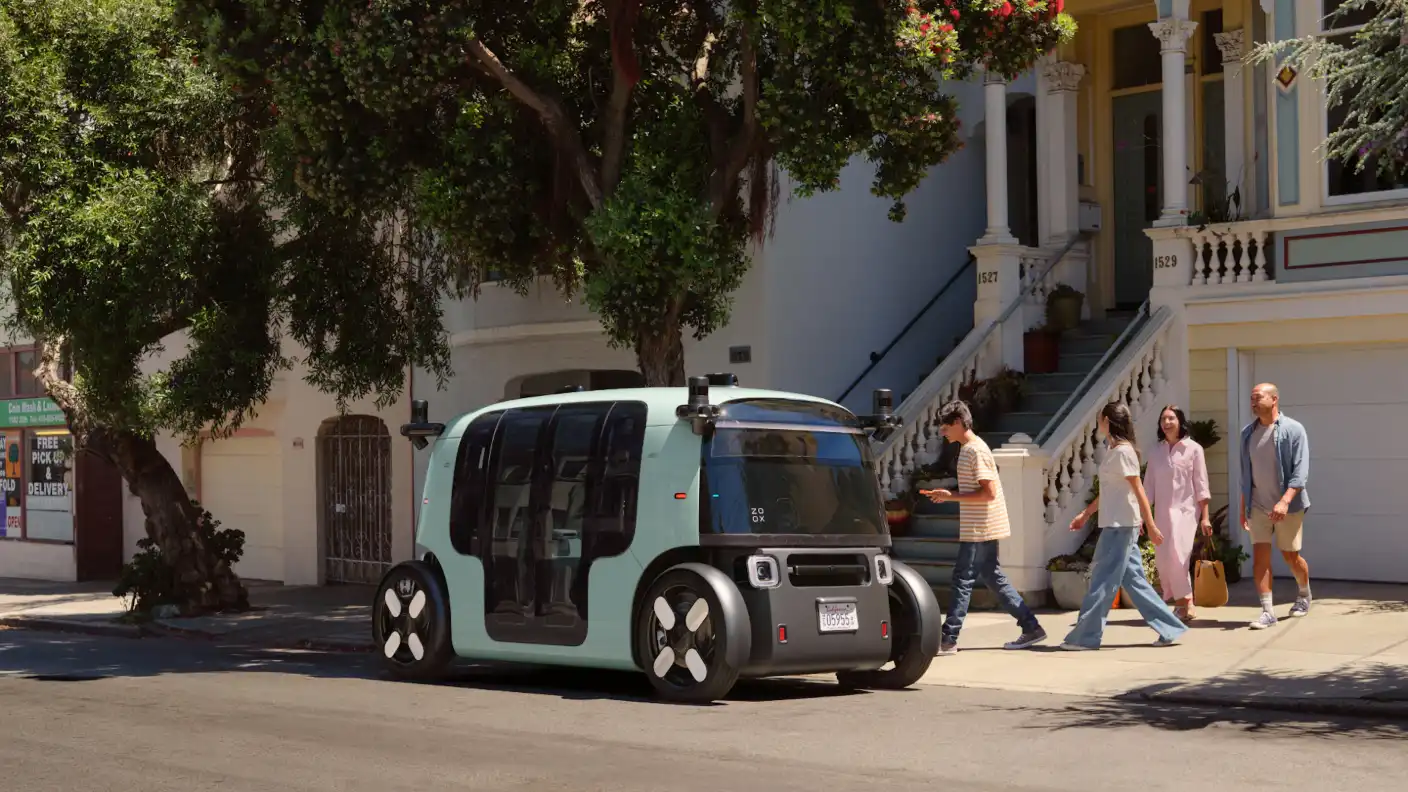
The dream of driverless urban transportation is taking another massive leap forward. Amazon’s autonomous vehicle company, Zoox, has officially pulled back the curtain on a redesigned version of its custom-built, purpose-built robotaxi. This hardware refresh directly addresses critical feedback from passengers who have logged millions of miles in the company’s early testing fleets. The updated model retains the iconic, toaster-shaped exterior profile but completely revamps the cabin and outer communication features to maximize passenger comfort, cleanliness, and overall safety. This unveiling comes at a critical time as the company prepares to transition from free, employee-only shuttle services to paid commercial operations across multiple major metropolitan areas in the coming months.
Unlike some competitors that modify standard production sedans and SUVs with bulky sensor rigs, Zoox designed its vehicle from the ground up for a driverless world. The core mechanical architecture of the electric vehicle remains unchanged. It is a compact, bidirectional vehicle with a symmetrical layout, four-wheel steering, and absolutely no steering wheel, pedals, or traditional dashboard controls. To navigate complex urban environments, the vehicle relies on an array of more than 40 cameras, radar sensors, lidar modules, and infrared cameras. The electric pod can carry up to four passengers facing each other and is capable of reaching highway speeds of up to 75 miles per hour, or 120 kilometers per hour.
Where Zoox focused the bulk of its latest redesign is on the in-cabin experience, heavily prioritizing rider ergonomics and comfort. Based on feedback gathered from more than 350,000 passenger trips and over 2.5 million miles driven in San Francisco and Las Vegas, engineers added extra soft padding and highly contoured ergonomic curves to the seats and headrests. They swapped out the previous darker interior materials for a soothing, light color palette consisting of aloe green seats and stone grey flooring. This lighter interior not only creates a more calming and open atmosphere inside the vehicle but also makes it much easier for passengers to spot personal belongings, such as a smartphone or keys, that they might have accidentally left behind.
Operating a shared public vehicle brings unique challenges, especially when there is no human driver present to monitor passenger behavior. Zoox designers admitted that handling odors, smoke, and general mess from passengers is a major operational hurdle. The new interior features materials that are far easier to clean and resist absorbing smoke or smells, particularly when passengers ignore rules and smoke tobacco or cannabis inside the vehicle. Additionally, the cabin features smart technical tweaks like fluted grooves on the wireless charging pad to keep mobile devices from slipping during sharp turns, wider cup holders, and a much more visible, high-contrast touch screen for controlling climate and music.
The updates extend to the vehicle’s exterior, emphasizing pedestrian safety and clearer communications on busy city streets. Because the vehicle is bidirectional, it can drive in either direction without ever needing to perform a multi-point turn. This design requires advanced lighting configurations, as federal laws require amber-colored reflectors on the front of a vehicle and red reflectors on the rear. Zoox engineers relocated these bidirectional reflectors to improve visibility in all weather conditions. Furthermore, the company integrated a new speaker and microphone directly into the door’s outer interface, allowing for clear, two-way audio communication between passengers, bystanders, first responders, and remote support teams.
This design refresh coincides with a significant production ramp-up at Zoox’s dedicated assembly plant in Hayward, California. The company is currently building out its production lines to support a fleet of more than 100 specialized vehicles, with plans to expand manufacturing rapidly once full regulatory approval arrives. Unlike traditional automotive assembly lines, Zoox is producing these complex, sensor-dense pods at scale, preparing to transition from limited public testing into a high-volume, commercially viable transportation service that can operate day and night consistently.
As manufacturing gains momentum, Zoox is actively scaling its geographic footprint beyond its original test beds of San Francisco and Las Vegas. The company has already doubled its operational coverage in Las Vegas, reaching high-profile destinations such as the Las Vegas Convention Center, major hotels along the Strip, the T-Mobile Arena, and the Sphere. In San Francisco, the service footprint is quadrupling to cover major eastern neighborhoods, including Chinatown, North Beach, and the Embarcadero. Looking to the future, the company is preparing to launch testing operations in Austin, Texas, and Miami, Florida, with Dallas, Texas, scheduled to begin public road testing within a matter of days.
To begin charging passengers for rides and generate revenue, Zoox is awaiting a crucial regulatory milestone. The company is actively pursuing a Part 555 exemption from the National Highway Traffic Safety Administration. This regulatory waiver is required for vehicles that do not feature traditional, federally mandated components like side-view mirrors or steering wheels. Executives express strong optimism that they will secure this federal approval within the next few months. Reaching this milestone will allow Zoox to launch paid commercial rides in Las Vegas and San Francisco, positioning the company as a formidable rival to other autonomous vehicle networks currently dominating the market.
The autonomous vehicle industry is on the verge of massive global growth. Market researchers project that the global robotaxi service market will explode to $168 billion by 2035, supported by a massive active fleet of 3.6 million self-driving vehicles worldwide. With the deep financial backing of Amazon, Zoox is uniquely positioned to capture a significant share of this emerging multi-billion-dollar market. By designing a purpose-built vehicle rather than retrofitting traditional cars, Zoox offers a distinctive passenger experience that could eventually redefine urban mobility and challenge the necessity of personal car ownership altogether.