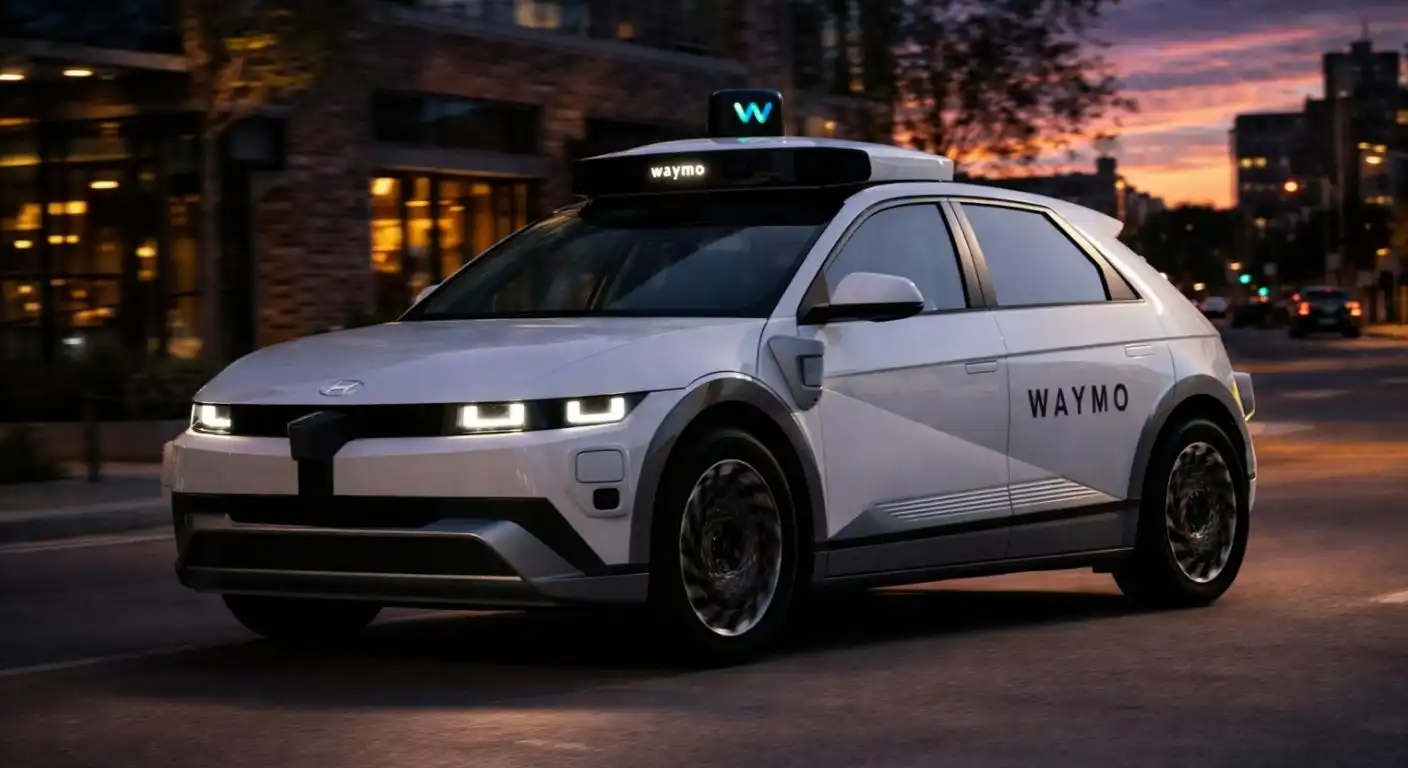
Key Points:
- Alphabet’s autonomous vehicle subsidiary, Waymo, established and formally registered “Waymo Germany GmbH” in Munich to anchor its upcoming European expansion.
- Local recruitment postings have already emerged seeking professional test drivers to map and collect localized safety data in Munich and Berlin.
- To launch commercial driverless rides in Germany, the company must successfully clear the country’s strict Passenger Transportation Act (PBefG).
- The expansion coincides with Waymo releasing safety data showing 94% fewer injury-causing crashes compared to human drivers over 220 million miles.
The global race to commercialize autonomous transportation is shifting into higher gear as the industry’s most prominent pioneer prepares for its first major footprint outside the United States. Alphabet’s self-driving technology unit, Waymo, has officially established and registered a corporate subsidiary in Germany. According to local corporate registries, the new entity represents the strategic foundation for the company’s planned expansion across Europe. By moving into the heart of Europe’s traditional automotive capital, the technology firm is signaling that it is finally ready to export its proven, driverless ride-hailing services to international markets.
The parent company officially founded the local subsidiary on May 13, securing its formal registration on June 15 under the name Waymo Germany GmbH. The official filings list the company’s business address at Google’s corporate offices in Munich, a city that has rapidly emerged as the main testing ground for next-generation automotive technology. According to the registration documents, the new German subsidiary will focus primarily on delivering commercial ride-hailing services using fully autonomous passenger vehicles. Additionally, the company plans to offer dedicated technical and operational support services for third-party partners seeking to launch their own driverless operations.
Although the company has not yet announced a formal public launch date for the service, behind-the-scenes preparations are already well underway. Local recruitment agency postings have recently listed job openings for professional test drivers based in both Munich and Berlin. This hiring activity matches the company’s historic expansion playbook. When entering a brand-new geographic market, the firm typically deploys a small, controlled fleet of vehicles equipped with human safety drivers. These operators manually navigate local streets to map complex intersection layouts, register unique traffic signals, and gather the localized driving data needed to train the underlying artificial intelligence.
Operating fully driverless commercial fleets in Europe requires navigating a strict and highly complex regulatory landscape. In Germany, autonomous vehicles must secure specific testing permits before they can map public roads with human safety operators. To transition these trials into a paid, commercial ride-hailing service, the company must obtain a formal license under Germany’s Passenger Transportation Act, commonly known as the PBefG. While the nation’s legal framework has already been updated to fully accommodate driverless commercial services, no self-driving company has successfully navigated this rigorous certification process to date, meaning the tech firm has a unique opportunity to set the local precedent.
The push into Europe arrives on the heels of the company releasing highly encouraging safety statistics from its active domestic operations. Through March, the company’s autonomous fleet logged more than 220 million driverless miles across major American metropolitan areas, the equivalent of over 250 human lifetimes behind the wheel. Compared to human drivers in the same areas over the same period, the self-driving vehicles were involved in 94% fewer injury-causing crashes and 82% fewer airbag-deployment collisions. Currently, the company operates commercial rides in 11 major metropolitan areas, successfully completing over two million passenger trips per month.
Despite these impressive safety statistics, the company’s expansion is occurring alongside a healthy dose of real-world operational friction. In a recent voluntary safety action, the company recalled 3,871 robotaxis to update its software after some vehicles failed to properly recognize closed freeway construction zones. This software patch came after a small number of vehicles struck orange traffic cones and entered active construction zones at highway speeds. By keeping its vehicles off major freeways while engineers deployed a permanent software fix, the company proved its commitment to safety over rapid scaling, reminding the market that fully scaling physical AI remains a slow and highly meticulous engineering process.
To optimize its physical asset utilization and build higher-margin recurring revenues, the company has also been experimenting with new business models. The firm recently rolled out a premium subscription tier called “Waymo Premier” for $29.99 per month in select cities like San Francisco. This subscription grants power users priority pickups, 10% cashback on rides, early access to new vehicle models, and free ride cancellations. Because autonomous ride-hailing companies own and maintain their entire fleets rather than relying on independent drivers who use their own personal cars, these subscription tiers serve as a vital tool to manage peak-hour demand and build reliable, predictable revenue streams.
By establishing its corporate headquarters in Munich, the company is diving directly into an incredibly crowded and competitive autonomous driving arena. Europe has become a major battlefield for self-driving technology startups and legacy automakers. Earlier this month, a major global ride-hailing platform partnered with a Tel Aviv-based artificial intelligence firm to launch its own Level 4 autonomous vehicle trials in Munich. Additionally, UK-based startup Wayve Technologies, which boasts heavy financial backing from global chip giants and prominent Chinese autonomous developers like Baidu and Momenta, is actively running road tests in Germany to secure its own share of the emerging market.
Ultimately, the company’s corporate registration in Germany proves that the transition to smart, driverless transportation is quietly moving past the science-project stage and into global commercialization. While building and scaling a physical fleet of sensor-dense vehicles is far more capital-intensive than launching standard software applications, the long-term payoff could fundamentally restructure urban mobility. As the company begins the long process of mapping Munich’s streets and securing local licenses, the era of relying on human drivers is gradually giving way to highly specialized, autonomous transportation networks. The future of global ride-hailing will not be won by the companies with the most gig-workers, but by those with the most reliable, secure, and compliant autonomous systems.