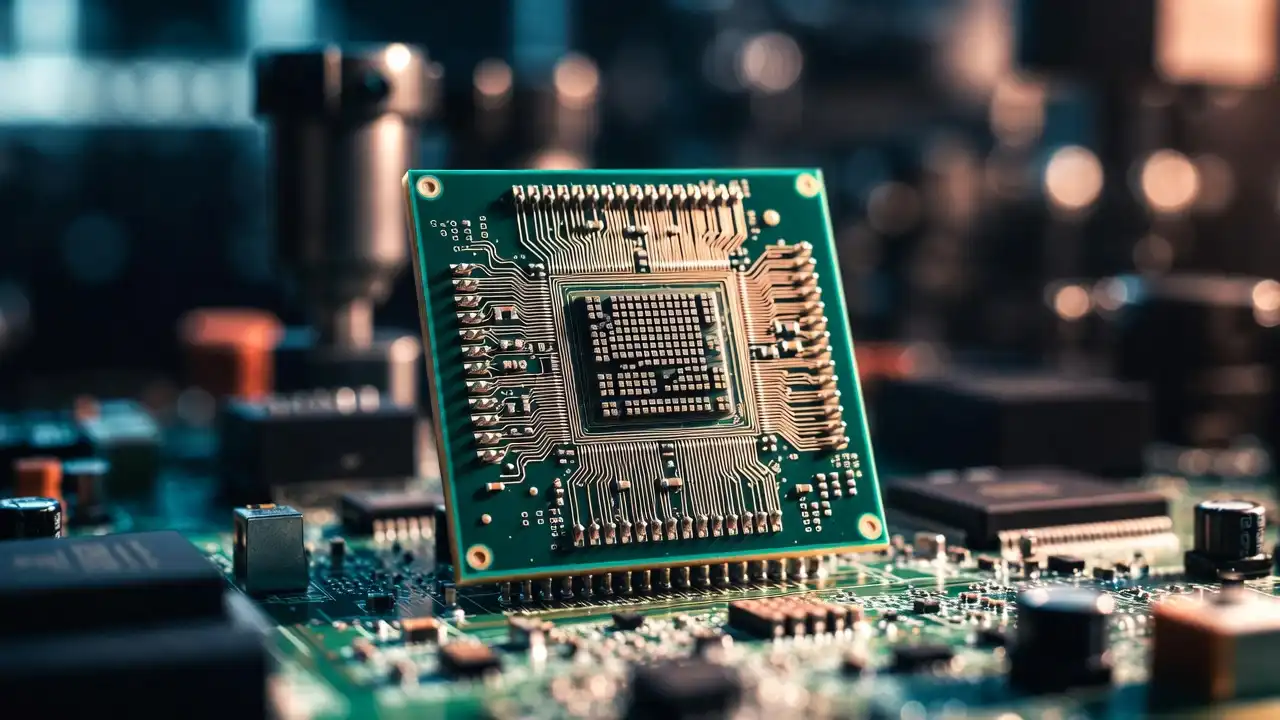
A massive financial realignment is taking place across the global technology sector. For years, investors viewed software companies as the ultimate cash machines. Software businesses carried low marginal costs, required minimal physical infrastructure, and generated predictable recurring revenue. Semiconductor companies, by contrast, lived in a notoriously cyclical world defined by expensive factories, rapid obsolescence, and volatile demand. The artificial intelligence boom has completely flipped this historical dynamic on its head.
Right now, the companies manufacturing the physical hardware that powers artificial intelligence are generating cash at a rate that defies historical comparison. Hardware developers like Nvidia, Micron Technology, Broadcom, and Taiwan Semiconductor Manufacturing Company have evolved from cyclical manufacturers into structural monopolies. They are collecting hundreds of billions of dollars in capital expenditures from the world’s wealthiest technology conglomerates. This massive influx of capital is flowing directly to their bottom lines, transforming these chip players into the most powerful free cash flow generators in the modern global economy.
For investors analyzing the technology landscape for TechGolly, the focus has shifted away from vague promises of future software profits. Wall Street is currently obsessed with free cash flow, and the semiconductor industry is producing it in staggering amounts. As the infrastructure buildout for artificial intelligence enters its next critical phase, understanding the mechanics of this historic wealth transfer is essential for navigating the stock market.
The Great Wealth Transfer from Software to Silicon
To understand why semiconductor companies are swimming in cash, you must look at the spending habits of their largest customers. The hyperscalers—Amazon, Microsoft, Alphabet, and Meta Platforms—are engaged in an arms race to secure computing supremacy. Corporate leaders at these massive firms believe that failing to secure enough artificial intelligence infrastructure poses an existential threat to their core businesses. As a result, they are spending money with zero hesitation.
Industry data shows that these four technology giants alone are on pace to spend well over $200 billion in capital expenditures this year. The vast majority of this money goes toward building sprawling data centers, securing dedicated power supplies, and purchasing advanced silicon components. This creates a fascinating financial paradox. The software companies are draining their own free cash flow to buy physical infrastructure. Meanwhile, the semiconductor companies selling that infrastructure are absorbing that same cash.
The money leaves the balance sheets of software companies as a capital expense and lands on the balance sheets of chipmakers as pure revenue. Because the chipmakers have successfully scaled their operations and maintained immense pricing power, a massive percentage of that revenue converts directly into free cash flow. This metric—the cash a company generates after accounting for cash outflows to support operations and maintain capital assets—dictates a company’s ability to buy back stock, pay dividends, and reinvest in research. Right now, the semiconductor industry holds the keys to the global cash vault.
Hyperscalers Foot the Bill for Artificial Intelligence Infrastructure
The scale of this infrastructure buildout has no historical precedent. A single modern artificial intelligence data center can cost upwards of $1 billion to construct and outfit. Inside those facilities, row after row of server racks require specialized graphics processing units, high bandwidth memory chips, and custom networking switches.
The software giants cannot build these data centers fast enough. Microsoft needs raw computing power to support its enterprise software integrations. Alphabet needs massive server farms to protect its search monopoly. Meta requires staggering amounts of processing power to refine its open-source models and power its advertising algorithms. Amazon must maintain its lead in the cloud computing market. None of these companies can achieve their goals without buying hardware from a very small, highly concentrated group of semiconductor suppliers. This desperate demand eliminates the need for chipmakers to offer discounts, naturally inflating their profit margins and cash reserves.
Nvidia Commands the Industry with Unmatched Cash Conversion
No company embodies this cash generation phenomenon better than Nvidia. For years, Nvidia operated a highly successful but relatively contained business selling graphics cards to video game enthusiasts and cryptocurrency miners. The artificial intelligence revolution turned the company into the undisputed center of the global economy. Nvidia currently controls an estimated 80 percent to 90 percent of the market for advanced artificial intelligence accelerators.
This monopoly-like grip on the market allows Nvidia to dictate terms to the wealthiest companies on earth. When a customer wants to buy the company’s flagship processors, they pay premium prices and wait in long lines for delivery. This pricing power translates into mind-boggling financial metrics. Financial analysts project that Nvidia will generate tens of billions of dollars in free cash flow over the next 12 months.
Nvidia achieves these numbers because it operates as a fabless semiconductor company. Nvidia designs the chips and develops the proprietary software ecosystem, but it does not actually spend the billions of dollars required to build the physical factories that print the silicon. By outsourcing the capital-intensive manufacturing process, Nvidia keeps its own capital expenditures incredibly low relative to its revenue. When revenue scales into the hundreds of billions, and capital expenditures remain relatively flat, the resulting free cash flow margins frequently exceed 40 percent to 50 percent of total sales.
Blackwell Architecture Secures the Next Growth Phase
Skeptics repeatedly argue that Nvidia’s massive cash generation must eventually slow down as competitors enter the market. Nvidia aggressively counters this narrative through relentless product innovation. The company recently transitioned to its new Blackwell architecture, which offers massive improvements in processing speed and energy efficiency compared to its previous generation of chips.
Demand for the Blackwell platform is already outstripping supply. Chief executives across the technology sector understand that buying the newest, most efficient hardware actually lowers their long-term electricity and operational costs. Consequently, the transition to Blackwell ensures that Nvidia’s order books will remain fully saturated for the next several quarters. As long as the company can ship these high-margin components, its free cash flow engine will continue to run at maximum capacity, allowing management to execute massive share repurchase programs that further boost shareholder value.
Micron Technology Capitalizes on the High Bandwidth Memory Squeeze
While logic processors grab the most media attention, memory chips are an equally critical bottleneck in the artificial intelligence supply chain. You cannot run a powerful graphics processing unit without surrounding it with massive amounts of specialized memory. This physical requirement has sparked a historic financial turnaround for companies like Micron Technology.
Historically, memory chip manufacturing was a brutal, low-margin business. Memory was treated as a generic commodity. When demand fell, manufacturers flooded the market with excess inventory, crashing prices and destroying profit margins. The artificial intelligence boom has broken that traditional cycle. Advanced models require a highly specific, difficult-to-manufacture product called High Bandwidth Memory.
High Bandwidth Memory involves stacking multiple memory chips vertically and connecting them through microscopic channels. This process is incredibly complex, and production yields are much lower than traditional memory manufacturing. Because only three companies in the world—Micron, SK Hynix, and Samsung—can produce this technology at scale, the supply remains heavily constrained.
The Pricing Power of the HBM Supercycle
This severe supply constraint gives Micron unprecedented pricing power. Corporate executives at Micron recently confirmed that their entire High Bandwidth Memory production capacity is completely sold out through the end of the year and fully allocated for the following year. When a company sells out its inventory years in advance, it no longer needs to compete on price.
Micron is shifting its manufacturing capacity away from cheap, traditional memory and focusing intensely on premium High Bandwidth Memory components. This product mix shift dramatically improves the company’s overall gross margins. As the average selling price of its products rises, the cash flowing into the business expands. Financial models indicate that Micron is entering a prolonged period of robust free cash flow generation. The company is using this cash to fund its own manufacturing expansions in the United States while simultaneously returning value to shareholders, proving that even legacy commodity producers can transform into cash machines under the right technological conditions.
Broadcom Dominates the Custom Silicon and Networking Race
Moving data between thousands of different processors is just as important as the processing itself. If the network connections between chips are slow, the entire data center grinds to a halt. Broadcom has positioned itself as the undisputed leader in solving these complex data center networking bottlenecks, turning its expertise into a massive cash flow engine.
Broadcom operates a highly diversified business, but its artificial intelligence portfolio is driving spectacular growth. The company provides the essential networking switches, optical components, and routing hardware that allow hyperscalers to connect tens of thousands of graphics processing units together. Broadcom commands massive market share in Ethernet networking, a standard that cloud providers increasingly prefer over proprietary networking solutions.
Beyond standard networking gear, Broadcom operates a highly lucrative custom silicon division. While companies like Google and Meta purchase off-the-shelf chips from Nvidia, they also design their own proprietary chips to handle specific internal workloads. They rely on Broadcom’s engineering teams and intellectual property to bring these custom designs to life.
Custom Silicon Offers a Profitable Alternative
The custom silicon business provides Broadcom with a massive, recurring revenue stream. Broadcom helps design the chip, secures the manufacturing capacity, and sells the final product back to the hyperscaler. Google’s internal tensor processing units and Meta’s custom training chips rely heavily on Broadcom’s underlying technology.
Because Broadcom embeds its intellectual property deeply into the hardware architecture of the world’s largest cloud providers, its revenue streams are incredibly sticky. Cloud providers cannot easily switch networking vendors or custom silicon partners without completely redesigning their data centers. This stickiness guarantees that Broadcom will capture a massive, predictable share of the $200 billion capital expenditure pie. The company boasts some of the highest free cash flow margins in the entire semiconductor industry, routinely generating billions of dollars in excess cash every single quarter, which it aggressively uses to pay down debt from acquisitions and issue substantial quarterly dividends.
TSMC and the Equipment Suppliers Capturing the Baseline
The cash generation phenomenon extends all the way down to the foundational layers of the semiconductor industry. Fabless companies like Nvidia and Broadcom cannot generate cash if they do not have a physical factory to print their designs. Taiwan Semiconductor Manufacturing Company serves as the exclusive manufacturer for almost every advanced artificial intelligence chip on the market.
TSMC operates an incredibly capital-intensive business. The company spends upwards of $30 billion to $32 billion a year building new fabrication plants and outfitting them with the necessary equipment. In a normal industry, spending $30 billion a year on infrastructure would destroy a company’s free cash flow. However, TSMC generates so much revenue from its advanced manufacturing nodes that it easily covers its massive capital expenditures and still produces billions in excess cash. By commanding higher prices for its cutting-edge manufacturing processes, TSMC guarantees that it profits from every single chip sold by its fabless clients.
Behind TSMC sit the companies that actually build the machines used inside the factories. Equipment suppliers like ASML, Applied Materials, Lam Research, and KLA Corporation act as the ultimate toll collectors for the semiconductor industry. You cannot build a new chip factory without buying their equipment.
The Indispensable Role of Extreme Ultraviolet Lithography
ASML holds a unique position as the only company in the world capable of manufacturing extreme ultraviolet lithography machines. These massive machines use lasers to draw microscopic circuit patterns onto silicon wafers. A single machine costs hundreds of millions of dollars. As TSMC, Intel, and Samsung build new factories to meet artificial intelligence demand, they must order dozens of these machines from ASML.
This creates a massive, multi-year order backlog for the equipment suppliers. Because their customers are locked into long-term facility construction plans, equipment suppliers enjoy incredible visibility into their future revenue. They know exactly how much cash they will generate over the next several years because the orders are already signed. This guaranteed revenue allows equipment manufacturers to run highly efficient operations, resulting in consistent, massive free cash flow generation regardless of short-term macroeconomic volatility.
Evaluating the Long-Term Sustainability of Semiconductor Cash Flows
When any sector generates cash at this magnitude, financial analysts naturally question the sustainability of the trend. The primary risk facing the semiconductor industry is the potential for an eventual digestion period. If the major hyperscalers finish building their initial wave of data centers and decide to pause their capital expenditures, the massive wave of revenue flowing into the semiconductor companies would inevitably slow down.
However, current market indicators suggest that this digestion period remains several years away. Corporate executives at the major cloud providers repeatedly state that the demand for computing power continues to outpace their ability to build physical infrastructure. Furthermore, as artificial intelligence moves out of the data center and into edge devices—like personal computers, smartphones, and industrial robotics—the semiconductor industry will capture entirely new revenue streams.
The companies that survive and thrive in the stock market are the ones that actually produce cash. For over a decade, investors tolerated unprofitable tech startups because money was cheap and interest rates were at zero. In a normal interest rate environment, investors demand actual financial returns.
The semiconductor industry is currently the only sector in the global economy capable of delivering hyper-growth revenue alongside massive, tangible free cash flow. Nvidia, Micron, Broadcom, TSMC, and the equipment suppliers have built impenetrable competitive moats. They control the physical assets required to build the future of computing. As long as the world demands more processing power, more memory, and faster data networks, these chip players will continue to operate as the most efficient cash-producing machines in the history of the financial markets.