Key Points:
- Four large-cap South Korean companies with market caps over 50 trillion won ($32.8 billion) saw their shares jump an average of 155% this year.
- LG Electronics shares surged more than fourfold, closing at 392,500 won on Tuesday, fueled by the unveiling of its new CLOiD humanoid robot at CES 2026.
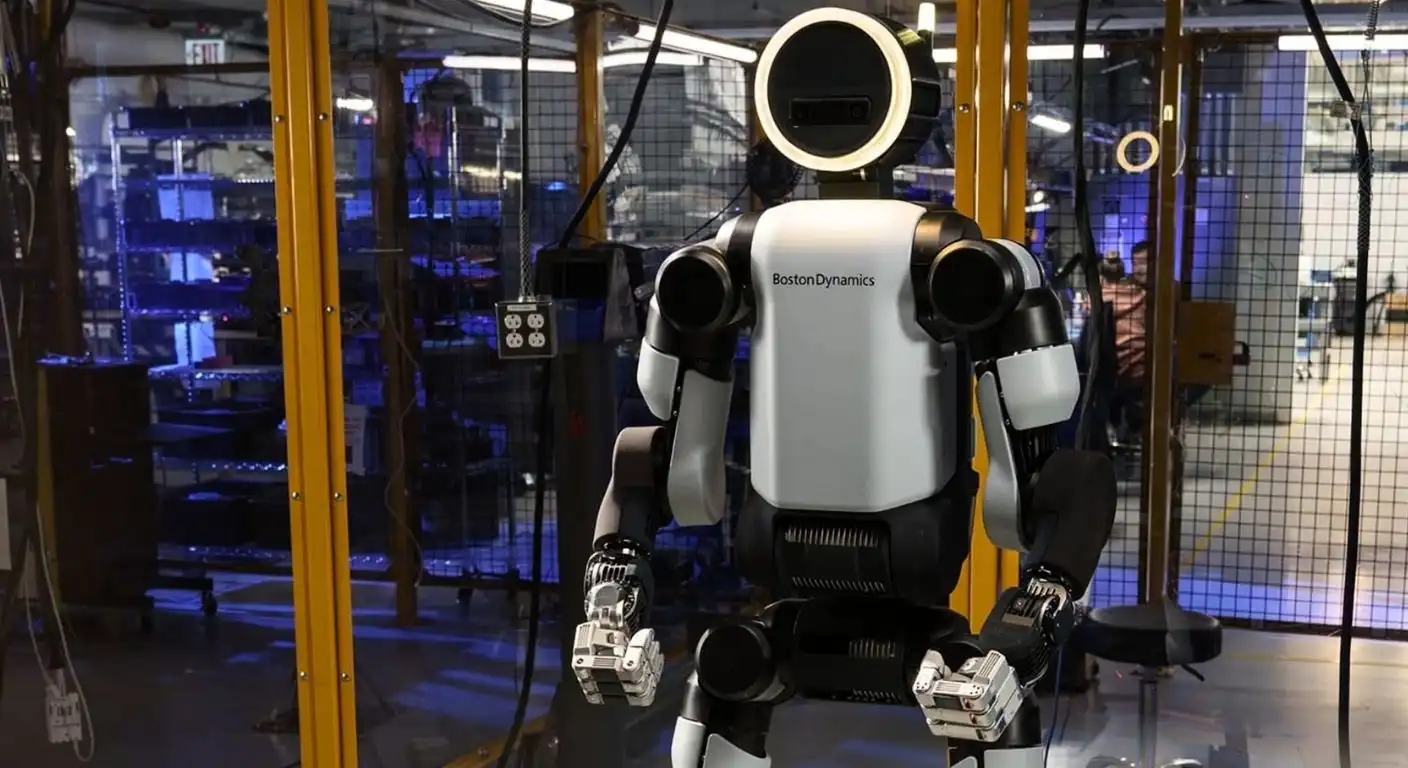
- Hyundai Motor, Hyundai Mobis, and Kia rallied 144%, 105%, and 40%, respectively, on soaring market expectations for Boston Dynamics’ Atlas robot.
- Nvidia CEO Jensen Huang’s recent endorsement of South Korean robotics as a key investment area has added massive momentum to local shares.
The global financial markets are witnessing an extraordinary capital migration as the physical artificial intelligence revolution transitions from a futuristic concept into a high-yield industrial reality. According to new data compiled by the Korea Exchange on Wednesday, June 3, 2026, four massive robot-related technology and automotive giants listed on South Korea’s main bourse have seen their share prices jump by an average of 155% since the beginning of this year. This dramatic stock market rally has turned the spotlight on East Asia’s premier manufacturing conglomerates, which are rapidly repositioning their business portfolios to lead the global humanoid robotics race.
The comprehensive dataset, updated through Tuesday, June 2, 2026, focuses on elite, large-cap companies with individual market capitalizations of at least 50 trillion won, which equals roughly $32.8 billion. Standing at the absolute forefront of this structural rally is consumer electronics giant LG Electronics Inc. Shares of LG Electronics closed at 392,500 won on Tuesday, marking a spectacular, more than fourfold increase from the 91,400 won recorded on the first trading day of January. While the company has historically generated the bulk of its revenue from traditional home appliances, its strategic pivot toward physical artificial intelligence has captured the market’s imagination following the successful unveiling of its new CLOiD humanoid robot at CES 2026 in Las Vegas.
Simultaneously, the parent group and affiliates of South Korea’s largest automotive empire are experiencing their own massive, robotics-driven valuation boom. Shares of Hyundai Motor Co., Hyundai Mobis Co., and Kia Corp. surged by 144%, 105%, and 40%, respectively, over the same five-month period. This coordinated stock rally reflects immense long-term market expectations for Boston Dynamics, a specialized robotics pioneer that is a direct subsidiary of Hyundai Motor Group. Investors are increasingly confident that Boston Dynamics’ next-generation bipedal humanoid robot, Atlas, is close to achieving full commercial viability, paving the way for wide-scale deployment across industrial factories, hazardous construction sites, and logistics centers.
This rapid transformation is fundamentally forcing analysts to rewrite how they value traditional manufacturing businesses. For decades, companies like Hyundai, Kia, and LG operated under low-margin, capital-intensive export models dependent on physical automobile assembly and hardware sales. Today, the physical AI boom is enabling these conglomerates to transition into high-margin businesses in technology, software licensing, and automated systems. By embedding advanced artificial intelligence directly into agile, physical machinery, these firms are proving that they can scale their revenues far faster than traditional manufacturing limits previously allowed, boosting their overall investment appeal to global portfolio managers.
Adding massive, short-term momentum to the local robotics sector is a high-profile endorsement from the world’s most influential semiconductor executive. On Monday, June 1, 2026, Nvidia CEO Jensen Huang explicitly cited robotics as a primary, high-priority area for potential Nvidia investments in South Korea. Speaking ahead of his highly anticipated diplomatic visit to Seoul starting Thursday, Huang’s comments immediately triggered a fresh wave of buying across the Korean tech sector. Analysts point out that if Nvidia partners with local manufacturing giants like Hyundai or LG to co-develop physical AI hardware, it will permanently secure South Korea’s position as the leading industrial factory of the global tech era.
This emerging partnership also highlights a deep mutual dependency between Silicon Valley’s software designs and East Asia’s physical manufacturing capabilities. While Nvidia holds an undisputed monopoly on high-end graphics processors and the software libraries needed to run advanced AI models, it cannot build physical robots or specialized mechanical joints itself. To bring its advanced software into the real world, the U.S. chip giant must rely on manufacturing partners capable of mass-producing heavy, high-precision robotic parts. This hardware requirement has turned South Korea’s industrial infrastructure—which already accounts for roughly 1.5% of the global advanced machinery market—into an indispensable asset for Western technology developers.
The rapid scale-up of the robotics sector arrives at a highly critical moment for South Korea’s domestic workforce. The country is currently facing some of the world’s most severe demographic challenges, characterized by an aging population and a rapidly shrinking labor pool. Economists project that the domestic manufacturing sector will face a shortfall of over 850,000 workers by 2030, making the deployment of autonomous industrial robots an absolute necessity to prevent a severe contraction in GDP. By accelerating the development of humanoid platforms such as Atlas and CLOiD, companies like Hyundai and LG are actively working to protect their factory output from these demographic headwinds.
Looking ahead to the second half of 2026, market observers expect a series of high-profile catalysts to sustain the sector’s upward momentum. The global technology community is closely watching electric vehicle pioneer Tesla Inc., which is scheduled to officially launch its third-generation humanoid robot, the Optimus Gen 3, later this year. Furthermore, several startup competitors in the United States and China are preparing for their own historic public listings, which could inject billions of dollars of fresh capital into the global robotics ecosystem. These upcoming events will keep investor interest in physical AI at a fever pitch, driving further competition among international developers.
Ultimately, the 155% average stock surge among South Korea’s robotics giants marks a profound turning of the page for the global technology economy. By proving that advanced, bipedal humanoids can successfully transition from experimental laboratory concepts into highly productive commercial assets, these firms are rewriting the rules of industrial automation. As Jensen Huang prepares to land in Seoul and the major carmakers prepare for full-scale commercial deployments, the balance of power in the global tech race is shifting toward physical execution. For South Korea’s industrial giants, the future is incredibly bright; by building the physical bodies for the next generation of artificial intelligence, they are driving the global economy into a brand-new era of automated prosperity.