Key Points:
- The world’s top three memory manufacturers—Samsung, SK Hynix, and Micron—have all crossed the historic $1 trillion market cap threshold.
- Enormous global demand for high-bandwidth memory (HBM) chips has turned memory into the primary supply chain bottleneck for the artificial intelligence era.
- Micron’s annual earnings are projected to reach $66.8 billion in 2026, representing a massive jump from the $8.5 billion recorded in 2025.
- While cheap forward P/E multiples of 10x suggest structural growth, high trailing P/E multiples continue to fuel the tech bubble debate on Wall Street.
The global semiconductor rally has officially entered the history books, elevating memory chipmakers into the most elite tier of the corporate world. On Monday, June 1, 2026, market data compiled by Bloomberg revealed that the world’s top three memory chip manufacturers—Samsung Electronics Co., SK Hynix Inc., and Micron Technology Inc.—have all crossed the historic $1 trillion market capitalization threshold. Driven by an insatiable global hunger for artificial intelligence hardware, this massive valuation surge has forced Wall Street to confront a crucial, trillion-dollar question: is this epic run a sustainable paradigm shift, or are investors buying into a massive cyclical tech bubble poised to burst?
Combined, these three newly crowned memory giants now command a market valuation that exceeds the combined value of Magnificent Seven pillars Meta Platforms Inc. and Tesla Inc. South Korea’s Samsung achieved its $1 trillion milestone after its stock surged 14.4% in a single session following a blockbuster operating profit report of $36 billion—dramatically beating Wall Street’s $24.4 billion projection. SK Hynix crossed the threshold as its shares rose nearly 15%, lifting its total valuation to $1.12 trillion. Meanwhile, Idaho-based Micron Technology reached its $1 trillion market cap after major brokerage UBS tripled its price target, cementing Micron’s position as the 11th-largest public company in the United States.
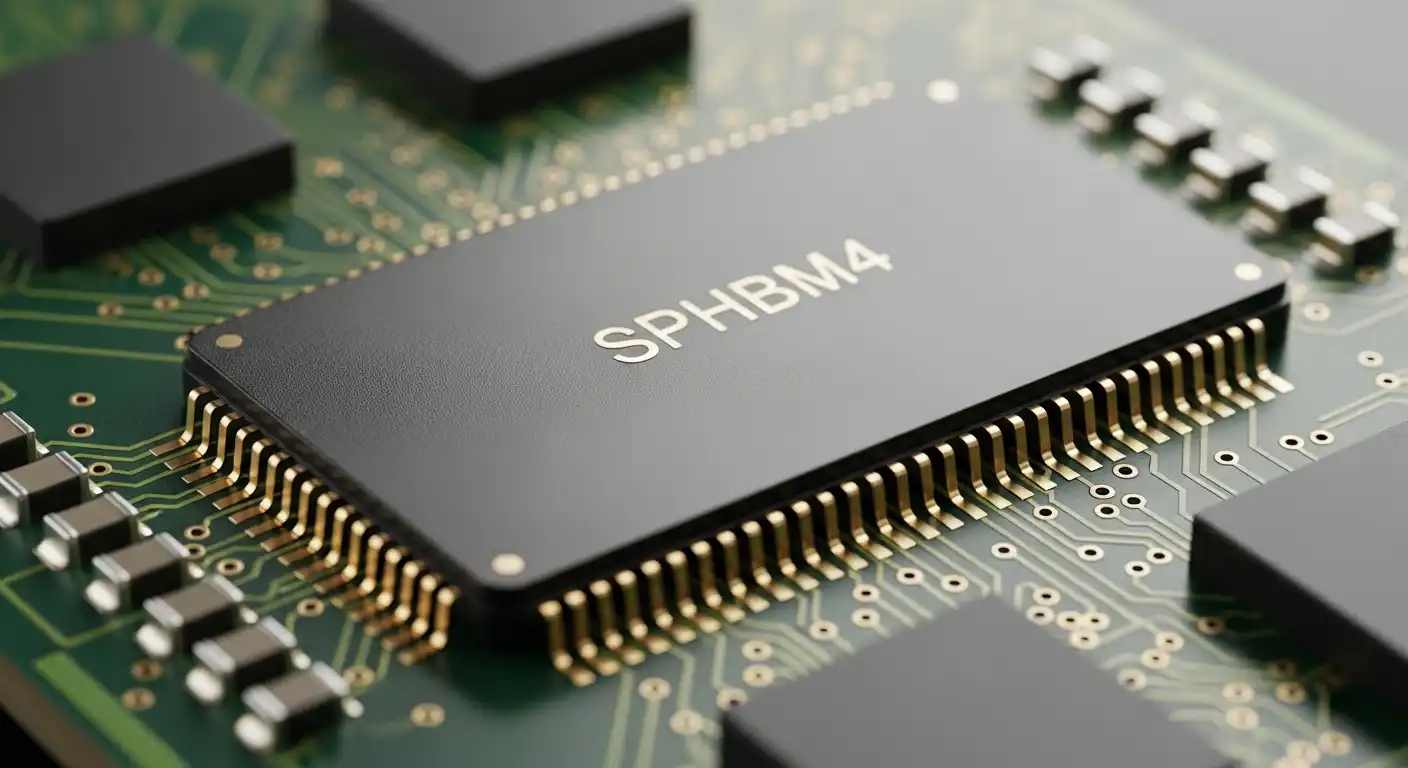
At the center of this unprecedented valuation surge is the massive demand for high-bandwidth memory (HBM) chips. These highly specialized, fast-performance components are essential for feeding data into the massive graphics processors that train and run large language models. The chief executives of graphics giant Nvidia and enterprise server pioneer Dell Technologies have both confirmed that memory has officially become the single biggest hardware bottleneck in the AI supply chain. Because these advanced HBM stacks consume an outsized portion of available manufacturing capacity, they are placing a severe strain on the global semiconductor industry’s ability to meet basic demand.
This physical capacity constraint is triggering widespread supply shortages in other, more traditional electronics markets. Because memory chipmakers are aggressively prioritizing highly lucrative, high-margin HBM production to feed AI data centers, they have scaled back manufacturing lines for standard DRAM and NAND chips. Consequently, manufacturers of consumer smartphones, personal computers, and traditional enterprise servers are struggling to secure necessary memory components. This spillover effect is driving up component contract prices globally, allowing memory firms to generate massive profits across their entire product catalogs.
The profit margins being generated by these memory leaders are truly mind-boggling. For example, analysts project Micron Technology’s annual net income to jump to a staggering $66.8 billion in 2026, representing an immense increase from the $8.5 billion the company recorded in 2025. Looking even further ahead, the company expects its net income to reach a massive $120 billion in 2027. This projected profit figure is larger than the annual net income that e-commerce giant Amazon.com Inc. is expected to deliver over the same period, illustrating how heavily global capital has shifted toward physical infrastructure.
This astronomical profit projection has led some fund managers to argue that the historical cyclicality of the memory industry has permanently changed. Jorry Noeddekaer, the London-based head of global emerging markets at Polar Capital, explained that while he does not believe the semiconductor industry is completely free of cycles, he is firmly in the “higher for longer” camp. Noeddekaer pointed out that major cloud hyperscalers are signing multi-quarter and multi-year supply volume agreements at fixed, high contract prices—a level of long-term revenue visibility that memory companies have historically lacked. For instance, Micron’s CEO recently revealed that its entire HBM production capacity is already sold out for calendar year 2026, while the special dividend payout represents roughly 1.5% of the company’s overall memory division profits.
Despite the massive stock rallies, these soaring profits have kept the forward valuation multiples of memory chipmakers surprisingly low. On a forward price-to-earnings (P/E) basis over the next 12 months, both Micron and SanDisk look incredibly cheap, trading at around 10 times earnings. In comparison, the Philadelphia semiconductor index trades at almost 27 times forward earnings. However, this cheapness relies entirely on the assumption that the AI boom is permanent. On a trailing P/E basis using past profits, the multiples look highly extreme, with Micron trading at 46 times and SanDisk at 58 times historical profits. At the same time, the broader semiconductor index sits at a staggering 71 times.
This valuation paradox is precisely where the heated AI bubble debate comes into play. If the historic demand for artificial intelligence data centers is indeed a structural paradigm shift, these low forward multiples make memory stocks an incredible bargain. However, if the current boom is simply a magnified version of the traditional semiconductor cycle, these valuations are highly vulnerable. Historically, high profit margins have encouraged chipmakers to spend billions of dollars building massive new fabrication plants, eventually leading to a supply glut that drives chip prices down. Skeptics warn that double-ordering by panicked tech buyers may be artificially inflating current demand, setting the stage for a painful market correction down the road.
Ultimately, the $1 trillion milestones achieved by Samsung, SK Hynix, and Micron represent a watershed moment for the global technology supply chain. By transforming memory from a low-margin, cyclical commodity into the indispensable bottleneck of the artificial intelligence era, these companies have rewritten the rules of tech investing. As the 2026 trading year progresses, the global financial community will closely watch to see whether corporate earnings can sustain these historic valuations. For now, the physical reality is clear: the road to artificial superintelligence runs directly through the cleanrooms of the world’s elite memory chipmakers.