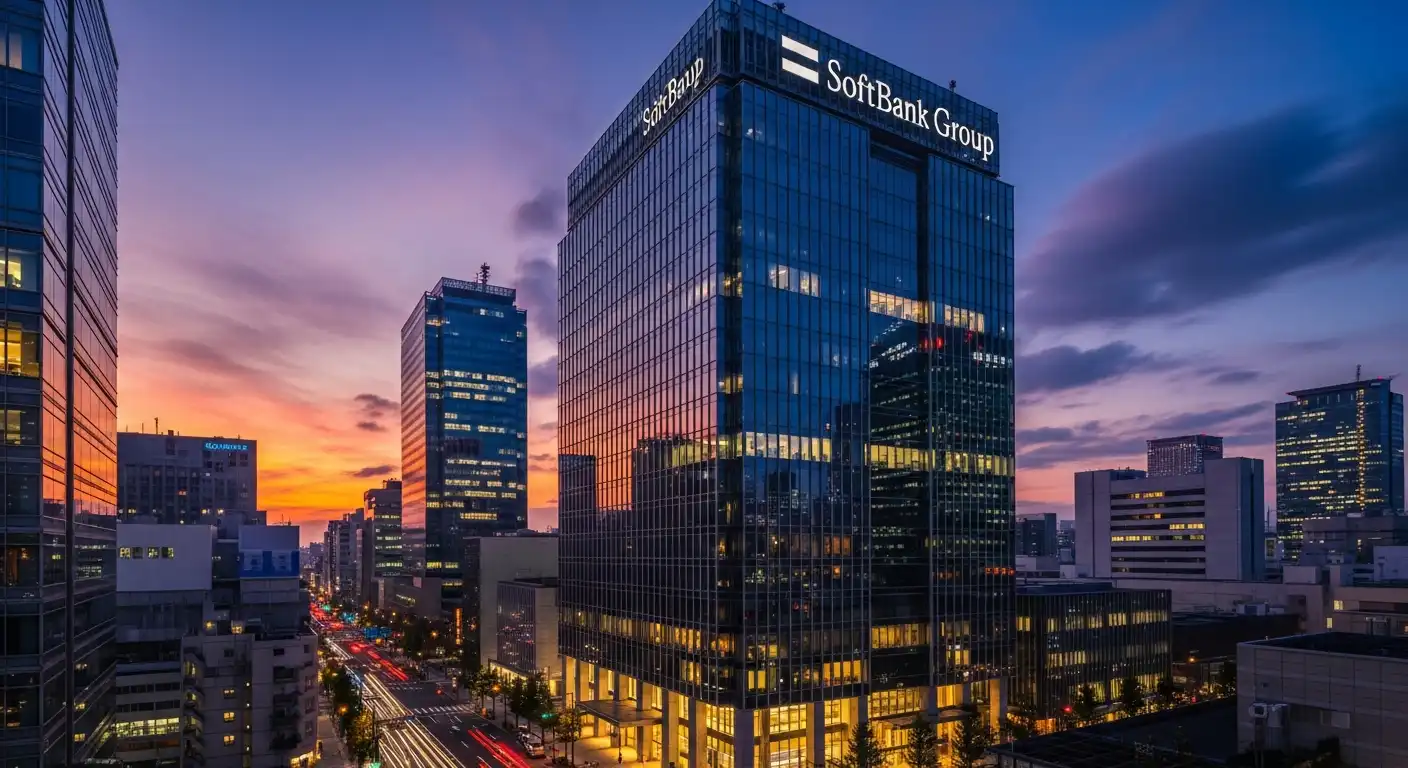
Key Points:
- Asian technology shares fell sharply on Monday, extending a massive Wall Street rout fueled by growing skepticism over artificial intelligence.
- Japan’s SoftBank Group fell by over 7.5%, while South Korea’s benchmark Kospi index plunged by up to 8%.
- Chip giants Samsung Electronics and SK Hynix fell about 5%, dragging down indexes due to their heavy market weights.
- Investors are reassessing the long-term returns on over $180 billion of annual artificial intelligence expenditures.
The intense global stock market correction has hit East Asian tech hubs with full force, triggering some of the sharpest single-day declines in years. On Monday, June 8, 2026, an aggressive sell-off in Asian tech stocks wiped out billions of dollars in market value, extending a brutal Wall Street rout that began late last week. Japan’s SoftBank Group and South Korea’s benchmark Kospi index led the regional decline, plunging amid mounting investor concern that corporate spending on artificial intelligence has far outpaced near-term financial returns.
The regional slide followed a mixed, highly skittish lead-in from Wall Street overnight, where U.S. investors similarly rotated away from technology megacaps into value plays. This skittish sentiment persisted into Asian hours, with Nasdaq 100 Futures shedding nearly 1% and S&P 500 Futures declining by 0.5%. Global traders remain highly cautious ahead of the upcoming U.S. nonfarm payrolls data for May, which will provide vital clues regarding the health of the world’s largest economy and the Federal Reserve’s next interest rate moves.
Tokyo-listed shares of SoftBank Group fell over 7.5% on Monday, reflecting the conglomerate’s high-risk exposure to the global artificial intelligence sector. SoftBank, led by founder and billionaire Masayoshi Son, has bet heavily on generative software and chip design startups, including maintaining an approximate 90% stake in Nasdaq-listed Arm Holdings. Although SoftBank’s stock had surged by nearly 70% earlier this year—even briefly surpassing Toyota Motor as Japan’s most valuable company—this week’s correction has wiped out much of those gains, highlighting how vulnerable tech holding companies remain to sudden shifts in investor sentiment.
Despite the painful multi-billion-dollar drop in his personal fortune, Masayoshi Son has remained characteristically bullish on the long-term future of advanced software. In a public statement, Son reiterated his belief that the artificial intelligence revolution will eventually grow to be 50 times larger than the dot-com boom of the early 2000s. He acknowledged that while the market will inevitably experience temporary price corrections and panics, these volatile periods represent the absolute best investment opportunities for far-sighted venture capital firms looking to secure cheap, high-performance assets.
The selling pressure was even more intense in Seoul, where South Korea’s benchmark Kospi index plunged by up to 8% during Monday’s session. The market rout triggered a level 1 circuit breaker, temporarily halting local trading as investors scrambled to exit their positions. This severe market disruption highlights the unique structure of the South Korean exchange, which relies heavily on a tiny handful of massive family-owned conglomerates to support its overall valuation.
South Korea’s premier memory chipmakers, Samsung Electronics and SK Hynix, both fell by roughly 5% on Monday. Because these two hardware giants account for over 40% of the Kospi’s total market weight, their synchronized decline dragged down the entire national index. Investors are increasingly worried that the high-bandwidth memory supply boom, which has historically generated record-setting profit margins for both firms, is nearing saturation as cloud giants slow their component purchases to digest existing inventories.
This tech-sector anxiety quickly spread to other major manufacturing hubs across the region. Taiwan Semiconductor Manufacturing Company (TSMC), the world’s largest contract chipmaker, declined by 2.1% in Taiwan trading, while electronics manufacturing giant Foxconn fell by 5.1%. These companies serve as the primary manufacturing workhorses for Apple, Nvidia, and AMD, making their declining share prices a highly reliable indicator that global hardware demand is cooling off after months of unprecedented expansion.
The broad-based market correction reflects a major, systemic shift in how institutional investors evaluate the artificial intelligence boom. For the past two years, Wall Street rewarded companies that committed massive capital to building AI systems, pushing sector valuations to historic heights. Today, however, investors are demanding clear, near-term pathways to profitability. With global cloud hyperscalers collectively spending over $180 billion annually on AI-related capital expenditures, fund managers are increasingly skeptical of long-term return timelines, prompting a rotation of capital from expensive growth tech stocks into safer, yield-bearing value assets.
Compounding this stock market volatility, global shipping and energy costs are also rising, putting additional pressure on corporate profit margins. The ongoing war in Iran has effectively closed the strategic Strait of Hormuz, forcing shipping lines to reroute container vessels around Africa. This logistical detour has removed a massive volume of oil from the market, driving shipping and fuel costs significantly higher. Even a minor 1.5% increase in global logistics overhead can severely squeeze technology manufacturers, as shipping complex semiconductor machinery and bulk components becomes increasingly expensive.
Ultimately, the dramatic sell-off of Asian tech stocks on June 8, 2026, marks a necessary and healthy period of valuation rebalancing for the global technology industry. The speculative era of the AI rally, where companies could drive their stock prices higher simply by mentioning automated software, has officially come to an end. By demanding realistic near-term guidance and reasonable capital expenditure timelines, public markets are steering the industry toward a more sustainable long-term trajectory. For patient, value-oriented investors, this expectations-driven pullback represents a highly attractive entry point into the companies that will continue to build the physical infrastructure of the digital age.