

Key Points:
- Rising crude oil prices, driven by tensions in the Middle East, will likely push Japan’s core consumer inflation back above 3% by early 2027.
- A prominent global investment bank warned that energy shocks transmit to retail prices through 3 distinct channels over 12 months.
- The Bank of Japan will likely raise its benchmark interest rate by 25 basis points to 1.0% at its June meeting.
- High upstream prices for naphtha and petrochemicals exceed 2022 levels, forcing midstream and retail companies to pass on costs actively.
A massive wave of cost-push inflation is rolling toward the world’s fourth-largest economy, threatening to dismantle decades of monetary accommodation. On Monday, June 8, 2026, global financial analysts warned that surging crude oil prices will likely push Japan’s core consumer inflation back above the 3% threshold by early 2027. Driven by escalating military conflicts in the Middle East and the blockading of the vital Strait of Hormuz, these raw material price increases are triggering a profound re-evaluation of national monetary policy. As a result, the Bank of Japan (BOJ) faces intense pressure to adopt a much more hawkish stance, preparing for a faster pace of interest rate hikes and a higher terminal rate to prevent prices from spiraling out of control.
The way higher crude oil prices filter down to everyday consumer products in Japan is a complex, multi-layered process. Bank of America researchers outlined three distinct transmission channels that operate over a roughly 12-month period. First, gasoline and retail fuel prices adjust almost immediately to movements in international Brent crude, hitting motorists at the pump within days. Second, domestic electricity and gas utility costs follow with a predictable lag of about six months, a delay mandated by Japan’s official fuel cost adjustment rules. Finally, the pass-through to non-energy items—including packaged foods, household goods, and local services—builds gradually and peaks after approximately one year.
This gradual, three-stage transmission means that while Japan’s core consumer price index currently sits below 2%, the major inflationary pressure will not peak until early 2027. By then, the steady accumulation of non-energy price increases will likely push headline inflation back above 3%, reversing the temporary cooling effect of near-term government utility subsidies. Although seasonal base effects in agricultural and fresh food prices should cause overall consumer price growth to decelerate slightly through the summer of 2026, the underlying cost-push pressures remain tilted heavily to the upside.
The severity of the current supply shock is particularly obvious in the upstream chemical and manufacturing sectors. Price increases for raw naphtha and other essential petrochemicals have already exceeded the historic records set during the 2022 global energy crisis. Because these chemical inputs underpin the production of plastics, packaging film, industrial adhesives, and synthetic fibers, their soaring costs are forcing midstream and downstream producers to pass expenses on. Unlike in previous economic cycles, when companies absorbed high material costs to maintain market share, Japanese firms are now raising retail prices more aggressively as national inflation expectations solidify.
The central bank’s primary concern is whether this temporary supply shock will generate dangerous “second-round” effects in underlying inflation. If inflation expectations—which currently hover near the 2% target—become permanently elevated, workers will demand much higher wage increases to maintain their purchasing power. This dynamic can easily trigger a self-fulfilling wage-price spiral. Because Japanese businesses are already operating in a tight labor market with rising wage growth, the risk of inflation overshooting and persisting above the target remains remarkably high, forcing monetary authorities to act preemptively.
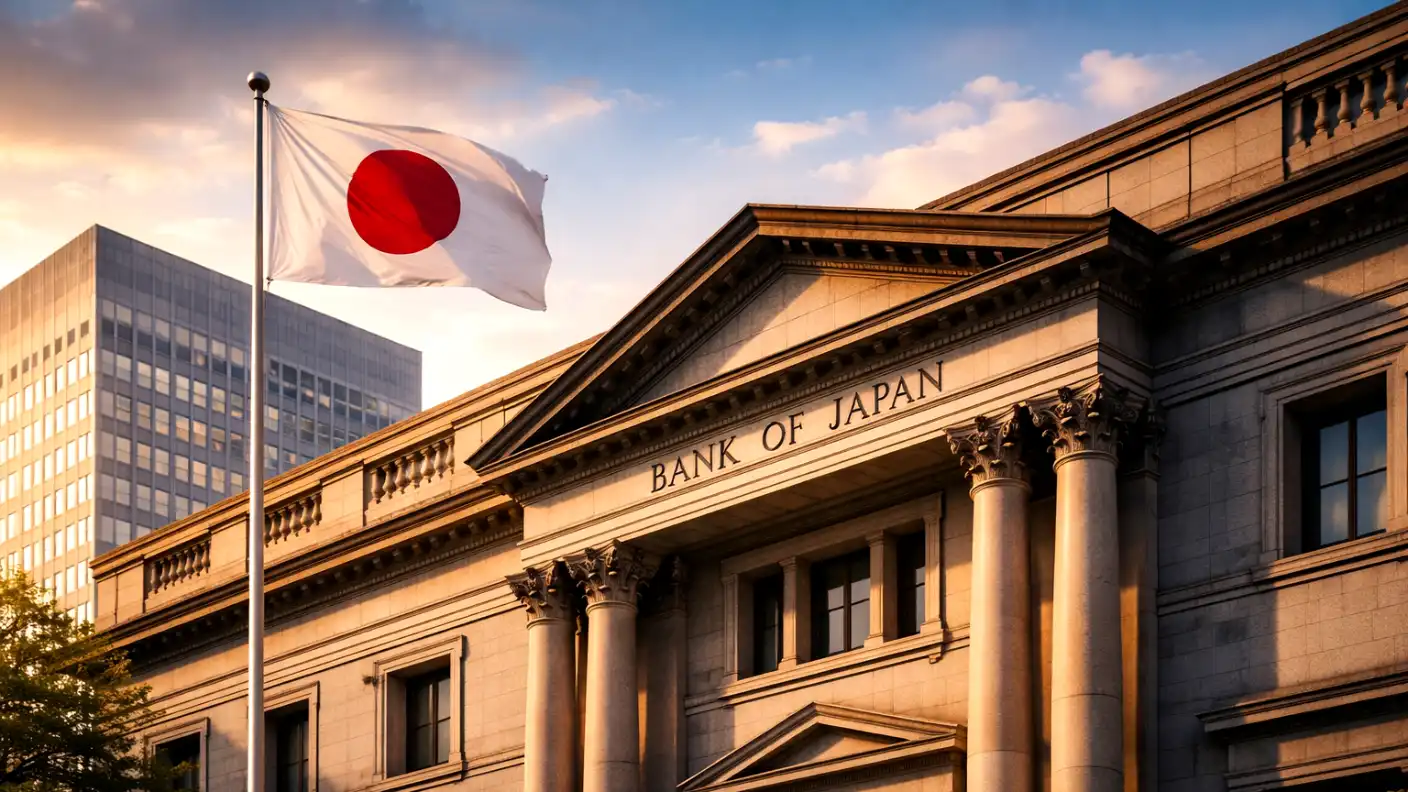
This inflationary backdrop has set the stage for a historic policy meeting. At its upcoming two-day policy session scheduled for June 15 and 16, 2026, the Bank of Japan will likely raise its short-term policy interest rate by 25 basis points, lifting the benchmark to 1.0%. This move would mark the first time Japan’s short-term borrowing costs have reached the 1.0% level since September 1995, officially concluding the country’s multi-decade era of near-zero and negative interest rates. Financial markets currently price in an 80% to 96% probability of a rate hike, highlighting how thoroughly investors have digested the central bank’s hawkish shift.
BOJ Governor Kazuo Ueda has delivered increasingly hawkish signals in recent weeks, preparing the market for the June rate adjustment. In a public address, Ueda cautioned that the central bank must act decisively if the upside risks to prices begin to outweigh the downside risks to overall economic activity. He emphasized that while the ongoing Middle East conflict introduces significant uncertainty, the risk of hotter-than-expected inflation appears greater overall and is likely to emerge sooner than previously estimated, leaving the central bank with little room to maintain its accommodative stance.
This monetary tightening occurs amid intense political pressure on the government. Prime Minister Sanae Takaichi, who assumed office in October, has prioritized shoring up the domestic economy and addressing public discontent over rising food and utility prices. While the government has implemented multi-billion-dollar energy subsidies and tax relief packages to shield households, these fiscal interventions represent short-term band-aids. Resolving the underlying inflation problem ultimately requires a stronger Japanese yen, which has depreciated sharply due to the massive interest rate gap between Japan and the United States.
The financial scale of Japan’s import bill is truly monumental. As a resource-scarce nation that imports nearly 95% of its fossil fuels, even a minor 1.5% depreciation of the yen can add over $1 billion to the country’s annual energy expenditures, compounding domestic inflation. To fund this expensive import bill and keep factories running, major trading houses and industrial conglomerates are actively reallocating their capital, with some firms investing heavily in domestic alternative energy and smart factory automation to reduce their physical power requirements.
In the end, the latest Japan inflation projection 2026 highlights a permanent structural transition for the world’s fourth-largest economy. The era of low-cost imported energy and stagnant domestic wages has officially come to an end, shattered by the physical realities of the Iran war and the Strait of Hormuz blockade. As the Bank of Japan prepares for its landmark June 16 meeting, its bold shift toward monetary normalization represents a necessary, albeit painful, insurance policy. By raising borrowing costs and cooling down speculative price pressures, Japan is building a more resilient, self-sufficient economic foundation designed to survive a highly fragmented global financial system.






