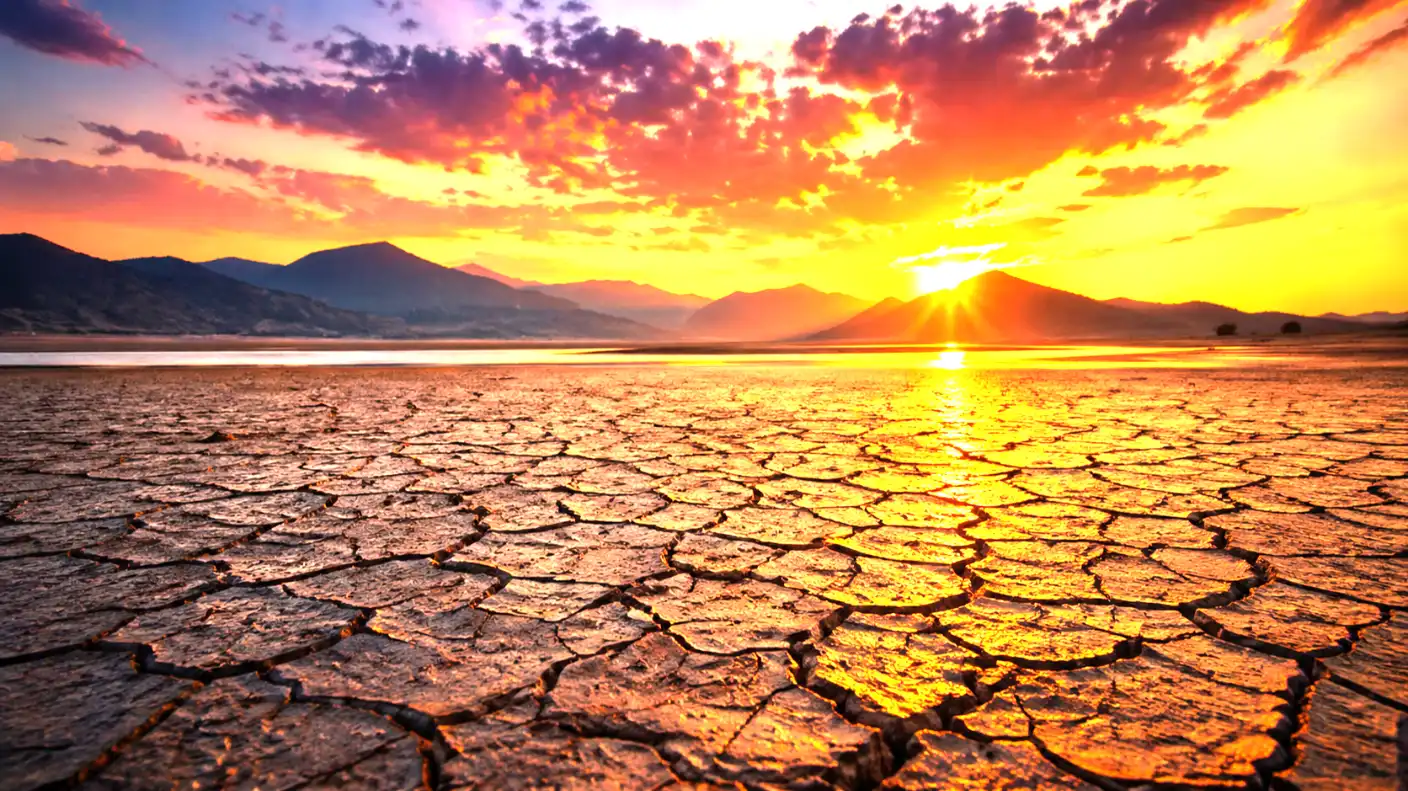
The European continent is bracing for its most severe meteorological crisis of the summer. According to urgent weather advisories issued by Spain’s State Meteorological Agency, known as AEMET, a massive plume of superheated, dry air migrating north from the Sahara Desert is set to engulf the Iberian Peninsula. Meteorologists warn that the upcoming week will deliver some of the highest temperatures ever recorded in the country’s history, with local thermometers projected to spike to an extraordinary 45 degrees Celsius, equivalent to 113 degrees Fahrenheit.
This extreme heatwave represents a major threat to public health, environmental safety, and critical infrastructure. The combination of intense solar radiation, stable atmospheric conditions, and the incoming African air mass has created a powerful “heat dome” over the region.
This atmospheric phenomenon acts as a lid, trapping hot air beneath it and compressing it further, raising temperatures to dangerous levels while completely blocking cloud formation and cooling rainfall.
As the country prepares for the worst of the heatwave, regional governments have placed emergency services on high alert. The state has issued severe warnings of extreme wildfire risks, critical water shortages, and potential electrical grid failures as millions of households run their cooling systems simultaneously.
For Spain, which relies heavily on summer tourism and agricultural exports to support its economy, this extreme weather event serves as a clear warning of the rising frequency and intensity of climate-driven heatwaves across southern Europe.
The Saharan Cauldron: Spain Braces for the Most Intense Heatwave of the Summer
The meteorological mechanics behind the upcoming heatwave are highly structured and predictable. The event is driven by a massive high-pressure system positioned over the Mediterranean, which is actively drawing superheated air from the Sahara Desert across the narrow Gibraltar Strait and directly into the Iberian interior.
This Saharan air mass is not only incredibly hot but also contains high concentrations of suspended dust, creating a dense, hazy phenomenon known locally as “calima.” The dust particles scatter the sunlight, creating a dull, orange sky while reducing visibility and severely degrading air quality.
The geographic distribution of the extreme heat will concentrate heavily in the southern and central river basins of the country. The Guadalquivir valley in Andalusia, which houses historic cities like Seville and Cordoba, is projected to be the epicenter of the heatwave, with temperatures expected to hover between 43 and 45 degrees Celsius for multiple consecutive days.
Similarly, the Guadiana and Tagus valleys in Extremadura and Castilla-La Mancha will face temperatures exceeding 42 degrees Celsius, while even the northern Ebro basin is preparing for a scorching 40 degrees Celsius.
Beyond the daytime maximums, health authorities are particularly worried about the lack of nighttime relief. The high-pressure system will prevent heat from escaping into space at night, resulting in widespread “tropical nights” where temperatures do not fall below 25 degrees Celsius, or 77 degrees Fahrenheit.
Without the opportunity for the human body or physical structures to cool down overnight, the cumulative physiological stress on vulnerable populations—including the elderly, young children, and outdoor workers—increases exponentially, driving a significant rise in heatstroke and cardiovascular emergencies.
Extreme Wildfire Risk: The Crucial Thirty-Thirty-Thirty Formula
The most immediate, highly dangerous environmental threat posed by the incoming heatwave is the explosive risk of wildfires. Prolonged, multi-year droughts have already left the forests, shrublands, and agricultural fields of the Iberian Peninsula bone-dry, creating a landscape that is highly vulnerable to ignition.
To evaluate and track this danger, emergency services rely on a strict, globally recognized meteorological warning system known as the 30-30-30 rule.
When a region simultaneously experiences temperatures exceeding 30 degrees Celsius, wind speeds greater than 30 kilometers per hour, and relative humidity levels below 30 percent, the physical conditions are perfect for the rapid, uncontrollable spread of forest fires.
During the upcoming heatwave, almost every major region in southern and central Spain will easily satisfy these dangerous criteria.
Understanding the Meteorological Trigger of Forest Fires
The physics of the 30-30-30 rule explains why modern wildfires are so difficult to contain. High temperatures rapidly evaporate whatever minimal moisture remains in forest soils and plant tissues, turning leaves, branches, and undergrowth into highly flammable tinder.
At the same time, relative humidity levels falling below 30 percent allow the air to act as a dry sponge, drawing moisture out of the environment and making it incredibly easy for a single spark—whether caused by a lightning strike, agricultural machinery, or human negligence—to ignite a fire.
Once ignited, high wind speeds exceeding 30 kilometers per hour provide the physical force needed to spread the flames rapidly across the canopy.
These winds carry burning embers kilometers ahead of the main fire line, igniting new, secondary blazes and trapping firefighting crews.
Under these conditions, traditional firefighting techniques are virtually useless, forcing emergency services to focus their limited resources on evacuating communities and protecting critical infrastructure rather than attempting to contain the active fire line.
The Cost of Environmental Containment
Managing this systemic wildfire threat imposes a massive financial and physical burden on Spain’s regional governments. The country maintains one of the most sophisticated, highly trained aerial firefighting fleets in Europe, utilizing specialized water-bombing planes, heavy helicopters, and automated drone networks to monitor and douse blazes.
However, operating this high-tech defense network during a severe heatwave is incredibly expensive.
A single hour of flight time for a heavy water-bomber costs thousands of dollars in fuel, maintenance, and crew allocation.
As the number of active fires increases across the country, regional air bases are stretched to their absolute operational limits.
This financial drain is worsened by the cost of mobilising thousands of civil protection officers, setting up emergency shelters, and providing long-term support to displaced families, proving that the direct, physical costs of climate-driven weather shocks are starting to place a significant burden on national budgets.
The Infrastructure Strain: Water Scarcity and Grid Vulnerability
The extreme heatwave will also place unprecedented, highly visible strain on Spain’s essential infrastructure. Modern societies rely on a continuous, uninterrupted flow of electricity and clean water to survive, yet both of these vital resource networks are highly vulnerable to the physical limits of extreme heat.
The primary concern is the national power grid, managed by Red Eléctrica de España.
As outdoor temperatures climb past 40 degrees Celsius, millions of households, commercial offices, and retail centers will turn their air conditioning units to maximum settings, driving a massive, sudden spike in national electricity demand.
At the same time, the high heat reduces the physical efficiency of the power grid, creating a dangerous double-squeeze that threatens to trigger localized blackouts.
The Critical Depletion of Southern Water Reservoirs
The physical strain on the water supply is particularly critical in the southern regions of Andalusia and Catalonia. Prolonged, multi-year droughts have already depleted the country’s national water reserves, with many major river basins currently operating far below their historical capacities.
In several agricultural areas of the Guadalquivir basin, reservoir levels have fallen below a critical 25 percent capacity threshold.
To protect the remaining drinking water supply for urban populations, regional water authorities have been forced to implement strict rationing programs, cutting off water to agricultural irrigation networks and restricting use for municipal swimming pools, public parks, and non-essential industrial activities.
This lack of water directly threatens the livelihoods of local farmers, who face the prospect of losing entire harvests of high-value crops like olives, citrus fruits, and wine grapes, driving up food prices globally.
The Threat of Air Conditioning-Driven Grid Failures
The massive demand for indoor cooling places the national electrical grid in a highly vulnerable position. When electricity flows through high-voltage transmission lines, it naturally encounters physical resistance, which generates heat.
When the surrounding air temperature is already exceptionally high, the transmission lines cannot easily dissipate this heat, causing the copper and aluminum wires to expand, sag, and lose their capacity to carry electricity.
Furthermore, solar panels, which are highly prized as a clean energy source, actually experience a decline in power-generation efficiency when ambient temperatures rise above 25 degrees Celsius, meaning the grid operator must rely on gas-fired peaker plants to make up the difference, driving up wholesale electricity costs during the peak of the heatwave.
Reshaping the Tourism Economy: The Rise of “Coolcationing”
The increasing frequency of severe summer heatwaves is executing a profound, long-term transformation on Spain’s vital tourism sector. Tourism remains one of the primary engines of the Spanish economy, contributing an estimated 12.8% to the national gross domestic product and supporting millions of service-sector jobs.
However, the reality of 45-degree heat is starting to alter how international travelers plan their summer vacations.
Many traditional tourists from Northern Europe, the United Kingdom, and North America are beginning to realize that spending their summer holidays in a state of absolute physical exhaustion is not enjoyable.
This realization is driving a significant, long-term shift in tourist behavior, with consumers increasingly choosing cooler, northern destinations to escape the extreme heatwaves of the south.
The Migration of Tourists to Northern Spain
This consumer transition has driven the rapid rise of “coolcationing”—the practice of booking summer vacations in regions known for their mild, comfortable climates rather than their scorching beaches.
In Spain, this trend is causing a massive reallocation of tourist spending.
Cooler, rain-heavy northern provinces like Galicia, Asturias, Cantabria, and the Basque Country are recording historic, unprecedented increases in hotel bookings, holiday rentals, and restaurant revenues during July and August.
Travelers are choosing to explore the dramatic green cliffs and cooler, breezy beaches of the Cantabrian Sea, leaving traditional southern resort areas to grapple with softer demand and lower occupancy rates during the hottest weeks of the summer.
Redesigning the Urban and Resort Experience
To protect their revenues and retain their customers, hotels, resorts, and municipal governments in southern and central Spain are being forced to execute major structural and operational changes.
They can no longer rely on traditional outdoor amenities to keep guests entertained.
Properties are investing heavily to upgrade their central air conditioning systems, install misting fans on outdoor terraces, and create indoor, climate-controlled leisure spaces.
Furthermore, municipal tourism boards are shifting their scheduled tours and cultural events to the cooler evening hours, while closing popular outdoor historical sites and parks during the peak heat of the day to protect visitors from heatstroke.
While these adjustments are necessary, they add high operational costs to the tourism sector, reducing profit margins and changing the traditional, sun-drenched image of the Spanish holiday.
Climate Adaptation: The Urgent Need for Long-Term Resilience
The extreme heatwave sweeping across Spain is a clear, unyielding warning that the climate of southern Europe is undergoing a permanent, structural shift. As the Saharan plume moves out and the immediate crisis passes, the country must focus its resources on building long-term, systemic resilience to survive future, even more intense heatwaves.
To protect its citizens, safeguard its economy, and secure its critical infrastructure, Spain must invest heavily in advanced climate adaptation strategies.
This means transitioning its cities away from asphalt-heavy, concrete designs that trap heat, choosing instead to plant massive urban forests, build green corridors, and install reflective, cool-roof technologies to lower city-center temperatures naturally.
It also requires a massive, multi-billion-dollar investment in advanced water technologies, including seawater desalination plants, wastewater recycling systems, and high-efficiency agricultural drip irrigation, ensuring that the country possesses the secure water resources needed to support its population and its agricultural sector during the hot, dry summers of the 21st century.
By combining these advanced adaptation strategies with a commitment to clean energy and international cooperation, Spain can successfully build a resilient, forward-looking society that is prepared to face the environmental challenges of a changing world, ensuring that even as the heatwaves of the Sahara continue to sweep across the Iberian Peninsula, the country remains a safe, prosperous, and beautiful place to live, work, and visit for generations to come.