

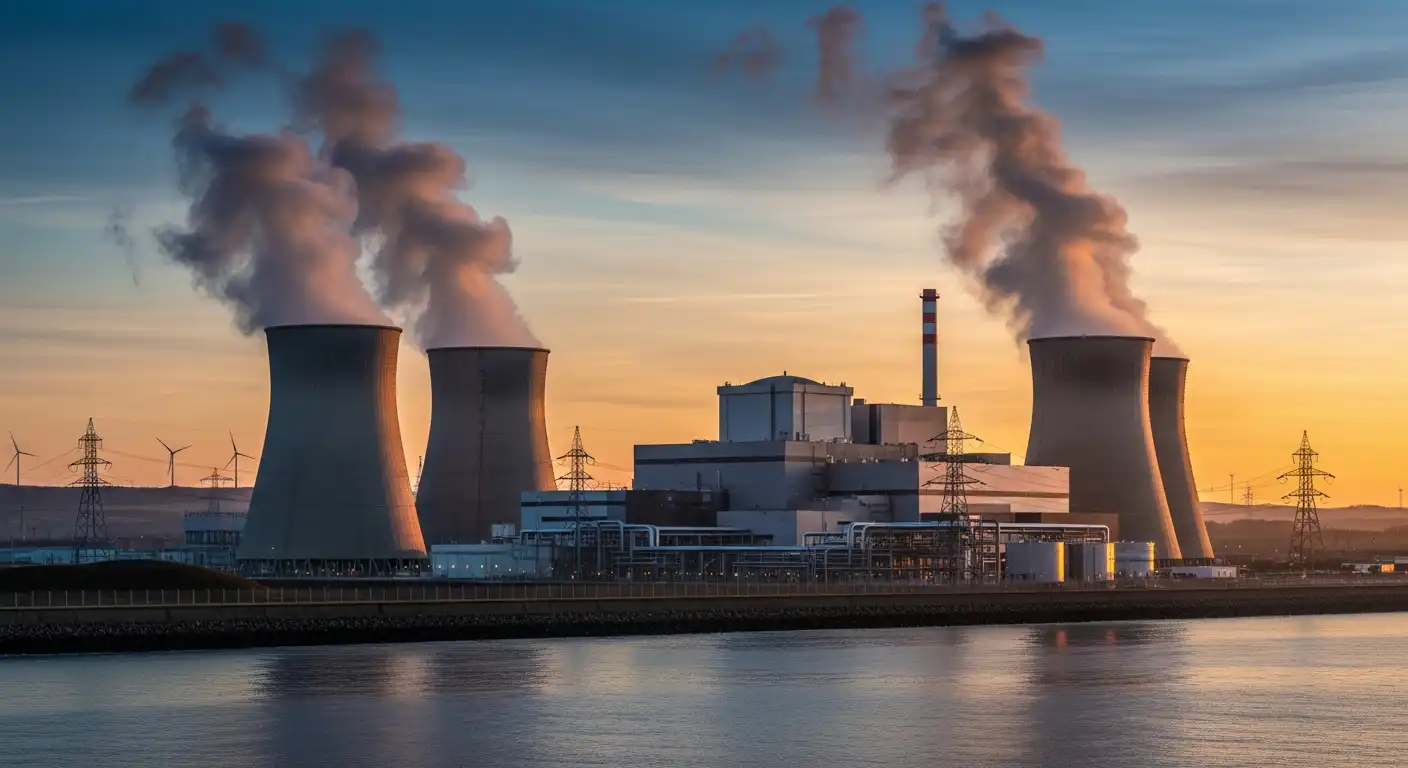
The global energy transition is facing a silent, highly volatile crisis that has exposed the physical limits of traditional power grids. For decades, France’s massive nuclear fleet operated as the undisputed backbone of the European electricity network. By generating roughly 70% of its domestic electricity from 57 nuclear reactors, France established itself as a global leader in low-carbon energy, frequently exporting massive quantities of cheap, reliable power to neighboring countries to stabilize the continental grid.
This strategic energy fortress has run into a severe, climate-driven bottleneck. In late June, France’s nuclear output fell to its lowest level in almost nine months. The cause was not a mechanical failure or a planned maintenance cycle. Instead, a record-breaking heatwave sweeping across Western Europe pushed river water temperatures to historic highs, forcing state-owned utility Electricite de France (EDF) to shut down reactors and curb power generation.
Because nuclear power plants rely heavily on local rivers to cool their reactors, the sudden spike in water temperatures has made it impossible to run these facilities at full capacity without violating strict environmental protection laws.
This production drop has triggered immediate, widespread repercussions across the European energy sector. With a significant portion of France’s nuclear capacity offline, wholesale electricity prices have skyrocketed to multi-month highs, and power exports to neighboring countries have collapsed. As the continent grapples with a locked-in high-pressure weather system known as an “Omega Block,” the energy squeeze has demonstrated that extreme summer heat can be just as disruptive to the global power grid as severe winter cold snaps.
The Physics of the Nuclear Cooling Bottleneck
The primary reason why France’s nuclear fleet is so vulnerable to extreme summer weather is a direct result of the physics of steam-turbine power generation.
The Critical Role of Rivers in Nuclear Operations
Nuclear power plants operate on a relatively simple thermodynamic principle. The heat generated by splitting uranium atoms inside the reactor core is used to boil water, creating high-pressure steam. This steam turns massive turbine blades connected to an electrical generator, producing high-voltage electricity.
Once the steam passes through the turbines, it must be rapidly cooled and condensed back into liquid water so that the cycle can repeat.
To achieve this condensation, nuclear power plants draw massive volumes of cold water from adjacent rivers, lakes, or oceans. This cooling water absorbs the waste heat from the steam loop and is then discharged back into the local waterway, typically several degrees warmer than when it entered the facility.
During normal weather conditions, this continuous water exchange works flawlessly. However, during a severe heatwave, the system’s reliance on local rivers turns into a critical operational vulnerability.
The Environmental Guardrails of the 2006 Decree
The primary obstacle preventing EDF from running its reactors at maximum capacity during hot weather is not a lack of engineering capability, but a strict set of environmental protection laws. In France, the discharge of heated water into public rivers is governed by a strict regulatory framework, officially codified in the decree of September 18, 2006.
These environmental regulations are designed to protect fragile river ecosystems from thermal pollution. When a power plant discharges hot water into a river, it raises the local water temperature, which can trigger massive algae blooms, deplete dissolved oxygen levels, and cause severe thermal stress or death for local fish and aquatic wildlife.
To prevent these ecological disasters, the law establishes strict temperature limits for major river basins:
- The Garonne River: The cooling water from the Golfech nuclear plant cannot push the river’s downstream temperature past a strict 28 degrees Celsius threshold.
- The Seine River: Downstream of the Nogent-sur-Seine facility, the water temperature cannot rise by more than 3 degrees Celsius on average and must remain below 28 degrees Celsius.
- The Rhône River: Plants like Bugey and Saint-Alban must continuously monitor and limit their thermal discharges to protect the river’s sensitive fish and vegetation.
When summer heatwaves push the baseline river temperatures close to these legal limits before any cooling water is even discharged, EDF has no choice but to scale back its power generation or shut down its reactors entirely to remain in compliance with the law.
The Rapid Wave of Reactor Shutdowns and Curtailments
As the record-breaking heatwave deepened in late June, with atmospheric temperatures rising above 40 degrees Celsius across much of France and reaching an extraordinary peak of 44.3 degrees Celsius in Pizay, EDF’s engineers had to execute a series of rapid, protective shutdowns.
Taking Key Facilities Offline: Golfech, Nogent, and Bugey
The operational shutdown program began late on a Monday, when EDF’s environmental monitoring systems detected that the Garonne River in southwestern France was warming rapidly toward the legal limit of 28 degrees Celsius. To prevent an ecological disaster, operators took the active Unit 2 reactor at the Golfech nuclear power plant offline, while Unit 1 was already offline for scheduled maintenance.
The closures quickly accelerated as the heatwave spread northward. On Thursday, June 25, EDF temporarily shut down two additional nuclear reactors:
- Nogent 2: Located at the Nogent-sur-Seine power station on the Seine River, northeast of Paris.
- Bugey 3: Located at the four-unit Bugey facility on the Rhône River, near the southeastern city of Lyon.
In addition to these full shutdowns, EDF was forced to implement significant generation curtailments at other major sites, including reducing the output of the Saint-Alban 2 reactor on the Rhône.
At midday on Thursday, the cumulative power cuts across the French nuclear fleet reached a massive 4.1 gigawatts, representing approximately 7% of the country’s total active nuclear capacity.
While the French transmission system operator, RTE, assured the public that the country’s overall grid reliability remained secure, the sudden loss of 4.1 gigawatts of baseline power stripped away the continent’s primary energy cushion.
The Broader European Power Grid and Financial Fallout
The sudden plunge in French nuclear output has sent shockwaves through the interconnected European energy markets, exposing the high vulnerability of the continent’s integrated power grid.
France’s Export Engine Grinds to a Halt
Historically, France’s low-cost nuclear fleet has acted as a primary exporter of cheap electricity to neighboring countries, helping to stabilize regional grids and lower energy bills across the UK, Germany, Italy, and Spain. During normal operations, French grid operator RTE frequently exports between 10 and 12 gigawatts of surplus electricity to its neighbors daily.
As the heatwave forced the reactor shutdowns, this massive export engine ground to a halt. On a Wednesday afternoon, France’s net electricity exports plummeted to just 3 gigawatts, representing a massive 70% drop in export volume compared to the prior week.
This sudden, sharp reduction in cheap French power has forced neighboring countries to rely heavily on expensive local gas-fired power plants to meet their own rising cooling demands, driving up electricity prices across Western Europe.
Wholesale Electricity Prices Skyrocket
The combination of low wind generation, high air-conditioning demand, and reduced nuclear availability has triggered a major pricing shock in the European wholesale energy markets.
Wholesale spot power prices in France and Germany surged to their highest levels since mid-January 2025, as the grid was forced to rely on more expensive natural gas generation to balance the system.
At the same time, the European carbon market experienced a corresponding surge, with carbon emissions allowances trading near a high of EUR 82 per ton as utilities increased their fossil fuel consumption.
Alessandro Armenia, an energy analyst at Kpler, noted that climate change is proving that extreme summer heat can be just as disruptive to energy markets as severe winter cold snaps. He warned that while these summer price spikes are currently surprising investors, they will likely become a recurring feature of the European energy market as global temperatures continue to rise.
Reforming the European Energy Architecture for a Warmer Future
The ongoing nuclear crisis in France has reignited an intense, highly academic debate among energy economists, grid planners, and policy chiefs regarding the long-term sustainability of Europe’s nuclear-heavy energy strategy.
Critics of the nuclear model point out that while atomic energy provides reliable, carbon-free baseload power, its heavy reliance on river systems for cooling makes it highly vulnerable to the physical impacts of climate change.
As summers grow hotter and longer, and river flows shrink due to persistent droughts, the frequency of these heat-related shutdowns will inevitably increase, making nuclear power less reliable during the exact periods when the grid needs energy most.
To build a more resilient energy system, Europe must accelerate its investments in alternative, decentralized technologies. This includes:
- Expanding Dry Cooling Technologies: Upgrading existing reactors with dry cooling towers that use air instead of water to condense steam, eliminating their reliance on river systems, though this technology carries a high capital cost and can slightly reduce overall plant efficiency.
- Investing in Large-Scale Battery Storage: Constructing massive, grid-scale battery storage facilities to store excess solar and wind power generated during the day, providing a clean, reliable cushion to balance the grid when nuclear output is curtailed.
- Building Sea-Cooled Reactors: Prioritizing the construction of future nuclear power plants along coastal regions, where cold, deep-sea water can be used for cooling without facing the strict thermal limits and seasonal shortages that affect inland river systems.
By diversifying its generation mix and investing in these climate-resilient technologies, Europe can successfully protect its power grid from the rising physical limits of the planet, ensuring a clean, secure, and affordable energy future for its citizens.
A Crucial Test for Climate Resilience
The plunge in French nuclear output to a nine-month low is a powerful, highly timely warning that the global energy transition faces serious, physical bottlenecks. By forcing EDF to shut down three major reactors and curb power generation to protect warming river ecosystems, the record-breaking European heatwave has demonstrated that even the most advanced carbon-free power grids remain highly vulnerable to the physical impacts of climate change.
While the French transmission operator has successfully managed to keep the national grid stable through the supportive diversity of the interconnected European network, the financial and operational fallout is substantial.
As wholesale power prices surge and exports to neighboring countries collapse, the tech and energy sectors must realize that climate resilience is no longer a long-term goal; it has become an immediate, survival-level necessity.
To protect the global economy from future energy shocks, governments and utility giants must move past legacy designs, investing in dry cooling systems, coastal reactors, and diversified renewable technologies needed to build a resilient, heat-proof energy architecture that can survive and thrive in a changing world.






