Key Points:
- Nvidia and Hyundai Motor Group expanded their strategic partnership to advance physical artificial intelligence, robotaxis, and heavy industrial manufacturing.
- The multi-year collaboration places Boston Dynamics’ upgraded Atlas humanoid robot at the center of smart factory innovation.
- The executives discussed a massive nine trillion won, or $5.9 billion, “AI Valley” infrastructure project in Saemangeum.
- Hyundai will deploy the production-ready Atlas robot at its Georgia Metaplant by 2028 to perform complex sequencing and heavy industrial tasks.
The commercial race to bring artificial intelligence into the physical world has reached a massive milestone in East Asia. On Monday, June 8, 2026, American chip giant Nvidia Corporation and South Korea’s Hyundai Motor Group announced an expansion of their strategic partnership during a high-profile meeting in Seoul. Nvidia Chief Executive Officer Jensen Huang and Hyundai Motor Executive Chair Chung Euisun met at Hyundai’s Yangjae headquarters to lay out a comprehensive, multi-year roadmap. This expanded Nvidia Hyundai AI robotics partnership aims to move advanced machines off the lab bench and onto the factory floor, bringing artificial intelligence to “all forms of mobility,” including self-driving cars, robotaxis, and heavy industrial manufacturing.
The physical manifestation of this alliance was highly obvious to anyone entering Hyundai’s corporate headquarters on Monday. Designers had completely remodeled the main lobby into an active, real-world “physical AI testbed,” complete with automatic watering systems for indoor plants, robotic security guards patrolling the corridors, and automated delivery droids transporting packages to offices. Huang toured the facility and viewed Hyundai’s first mass-produced mobility robot platforms, praising the automotive giant’s unmatched capability to manufacture complex hardware at an extremely large global scale.
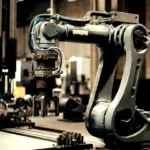
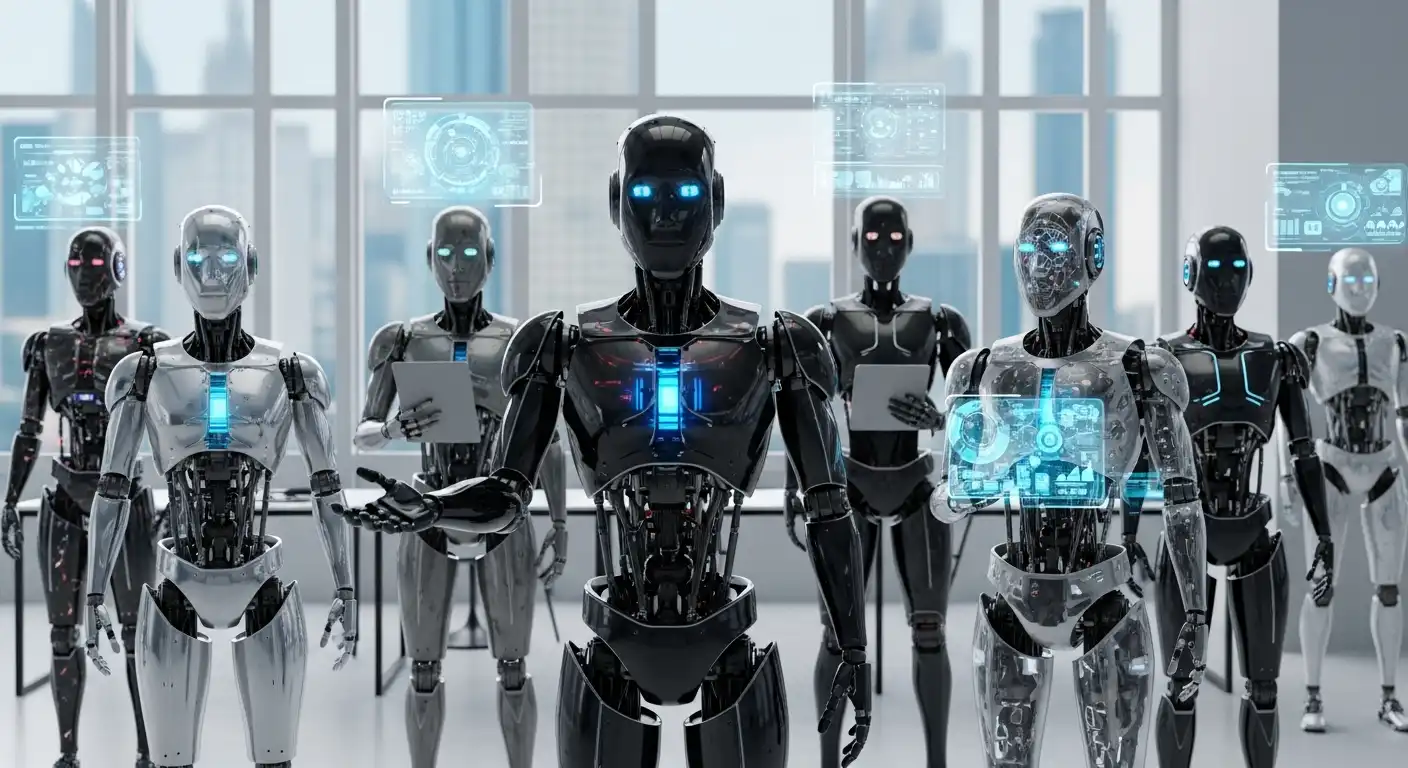
At the absolute center of this industrial robotics push is Boston Dynamics’ newly upgraded Atlas humanoid robot. Hyundai, which acquired a controlling stake in the legendary robotics firm, unveiled the production-ready, fully electric version of Atlas in January. Under the expanded partnership, the companies plan to utilize Nvidia’s Isaac robot development platform to train and safely deploy these humanoid workers across industrial manufacturing environments. Hyundai plans to officially deploy the Atlas humanoid at its Hyundai Motor Group Metaplant America (HMGMA) facility in Georgia by 2028, where the machines will perform high-risk sequencing and assembly tasks to reduce the physical burden on human employees.
The most ambitious financial element of the discussion focused on a massive industrial development project in Saemangeum, a western port city in South Korea. The executives reviewed plans for Hyundai’s 9 trillion won (approximately $5.9 billion) infrastructure initiative, which will feature a state-of-the-art AI data center, a dedicated robot manufacturing cluster, and a clean hydrogen fuel plant. Huang enthusiastically referred to the planned development as South Korea’s “AI Valley,” drawing direct comparisons to California’s Silicon Valley. He expressed immense happiness at the prospect of building Nvidia’s core regional infrastructure within this massive industrial hub.
During the talks, Executive Chair Chung Euisun suggested that the two companies could establish a perfect, highly resilient AI ecosystem if Nvidia joins the Saemangeum project as a direct partner. Building a joint, high-performance data hub on-site would enable both firms to pool their data resources and co-develop next-generation software models. Chung emphasized that additional domestic and international investments will flow into the western port city as the project matures, establishing a highly advanced industrial corridor that can easily supply the entire Asia-Pacific region with clean energy, custom silicon, and smart robotics.
To support this massive manufacturing expansion, Hyundai is integrating Nvidia’s advanced digital twin technologies directly into its global factory design processes. The automaker plans to use the Nvidia Omniverse platform, running on high-performance Nvidia OVX systems, to build a cohesive “digital thread” across its existing engineering tools. This allows the company’s designers to conduct highly accurate product prototyping, simulate complex factory layouts, and train robotic assembly lines in a virtual environment before spending millions on physical construction, significantly reducing time to market.
Training these advanced physical AI models and autonomous driving software stacks requires an astronomical amount of computational horsepower. Under a strategic framework first established in late 2025, Hyundai is building an Nvidia AI supercomputer to accelerate its model training and validation processes. The company intends to deploy up to 50,000 next-generation Nvidia Blackwell GPUs to run its data-driven development pipelines. This massive investment ensures that the company can efficiently manage the immense, multi-petabyte datasets necessary to safely develop its Level 4 robotaxi software and smart factory algorithms.
The expansion of the alliance occurs during a period of rapid, multi-billion-dollar investments in the physical AI sector. As global tech giants collectively spend over $100 billion annually on artificial intelligence infrastructure, the race to transition software brains into physical hardware has become the defining battleground of the industry. Analysts at Bloomberg estimate that the global market for smart manufacturing and industrial robotics will surpass $150 billion by the end of the decade. By securing a direct partnership with a mass-production powerhouse like Hyundai, Nvidia is protecting its market share and locking in a massive, long-term industrial customer.
While both companies are eager to accelerate their technology roadmap, they must navigate a highly volatile global supply chain. Escalating geopolitical tensions and tariff disputes have pushed up the price of high-grade steel, copper, and specialized sensor components. Even a minor 1.5% delay in component shipping or regulatory approvals can force automakers to spend millions in wasted factory overhead. To protect its margins, Hyundai is dedicating a portion of its global growth capital toward securing localized, domestic suppliers, aiming to shield its $1 billion-plus robotics projects from volatile international trade friction.
Ultimately, the deepening alliance between Nvidia and Hyundai Motor Group marks a vital turning page for the global robotics and automotive industries. By combining Nvidia’s advanced accelerated computing, open models, and Omniverse simulation with Hyundai’s world-class manufacturing scale and Boston Dynamics’ humanoid technology, the two companies are building a highly resilient, physical AI ecosystem. As the joint engineering teams begin deploying the Atlas humanoid at the Georgia Metaplant and develop the Saemangeum AI Valley over the coming years, this landmark partnership proves that the future of industry belongs to those who successfully merge digital intelligence with physical manufacturing scale.