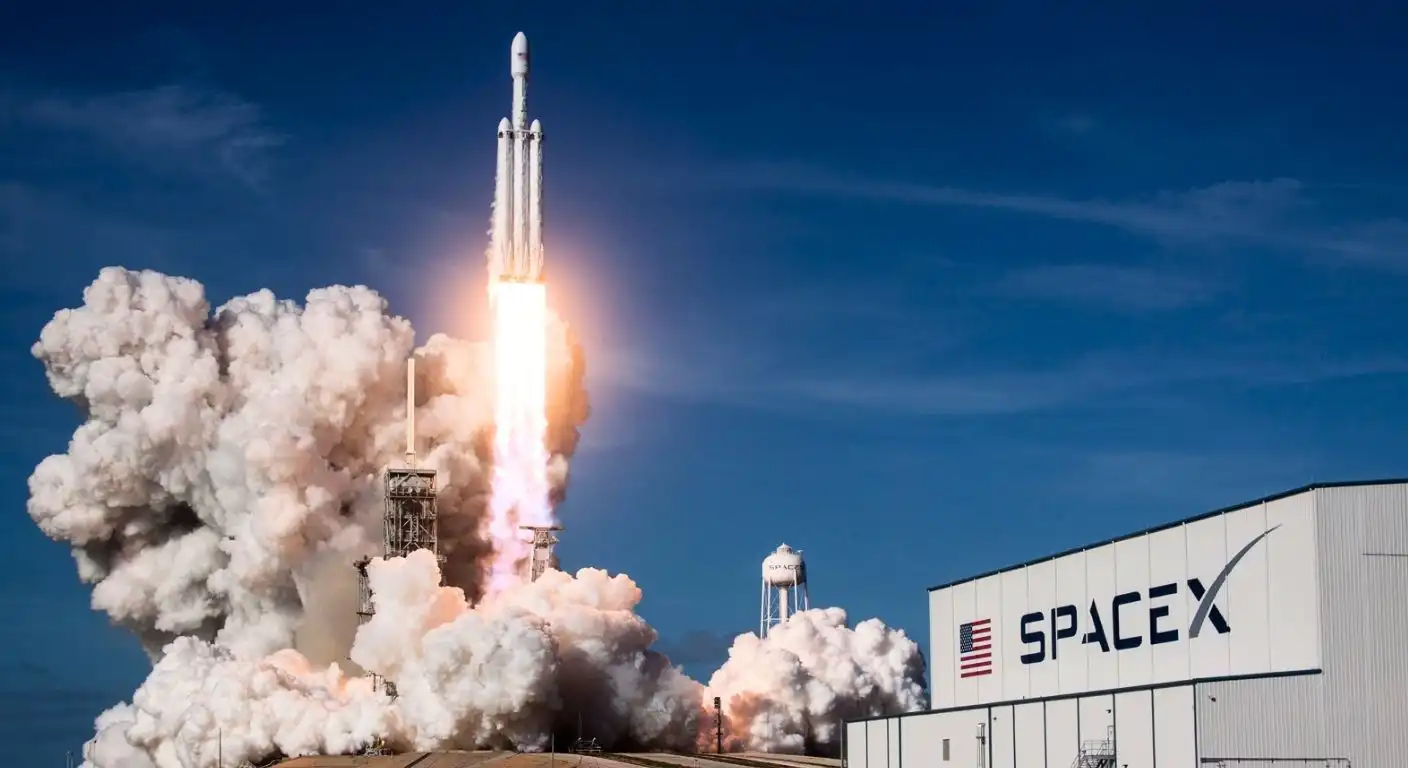
The global capital markets are witnessing a major, historically unprecedented transformation in corporate treasury management. For over two decades, the space exploration, satellite communications, and artificial intelligence giant SpaceX operated as a highly valuable, privately held venture-backed startup. The company raised billions of dollars almost exclusively through private equity rounds, establishing a loyal base of high-net-worth investors and venture capital firms.
This equity-only capital model has officially ended. In late June, following a blockbuster public listing and a record-breaking debut bond sale, Wall Street analysts and institutional investors began actively debating the company’s long-term financing strategy.
The launch of an active credit-default swaps (CDS) market and the issuance of $25 billion in high-grade corporate bonds represent a significant milestone in SpaceX’s debt diversification.
By transitioning from an equity-only tech unicorn into a mainstream, highly active corporate borrower, the company has built a highly sophisticated capital structure designed to fund its astronomical infrastructure requirements without constantly diluting its existing shareholders.
However, this transition has triggered an intense, highly complex debate between equity and credit investors. While equity investors remain highly bullish—focusing on the company’s massive growth potential, the global expansion of the Starlink satellite network, and the integration of its newly acquired artificial intelligence unit, xAI—bondholders are taking a far more cautious, risk-sensitive stance.
They point to the company’s staggering cash burn rate, widening GAAP net losses, and the high cost of insuring its debt against default as clear warning signs that the space giant’s high-risk, capital-heavy business model presents a significant credit risk that Wall Street must carefully monitor.
Navigating the Milestone of SpaceX Debt Diversification
The decision by SpaceX to diversify its capital structure by issuing massive, long-term corporate bonds is a key turning point that permanently alters the company’s relationship with the global financial markets.
The Transition from Equity-Only Startup to High-Grade Corporate Borrower
For most of its corporate history, SpaceX was treated by the financial community as an experimental, high-risk aerospace venture. Under the guidance of founder Elon Musk and President Gwynne Shotwell, the company relied on its massive private valuation—which reached an estimated $210 billion in its final private funding rounds—to raise cheap equity capital from venture capital firms, sovereign wealth funds, and private equity managers.
The company permanently altered this playbook on June 12, completing the largest initial public offering in history under the ticker SPCX. The listing raised a record-breaking $75 billion by selling 555 million shares at $135 each, valuing the company at $1.77 trillion.
Just days later, on June 23, SpaceX followed this historic equity debut with a massive $25 billion debut bond offering. This rapid, coordinated entry into both the public equity and high-grade debt markets represents a historic transition, turning the aerospace pioneer into a highly active, mainstream corporate borrower with a highly diversified capital structure.
Balancing a Trillion-Dollar Equity Story with Real Credit Risk
This rapid capital transformation has created a major, highly contentious debate on Wall Street, exposing a deep divide in how different classes of investors evaluate the company’s long-term financial health.
On one hand, equity investors are focused on the company’s highly compelling, trillion-dollar growth story. They point to the rapid, global monetization of the Starlink satellite internet network, which has already established a dominant lead in the telecom sector, and the immense future commercial potential of its reusable Starship launch vehicle and its newly integrated AI unit, xAI.
From their perspective, taking on $25 billion of low-cost, high-grade debt is a brilliant treasury management tool that allows the company to protect its massive $101 billion cash reserve while maintaining a highly flexible corporate balance sheet.
On the other hand, credit investors and bondholders are taking a far more cautious, risk-sensitive stance. Unlike equity investors, who enjoy uncapped upside potential if the stock price rises, bondholders have a capped return, making them highly sensitive to any factor that undermines a company’s cash-flow certainty.
These conservative lenders point to the company’s staggering cash burn rate, which reached nearly $30 billion over the past four quarters, and its massive GAAP net losses—including a $4.94 billion loss for the previous fiscal year and an estimated $4.30 billion loss in the first quarter of this year—as clear evidence that the company is currently operating with a highly leveraged, high-risk profile.
The Financial Scale and the Refinancing of Legacy Liabilities
The primary operational motivation behind SpaceX’s massive $25 billion bond offering reveals a complex web of corporate treasury management designed to reduce short-term interest expenses and secure its corporate balance sheet.
Refinancing the Twenty Billion Dollar Bridge Loan and xAI Debt
Despite having over $101 billion in cash and cash equivalents on its balance sheet following its record-breaking IPO, SpaceX chose to take on $25 billion of public debt to refinance a highly expensive, temporary $20 billion bridge loan.
The company had secured this temporary bridge loan earlier in the year to retire approximately $17.5 billion of high-interest, legacy junk debt that had been accumulated by Elon Musk’s other major business ventures, including the social media platform X (formerly Twitter) and his artificial intelligence startup, xAI, to bridge their rapid cash drains during their early development phases.
The bridge loan carried an effective interest rate of roughly 4.5%. By issuing permanent, investment-grade bonds, SpaceX has successfully converted that short-term, temporary financing into stable, long-term capital market debt, dramatically reducing its annual interest expenses and securing its corporate balance sheet.
Inside the Eighty-Nine Billion Dollar Bond Order Book
Despite the cautious skepticism of some credit analysts, SpaceX’s inaugural bond offering was an extraordinary success. The company priced $25 billion of bonds across five distinct tranches, with maturities ranging from five to thirty years, allowing the company to build a highly diverse, long-term debt profile.
The offering was met with overwhelming demand from institutional investors, drawing a spectacular order book that exceeded $89 billion. This meant the transaction was roughly 3.5 times oversubscribed, allowing lead underwriters to tighten pricing and expand the total deal size to $25 billion.
Major credit rating agencies, including S&P, Fitch, and Moody’s, assigned the company BBB-tier investment-grade ratings ahead of the sale. This solid credit rating allowed SpaceX to access a massive pool of institutional capital that is legally barred from investing in high-yield or junk-rated debt, giving the company the ability to borrow at significantly lower rates than it could through its previous private financing arrangements.
The Credit Derivatives Warning: Why Insuring SpaceX Costs More
While the initial success of the bond sale is impressive, the launch of an active credit derivatives market has revealed that institutional traders are still demanding a significant risk premium to hold the rocket maker’s debt.
The High Cost of SpaceX Credit Default Swaps
Shortly after the completion of the bond sale, major Wall Street dealers began making active markets on credit-default swaps (CDS) tied to SpaceX, providing investors with a real-time, transparent tool to hedge their bond portfolios or speculate on the company’s creditworthiness.
The pricing of these credit default swaps has raised some eyebrows. According to pricing sheets reviewed by Bloomberg, the cost of protecting SpaceX’s debt against default for five years settled at a mid-point of approximately 1.255% to 1.26% annually.
This pricing means that an institutional investor must pay roughly $125,500 to $126,000 per year to insure every $10 million of principal protected. This relatively high premium indicates that while the company possesses solid investment-grade ratings, the credit markets still view its highly aggressive, capital-heavy operations as carrying a higher baseline risk than traditional corporate borrowers.
Comparing SpaceX’s Risk Premium with Similarly Rated Peers
The significant risk premium demanded by the credit markets is highly visible when comparing SpaceX’s CDS pricing with that of other similarly rated, high-grade corporate issuers.
For example, the cost of protecting the debt of Intel Corp. against default for five years stands at roughly 0.64% annually, or about $64,000 per year for every $10 million of principal protected.
Both companies carry similar, solid BBB-tier investment-grade ratings, yet insuring SpaceX’s debt costs nearly double the amount required to insure Intel’s.
This substantial pricing gap shows that despite the aerospace giant’s massive cash reserves and market dominance, bond investors still perceive its highly aggressive, capital-intensive operations and risk-tolerant corporate culture as carrying a higher baseline risk, prompting them to demand a larger premium to write default protection.
The Capital-Heavy Future of Starlink, Starship, and AI
As SpaceX transitions into a mature, publicly traded corporate giant, its ongoing capital requirements will remain a primary focus for Wall Street analysts. The company’s ambitious, long-term business goals require an unprecedented, sustained capital spend.
Funding the CapEx-Heavy Future of Starlink, Starship, and AI
Despite its massive cash reserves and strong revenue growth, SpaceX is projected to continue burning cash through 2029. The company must fund several high-stakes, capital-intensive programs simultaneously, including:
- The continuous construction and deployment of its Starlink satellite constellation, which requires launching hundreds of new satellites every month to maintain its global internet dominance.
- The advanced development of its multiplanetary Starship systems, which requires a series of expensive, high-risk test launches and the construction of massive launch facilities in Texas and Florida.
- The build-out of massive, localized AI data centers to support its autonomous navigation, satellite routing, and deep-space communication systems.
To sustain this massive capital spend without constantly diluting its existing shareholders through dilutive stock sales, SpaceX must maintain deep, continuous access to the global debt markets.
By completing its debut bond sale and establishing an active, highly liquid credit derivatives market, the company has built the necessary financial infrastructure to support its long-term goals.
The CDS market will provide investors with a continuous, real-time risk assessment tool, helping to lower borrowing costs, increase liquidity, and ensure that the world’s most valuable aerospace pioneer has the financial firepower to turn its ambitious multiplanetary dreams into a highly profitable, self-sustaining reality.
A Watershed Moment for Corporate Finance
The implementation of a comprehensive debt diversification strategy by SpaceX is a watershed moment that permanently alters the company’s relationship with the global capital markets. By proving that a privately held technology unicorn can successfully transition into a mainstream, high-grade corporate borrower through a combination of massive bond sales and credit derivatives trading, the company has provided a bold, highly sophisticated roadmap for its financial future.
While the cautious skepticism of some credit analysts and the high cost of insuring its debt against default prove that the fixed-income community remains wary of its highly aggressive, capital-heavy risk profile, the massive $89 billion order book and the solid BBB-tier ratings demonstrate that institutional trust remains exceptionally high.
As SpaceX continues to convert short-term, high-cost liabilities into permanent, low-cost capital market debt, the establishment of this liquid derivative pricing framework will provide the company with the financial stability and structural flexibility needed to fund its massive Starlink, Starship, and AI ambitions, ensuring that the future of global space exploration remains backed by the deepest and most sophisticated financial systems on earth.