

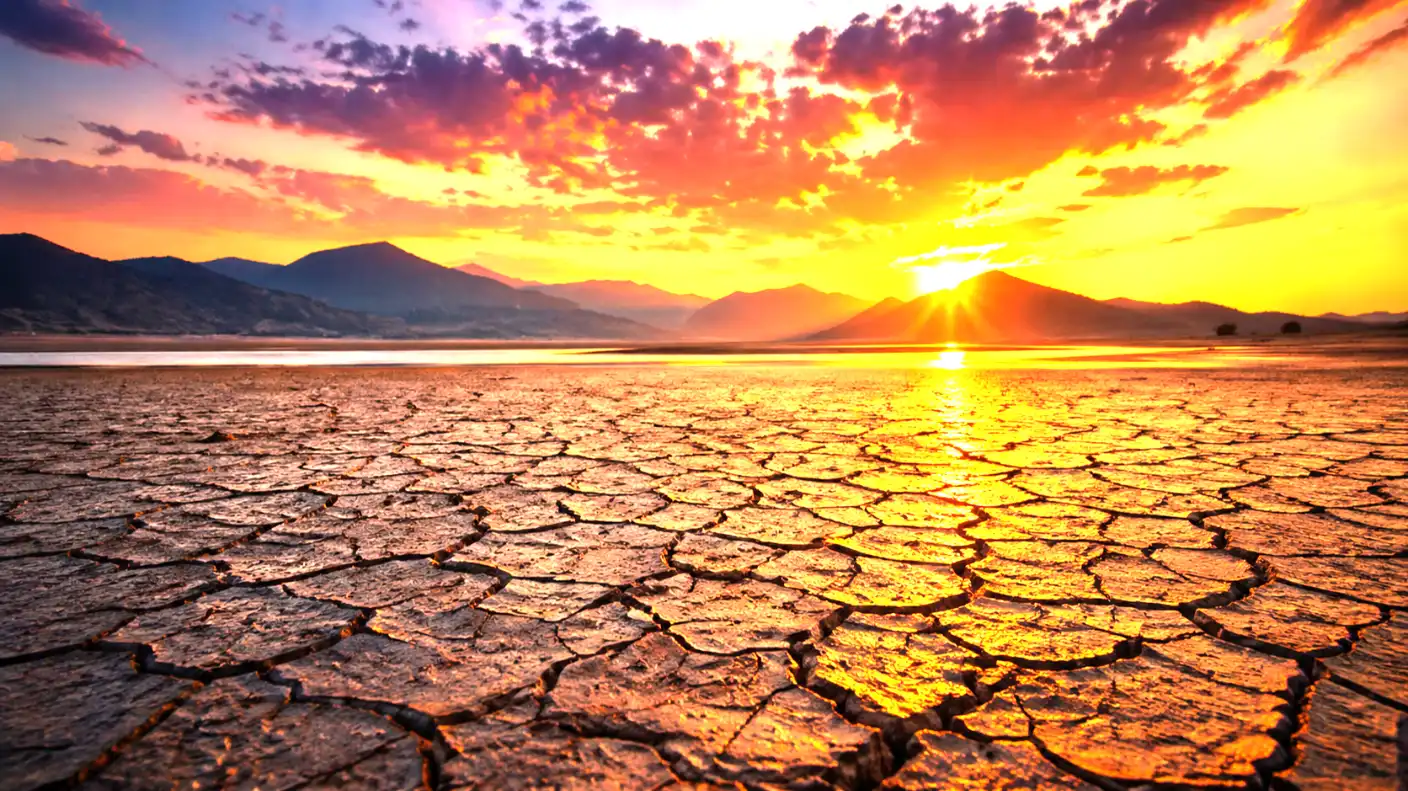
The global tourism industry has run headfirst into a severe, climate-driven resource crisis. For decades, Europe’s southern coastal regions and picturesque islands served as the ultimate summer escape for millions of international travelers, who eagerly booked flights to enjoy sun-drenched beaches, high-end resorts, and vibrant local cultures. Today, this massive influx of holidaymakers has collided with a record-shattering early summer heatwave, pushing the continent’s fragile environmental infrastructure to the absolute brink.
As the peak summer holiday season begins, Europe’s most popular coastal hotspots and islands are literally running dry. An intense, persistent high-pressure system known as an “Omega Block” has trapped a massive dome of hot air drawn from the Sahara Desert over much of Western Europe. This extreme weather event has pushed temperatures past 40 degrees Celsius in France, Spain, and Italy, while the United Kingdom has experienced its hottest June on record.
This extreme heatwave is happening at the exact moment when European tourist numbers have reached historic, post-pandemic highs. The simultaneous convergence of record-breaking temperatures and unprecedented visitor volumes has created an unsustainable demand for freshwater, depleting local reservoirs, triggering strict water rationing, and threatening the long-term survival of the Mediterranean tourism economy.
The Quantitative Scale of Europe’s Record-Breaking Heatwave
The sheer severity of the current heatwave is visible in the historic meteorological data recorded across the continent, proving that extreme weather events are becoming longer, more frequent, and more intense.
According to data compiled by France’s national meteorological service, Météo-France, the country recorded its hottest day on record on June 24, with the national thermal indicator reaching an average of 30.0 degrees Celsius. This historic temperature beat the previous record of 29.8 degrees Celsius set just the day before, and surpassed earlier national records from July 2019 and the devastating heatwave of August 2003, which caused an estimated 15,000 deaths across France. In southwestern towns like Pulluau and Les Herbiers, temperatures climbed to an extraordinary 43.8 degrees Celsius, while the national temperature indicator overnight reached a record high of 21.6 degrees Celsius.
The heatwave is also breaking records across the English Channel. The United Kingdom’s Met Office confirmed that the country recorded its hottest-ever June temperature of 36.7 degrees Celsius in Somerset on June 25, prompting authorities to temporarily close schools and restrict rail travel to prevent tracks from buckling under the extreme heat.
According to data from the European Union’s Copernicus Climate Change Service, Europe remains the world’s fastest-warming continent, with temperatures increasing at twice the global average rate since the 1980s. Over the last four years, more than 200,000 people across Europe have died from heat-related causes, highlighting the immense, life-threatening stakes of the current climate crisis.
Why Europe’s Islands are Running Dry
The primary impact of this extreme heatwave is a severe, tourism-driven water crisis that has struck Europe’s popular holiday islands with unprecedented severity, exposing the critical vulnerability of their local infrastructure.
Greece Declares States of Emergency on Aegean Islands
The situation is particularly acute in Greece, where the rapid surge in summer visitors has completely overwhelmed local water supplies. The Greek government was forced to declare a formal state of emergency on the Aegean islands of Alonissos and Tinos, as local drinking water reserves fell to critical lows.
These two islands are far from alone in their struggles. A growing list of popular Greek tourist destinations—including Corfu, Karpathos, Leros, Patmos, Astypalea, Symi, and Aegina—have all hit water crisis points over the past year, forcing municipal authorities to implement emergency measures to secure basic drinking water for local communities.
This water crisis is a direct result of a massive, seasonal population imbalance. These small Mediterranean islands typically have permanent populations of only a few thousand residents, and their local water infrastructure was built to support that modest scale.
During the peak summer months, however, these islands host tens of thousands of international tourists. The sudden, massive influx of visitors sends local water consumption through the roof, quickly draining local aquifers and reservoirs that have already been severely depleted by years of below-average winter rainfall and persistent drought.
The Four-Fold Consumption Gap of the Modern Tourist
The core of the problem lies in the staggering difference in water consumption habits between local residents and international tourists. While local islanders are highly conscious of their water resources and practice strict water-saving habits as part of their daily lives, your average tourist operates under a highly consumptive, luxury mindset.
Industry data reveals that a typical tourist consumes up to four times more water per day than a local resident. This massive consumption gap is driven by:
- Swimming Pools and Water Features: Luxury hotels and private villas must use thousands of gallons of freshwater daily to fill and maintain their swimming pools, hot tubs, and ornamental fountains.
- Daily Fresh Towels and Laundry: High-end resorts run massive, commercial laundry operations around the clock to provide guests with fresh towels, bed linens, and tablecloths daily.
- Landscaped Gardens: Premium hotels irrigate large, exotic, and non-native landscaped gardens to maintain a lush, green aesthetic in arid, sun-baked environments.
- Excessive Personal Use: Tourists typically take multiple, long showers daily to cool off after spending hours in the searing heat, with little regard for the local water constraints.
This high rate of consumption adds up incredibly fast. When a small island with a permanent population of 3,000 people suddenly hosts 30,000 high-consuming tourists, the local water grid simply cannot keep up with the demand, leading to empty pipes, falling water pressure, and a total depletion of local reserves.
Deepening Droughts and Rationing Across Italy and Spain
While the Greek islands are facing acute local shortages, the agricultural and municipal water grids of Italy and Spain are experiencing a deeper, more systemic crisis that threatens both the tourism industry and the national food supply.
Sicily and Southern Italy Face Severe Water Rationing
In Italy, where the health ministry put 16 major cities—including Rome, Milan, Venice, and Bologna—on red alert, the water crisis has hit the southern regions and Sicily with extreme severity. Years of persistent drought, combined with the current heatwave, have left regional reservoirs at some of their lowest levels in forty years.
Faced with emptying reservoirs, local authorities in Sicily have implemented strict water rationing for both residential and agricultural users. In several municipalities, drinking water is only turned on for a few hours a day, and farmers have seen their irrigation allowances cut by up to 50% to prioritize the water needs of cities and coastal tourist resorts.
The water shortage has also triggered electricity blackouts in major cities like Milan and Turin, as a massive spike in air conditioning use has overwhelmed the local power grid, which is already struggling with reduced output from hydroelectric plants and nuclear reactors that rely on warming river waters for cooling.
Spain’s Reservoirs Face Extreme Pressure and Beach Restrictions
In Spain, the national weather agency AEMET issued red alerts for extraordinary danger across several regions, with temperatures in normally cooler northern cities like San Sebastián reaching 40 degrees Celsius. The extreme heat has put intense pressure on Spain’s already strained water infrastructure, particularly in the tourism-heavy regions of Catalonia, Andalusia, and the Canary Islands.
To protect their dwindling water reserves, local governments across Spain have implemented aggressive conservation measures. Many popular coastal towns have turned off the freshwater showers on their public beaches, banned the filling of private swimming pools, and prohibited residents from watering their gardens or washing their cars.
In Catalonia, which has faced a multi-year hydrological drought, some municipalities have had to transport drinking water via expensive shipping tankers to keep local communities and hotels supplied, illustrating the extreme, costly measures required to survive the water crisis.
The Biology of the Heatwave: Toxic Algae and Flesh-Eating Bacteria
The combination of extreme heat and water scarcity has also triggered several dangerous environmental and public health hazards, turning Europe’s popular beaches into potential safety hazards for unsuspecting tourists.
Warming Coastal Waters Create Breeding Grounds for Vibrio
As the heatwave bakes the continent, the water temperatures of the Mediterranean Sea, the Baltic Sea, and local inland lakes have risen to historic highs. While warmer water is attractive to swimmers, it also creates the perfect breeding ground for dangerous, naturally occurring pathogens.
Chief among these is Vibrio, a genus of bacteria that thrives in warm, brackish coastal waters. Some species of Vibrio can cause severe skin infections, necrotizing fasciitis (commonly known as “flesh-eating” or “flesh-rotting” bacteria), and life-threatening septicemia if they enter the body through an open wound or if contaminated raw shellfish are consumed.
The rapid proliferation of this bacteria has forced local health authorities in parts of Spain, France, and Germany to issue public health warnings and temporarily close several popular beaches and swimming areas, delivering a significant blow to local tourism operators.
France’s Record-Breaking Hottest Night and the Drowning Epidemic
The intense heatwave has also triggered a tragic, nationwide safety crisis in France. As temperatures climbed past 43 degrees Celsius during the day and remained historically high overnight, millions of desperate residents and tourists sought immediate relief from the stifling heat by swimming in local rivers, canals, and lakes.
This has resulted in what French Prime Minister Sébastien Lecornu called a tragic scourge of drowning deaths. In a single week, French emergency services recorded at least 40 drowning fatalities, with the majority of the victims being young people who drowned while swimming in unsupervised, highly dangerous bodies of water.
The tragedy has prompted the government to issue urgent public safety warnings, advising people to only swim in designated, supervised areas and urging local authorities to deploy additional lifeguards to protect the public during the ongoing heat crisis.
Strategic and Infrastructure Solutions for a Warmer Continent
The current water crisis and the record-breaking heatwave have made it undeniably clear that Europe’s traditional approach to resource management is no longer viable. To survive in a warmer, more volatile climate, the continent must invest heavily to rebuild its water and energy infrastructures.
Moving Beyond Temporary Trucking to Advanced Desalination
For water-starved Mediterranean islands and coastal municipalities, relying on expensive, temporary trucking or shipping tankers to import freshwater is an unsustainable and highly inefficient long-term solution.
If these popular holiday hotspots are to survive, governments and private developers must invest billions of euros to build advanced, energy-efficient desalination plants.
Desalination technology allows coastal communities to convert abundant, local seawater into high-quality drinking water, providing a reliable, drought-proof supply that can easily scale to meet the needs of peak summer tourism.
Additionally, cities must invest in modern, circular water systems, such as advanced wastewater recycling plants, to purify and reuse domestic water for agricultural irrigation and industrial cooling, reducing the overall demand on fragile freshwater aquifers and protecting local ecosystems.
Reforming Tourism Policies to Prioritize Resource Security
The luxury tourism sector must also undergo a significant cultural and operational transformation to align with the realities of water scarcity. Hospitality brands can no longer operate as if freshwater is an infinite, low-cost commodity.
This requires implementing strict, resort-wide water conservation measures, including:
- Eliminating Private Pools: Restricting the construction of private pools for individual guest suites, choosing instead to build larger, shared infinity pools that use less overall water.
- Implementing Greywater Recycling: Installing greywater systems that capture and treat sink and shower water, reusing it to irrigate hotel gardens and flush toilets.
- Redesigning Landscaping: Replacing thirsty, exotic lawns and non-native plants with drought-tolerant, native Mediterranean flora that require minimal irrigation.
- Educating Guests: Launching active, engaging guest communication campaigns to encourage tourists to reduce their personal water usage, limit laundry requests, and respect local resource constraints.
By building these sustainable, water-conscious practices directly into their brand identities, luxury hotels can successfully protect their local environments, lower their operating costs, and ensure they remain welcome, responsible members of their local communities.
Reimagining the Mediterranean Holiday
The record-breaking heatwave and the severe water shortages currently disrupting daily life and tourism across Europe are a powerful, sobering warning that the continent’s current resource and tourism models are broken. The combination of an intense “Omega Block” drawing hot air from the Sahara and an unprecedented influx of high-consuming international tourists has pushed southern Europe’s fragile water grids to their absolute limits.
While the immediate economic costs of the crisis—including cancelled flights, slowed rail networks, closed beaches, and rising utility rates—are highly challenging, they also represent a necessary reality check.
To protect its valuable tourism economy and preserve its beautiful natural environments, Europe must move past temporary, short-term band-aids and invest in the advanced desalination plants, circular water recycling systems, and sustainable hospitality practices needed to build a resilient, water-secure future.
Only by establishing these solid environmental foundations can the continent’s most popular holiday hotspots successfully survive the challenges of the digital age, ensuring they remain safe, beautiful, and highly prosperous destinations for generations of travelers to come.






